7 citations
,
January 2001 in “Comprehensive series in photosciences” UV radiation significantly damages hair, especially with humidity, making it more vulnerable to further damage.
 5 citations
,
September 2017 in “Colloids and surfaces. B, Biointerfaces”
5 citations
,
September 2017 in “Colloids and surfaces. B, Biointerfaces” Tying a knot can measure hair friction, useful for medical applications.
 4 citations
,
February 2020 in “Journal of Cosmetic Dermatology”
4 citations
,
February 2020 in “Journal of Cosmetic Dermatology” Synthetic hair implants can cause severe scalp problems and removing them improves conditions; natural hair transplants are safer and more effective.
 4 citations
,
January 2007 in “Sen'i Gakkaishi”
4 citations
,
January 2007 in “Sen'i Gakkaishi” Permed hair degrades faster and shows more damage after protease treatment compared to untreated hair.
4 citations
,
January 2016 in “Advances in experimental medicine and biology” Freezing and storing special stem cells from hair follicles keeps their ability to grow hair and turn into different cell types.
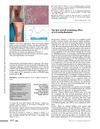 3 citations
,
November 2011 in “European Journal of Dermatology”
3 citations
,
November 2011 in “European Journal of Dermatology” 4-O-methylhonokiol from Magnolia officinalis significantly promotes hair growth.
3 citations
,
January 2002 in “Springer eBooks” Alkaline hair relaxers damage hair, but cationic and non-ionic polymers can help reduce this damage.
1 citations
,
September 2024 in “International Journal of Cosmetic Science” Bleaching hair increases pore size and changes pore structure.
 1 citations
,
December 2021 in “International journal of research in dermatology”
1 citations
,
December 2021 in “International journal of research in dermatology” Dermatologists should learn more about shampoos to better treat hair and scalp issues.
 1 citations
,
August 2011 in “Planta Medica”
1 citations
,
August 2011 in “Planta Medica” Bimatoprost effectively promotes hair growth.
 1 citations
,
April 2023 in “PubMed”
1 citations
,
April 2023 in “PubMed” Biocompatible artificial hair implants significantly improved patients' quality of life and were successful.
1 citations
,
September 2003 in “CRC Press eBooks” Hair is important for social and sexual communication in humans.
 November 2023 in “Borneo Journal of Pharmacy”
 Sappan wood hair tonic helps protect and repair damaged hair.
April 2023 in “CRC Press eBooks” Hair care products mainly work on the hair's surface and need professional guidance for use.
October 2015 in “Cosmetic Dermatology” Hair is complex, varies in type, and plays a big role in attractiveness and culture.
Tan sheep's unique fur traits are determined during the embryonic stage by specific genes.
 February 2026 in “American Scientific Research Journal for Engineering, Technology, and Sciences (Global Society of Scientific Research and Researchers)”
 Gray hair requires special coloring techniques and care to maintain quality and strength.
February 2026 in “Small Ruminant Research” The IRF2BP2 gene affects sheep fleece quality by influencing fiber traits.
May 2025 in “Journal of Photochemistry and Photobiology B Biology” Blue LED light improves hair treatments for Caucasian and Asian hair but not for African hair.
February 2025 in “Zenodo (CERN European Organization for Nuclear Research)” Proper training and scientific knowledge are crucial for safe and effective chemical hair procedures.
February 2025 in “Zenodo (CERN European Organization for Nuclear Research)” Scientific knowledge is crucial for safe and effective chemical hair procedures.
 June 2023 in “Journal of cosmetic dermatology”
 Dermatologists should know hair prosthetic options to better help alopecia patients.
October 2022 in “Hair Transplantation” Hair disorders are caused by genetics, environment, hormones, or inflammation, and treatments focus on normalizing hair growth and density.
January 2022 in “Surgical & Cosmetic Dermatology” Isotretinoin can rarely cause hair to grow curly.
April 2017 in “The journal of investigative dermatology/Journal of investigative dermatology” Researchers developed a method to grow human hair follicles using 3D-printed skin models and modified cells.
 September 2016 in “Journal of dermatological science”
 Adult skin cells can be used to create new hair in a lab.
October 2015 in “Cosmetic Dermatology” Hair styling products and tools help improve hair's look and manageability but can damage hair if used incorrectly.
 July 2012 in “British Journal of Dermatology”
 Women generally want more hair volume, which becomes a concern around menopause due to hair loss.
Higher methionine in pregnant rabbits' diets improves baby rabbits' hair growth.
Higher methionine levels in pregnant rabbits' diets improve hair follicle development and hair fiber diameter in their babies.