10 citations
,
October 2014 in “Plastic & Reconstructive Surgery Global Open” Botulinum toxin type A injections improved hair growth and scalp health in a woman with radiation-induced hair loss.
February 2026 in “Cureus” Crisaborole may help regrow hair in children with alopecia areata.
 March 2024 in “Journal of integral sciences”
 Rosemary oil may promote hair growth and is a natural alternative to minoxidil.
 February 2024 in “Cosmoderma”
 Low-dose oral minoxidil can help treat male and female pattern hair loss, especially in those who can't use topical treatments or have heart health issues.
July 2013 in “DOAJ (DOAJ: Directory of Open Access Journals)” Minoxidil can effectively treat patchy hair loss by stimulating hair growth.
 67 citations
,
July 2016 in “Reviews in Endocrine and Metabolic Disorders”
67 citations
,
July 2016 in “Reviews in Endocrine and Metabolic Disorders” Stress can worsen skin conditions by affecting hormone levels and immune response.
36 citations
,
February 1998 in “Journal of Anatomy” Fibre optic confocal imaging can visualize skin layers, blood vessels, and nerves in live mice.
27 citations
,
March 2006 in “Journal of cosmetic dermatology” HRT helps improve skin issues caused by menopause.
 25 citations
,
June 2021 in “Developmental Cell”
25 citations
,
June 2021 in “Developmental Cell” Dying cells can help with faster healing and new hair growth by releasing a growth-promoting molecule.
 10 citations
,
July 2011 in “Springer eBooks”
10 citations
,
July 2011 in “Springer eBooks” Carboxytherapy can improve skin conditions with few side effects, but results may vary and are not guaranteed.
9 citations
,
July 2024 in “Toxins” OnabotulinumtoxinA is used to treat wrinkles, pain, sweating, hair loss, and more by temporarily paralyzing muscles and affecting pain pathways.
5 citations
,
June 2024 in “Pharmacological Research” FOL-026 peptide may help hair growth and cardiovascular health by improving blood flow and cell functions.
3 citations
,
April 2018 in “JURNAL ILMU KEFARMASIAN INDONESIA” Ambon banana weevil extracts can be used in hair care products to promote hair growth.
 2 citations
,
December 2021 in “International journal of Ayurveda and pharma research”
2 citations
,
December 2021 in “International journal of Ayurveda and pharma research” Ayurvedic treatment helped reduce PCOS symptoms in a 19-year-old girl.
 1 citations
,
December 2022 in “̒Ulūm-i dārūyī”
1 citations
,
December 2022 in “̒Ulūm-i dārūyī” The new wound dressing with minoxidil and dexamethasone could speed up healing and reduce scarring in rats.
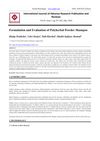 May 2026 in “International Journal of Research Publication and Reviews”
 The polyherbal powder shampoo is a safe and effective natural alternative for healthy hair care.
January 2026 in “Open Science Framework” More research is needed to find effective treatments for hair loss caused by valproic acid.
 June 2025 in “Revista Brasileira de Fisioterapia Pelvica”
 The Broad Ligament Maneuver effectively relieved PCOS symptoms and restored ovarian function.
The integumentary system is essential for protection, temperature regulation, and health.
December 2024 in “African Journal of Biomedical Research” Ayurvedic treatment can effectively improve PCOD symptoms and irregular menstruation.
Botulinum toxin injections do not help with male pattern baldness.

Alopecia areata patients show increased inflammation and OX40 activation, suggesting a new treatment target.

Lavender is widely used for its calming effects and in beauty products, but its medical effectiveness is not fully proven and not FDA-approved.
 July 2023 in “British journal of dermatology/British journal of dermatology, Supplement”
 HPV8 E6 gene causes growth of certain skin stem cells.
July 2022 in “Siriraj Medical Bulletin” The conditioner effectively strengthens and smooths hair, offering a natural alternative.
 January 2018 in “Elsevier eBooks”
 The document concludes that alopecia has significant social and psychological effects, leading to a market for hair loss treatments.
New bio-ink can print complex tissues and organs.

The document concludes that current treatments for androgenic alopecia are not fully effective, but new therapies like botulinum toxin and PRP show promise, and future gene therapy could be beneficial.
 July 2012 in “Ubaya Repository (University of Surabaya)”
 The gel and tonic were not stable.
January 2011 in “Junshi yixue” A mouse model for studying scleroderma in chronic graft-versus-host disease was successfully created.