 March 2026 in “Food Science and Biotechnology”
 Blue honeysuckle fruit extract helps hair grow by activating a specific signaling pathway.
June 2025 in “OPAL (Open@LaTrobe) (La Trobe University)” The RHC complex with nicotinamide promotes hair growth and health.
 January 2022 in “Stem cell biology and regenerative medicine”
 New biofabrication technologies could lead to treatments for hair loss.
 January 2021 in “Biomedical Research-tokyo”
 Reticulocyte hemoglobin content is the best indicator of iron deficiency causing hair loss in women.
235 citations
,
July 1999 in “Journal of biological chemistry/The Journal of biological chemistry” Human hair is made up of different keratins, some strong and some weak, with specific types appearing at various stages of hair growth.
 87 citations
,
July 2009 in “The journal of investigative dermatology/Journal of investigative dermatology”
87 citations
,
July 2009 in “The journal of investigative dermatology/Journal of investigative dermatology” Human beard hair medulla contains a unique and complex mix of keratins not found in other human tissues.
73 citations
,
December 2015 in “Nature Genetics” Mutations in TBX3 cause horses to have more even hair color instead of Dun camouflage.
 13 citations
,
January 2017 in “Molecules”
13 citations
,
January 2017 in “Molecules” Compounds from Alpinia zerumbet may help with hair regrowth and cancer treatment by targeting PAK1.
 13 citations
,
December 2014 in “Stem Cells”
13 citations
,
December 2014 in “Stem Cells” Hair and skin can regenerate without bulge stem cells due to other compensating cells.
13 citations
,
January 1993 in “Archives of dermatological research” Human hair follicles can grow and stay healthy for up to 8 days in a lab setting.
 12 citations
,
May 2014 in “International Journal of Molecular Medicine”
12 citations
,
May 2014 in “International Journal of Molecular Medicine” Chrysanthemum zawadskii extract helps hair grow by stimulating hair cells.
 10 citations
,
May 2012 in “PloS one”
10 citations
,
May 2012 in “PloS one” Low ERCC3 gene activity is linked to non-pigmented hair growth.
 7 citations
,
January 2020 in “Journal of Dermatology”
7 citations
,
January 2020 in “Journal of Dermatology” Cantu syndrome, which causes excessive hair growth and skin issues, is due to a mutation in the ABCC9 gene, and understanding this could help develop new treatments for hair diseases.
6 citations
,
May 2022 in “Journal of Cosmetic Dermatology” Lagerstroemia indica extract can help prevent hair loss and promote hair growth.
 September 2022 in “bioRxiv (Cold Spring Harbor Laboratory)”
 The research provided new insights into the genetic factors contributing to hair loss and skin conditions by analyzing individual cells from the human scalp.
 June 2017 in “Experimental dermatology”
 Skin has a larger surface area than thought, certain skin cells improve skin flap survival, better trials for skin conditions in children are needed, Stevens-Johnson syndrome rates vary by age and race, and better skin barrier function may reduce inflammation in the elderly.
 February 2026 in “International Journal of Molecular Sciences”
 PDLLA filler can improve hair thickness and shine by reducing age-related hair decline.

Eclipta alba L. (Urang-Aring) can help treat hair loss.
August 2023 in “Journal of Investigative Dermatology” Senescent melanocytes in nevus skin boost hair growth.
April 2021 in “The journal of investigative dermatology/Journal of investigative dermatology” MPZL3 protein is important for controlling hair growth cycles.
 September 2017 in “Journal of Investigative Dermatology”
 Hair follicle cells change their DNA packaging during growth cycles and when grown in the lab.
COVID-19 might cause gray hair to regain color.

Regenerative cosmetics can improve skin and hair by reducing wrinkles, healing wounds, and promoting hair growth.
46 citations
,
May 1991 in “British Journal of Dermatology” Heparin can inhibit hair growth in mice when injected.
 5 citations
,
September 2020 in “Molecules”
5 citations
,
September 2020 in “Molecules” Extracts from three Polynesian plants were found to promote hair growth by affecting cell growth and gene expression related to hair.

Regenerative cosmetics can improve skin and hair by reducing wrinkles, healing wounds, and promoting hair growth.
 January 2021 in “International journal of pharmaceutical research”
 Sansevieria trifasciata P. extracts, especially the ethyl acetate fraction, effectively promote hair growth in male rabbits with hair loss.
A woman had temporary hair loss due to stress from a spinal cord injury.
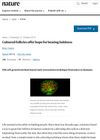
Growing hair follicles from cultured cells could potentially treat baldness, but more research is needed.
January 2013 in “Herald of Medicine” GHK-Cu liposome promotes hair growth in mice with alopecia.