 3 citations
,
June 2006 in “Expert Review of Dermatology”
3 citations
,
June 2006 in “Expert Review of Dermatology” The document concludes that hair loss is complex, affects many people, has limited treatments, and requires more research on its causes and psychological impact.

Maintaining enough zinc may help prevent and manage hair loss.
 208 citations
,
January 2013 in “Lab on a Chip”
208 citations
,
January 2013 in “Lab on a Chip” The Multi-Organ-Chip improves the growth and quality of skin and hair in the lab, potentially replacing animal testing.
 51 citations
,
January 2004 in “Skin Pharmacology and Physiology”
51 citations
,
January 2004 in “Skin Pharmacology and Physiology” The document explains hair growth and shedding, factors affecting it, and methods to evaluate hair loss, emphasizing the importance of skin biopsy for diagnosis.
 10 citations
,
June 2005 in “The journal of investigative dermatology/Journal of investigative dermatology”
10 citations
,
June 2005 in “The journal of investigative dermatology/Journal of investigative dermatology” FP-1 is a key protein in rat hair growth, active only during the growth phase.
 6 citations
,
January 2022 in “Journal of Investigative Dermatology”
6 citations
,
January 2022 in “Journal of Investigative Dermatology” Male pattern baldness is linked to higher levels of a certain receptor in the scalp, which leads to the shrinking of blood vessels and hair loss. Early treatment targeting this receptor could be more effective.
October 2001 in “Science news” Understanding hair growth and loss is complex, involving genetic and molecular factors.
January 2010 in “Chinese Journal of Aesthetic Medicine” EGCG promotes hair growth in mice.
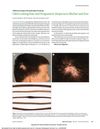 May 2014 in “JAMA Dermatology”
 Mother and son diagnosed with a rare genetic hair loss condition with no effective treatment.
43 citations
,
December 2006 in “The American journal of pathology” Edar signaling is crucial for controlling hair growth and regression.
10 citations
,
February 2019 in “Journal of cellular physiology” TGF-β2 helps yak hair follicles enter the regression phase, while HSP70 tries to prevent it.
 91 citations
,
May 2003 in “American Journal of Pathology”
91 citations
,
May 2003 in “American Journal of Pathology” Prolactin affects hair growth cycles and can cause early hair follicle regression.

Perilla seed extract may help prevent hair loss better than some standard treatments.
 April 2023 in “The journal of investigative dermatology/Journal of investigative dermatology”
 DKK2 and SOSTDC1 together are necessary for the normal timing of the first regression phase in the hair growth cycle.
28 citations
,
November 2018 in “Journal of cellular physiology” miR-124 helps mouse hair follicle stem cells become nerve cells by blocking Ptbp1 and Sox9.
 4 citations
,
February 2020 in “Journal of Cosmetic Dermatology”
4 citations
,
February 2020 in “Journal of Cosmetic Dermatology” Trichoscopy helps diagnose hairline recession causes in Egyptian women, with androgenetic alopecia being the most common.
 2 citations
,
May 2018 in “Journal of the American Academy of Dermatology”
2 citations
,
May 2018 in “Journal of the American Academy of Dermatology” Low vitamin D might be one of several factors involved in the hair loss condition alopecia areata.
 1 citations
,
August 2019 in “Research Square (Research Square)”
1 citations
,
August 2019 in “Research Square (Research Square)” Cashmere goats have a hair growth cycle with specific genes regulating growth, regression, and resting periods.
February 2019 in “bioRxiv (Cold Spring Harbor Laboratory)” Cashmere goat hair growth follows a cycle with distinct growth, regression, and resting periods, influenced by specific genes.
 April 2018 in “The journal of investigative dermatology/Journal of investigative dermatology”
 Higher fluence in hair removal damages hair follicles more, while lower fluence mimics natural hair regression, with long-term IPL treatments effectively reducing hair.
86 citations
,
June 1998 in “Journal of Investigative Dermatology” The hairless gene mutation causes baldness by disrupting hair follicle structure.
 65 citations
,
February 2017 in “Pflügers Archiv - European Journal of Physiology”
65 citations
,
February 2017 in “Pflügers Archiv - European Journal of Physiology” Macrophages are vital for skin healing, hair growth, salt balance, and cancer defense.
18 citations
,
February 2023 in “eLife” ILC1-like cells can independently cause alopecia areata.
10 citations
,
December 2015 in “Experimental dermatology” EGFR helps mouse hair follicles stop growing by reducing certain growth regulators.
6 citations
,
August 1975 in “Journal of Endocrinology” Cortisol and corticosterone thin mouse skin and regress hair follicles, while testosterone promotes skin and hair development.
 4 citations
,
July 2020 in “Biochemical and Biophysical Research Communications”
4 citations
,
July 2020 in “Biochemical and Biophysical Research Communications” A protein called ectodysplasin-A2 increases a hair growth inhibitor in balding cells, which could be a target for hair loss treatment.
4 citations
,
June 2015 in “Connective tissue research” The research found changes in gene expression related to cell death in mouse skin that help understand hair follicle development and skin health.
 3 citations
,
January 1989 in “PubMed”
3 citations
,
January 1989 in “PubMed” The review found that specific changes in scalp tissue can help diagnose different types of hair loss.
2 citations
,
June 1994 in “Der Hautarzt” DNA-flowcytometry is a reliable method to evaluate hair growth in androgenetic alopecia.
 1 citations
,
December 2015 in “Lʹvìvsʹkij klìnìčnij vìsnik”
1 citations
,
December 2015 in “Lʹvìvsʹkij klìnìčnij vìsnik” Correcting trace element imbalances may help reduce alopecia areata symptoms.