 36 citations
,
December 2016 in “Journal of The American Academy of Dermatology”
36 citations
,
December 2016 in “Journal of The American Academy of Dermatology” The normal range for the hair pull test is 2 hairs or fewer, and washing or brushing hair before the test does not affect the results.
4 citations
,
December 2020 in “Journal of the American Academy of Dermatology” Pulling 2 or fewer hairs is normal for all hair types, including Afro- and Asian-textured hair.
December 2023 in “Minia Journal of Medical Research” Transverse sectioning is more reliable for diagnosing alopecia areata.
 July 2021 in “Australasian Journal of Dermatology”
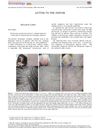
 The trichoscopy-assisted hair pull test is useful for diagnosing different types of hair loss.
 January 2015 in “Springer eBooks”
 The pull test and wash test are cheap, easy methods to diagnose hair loss.
4 citations
,
January 2017 The pull and wash tests are simple, cost-effective ways to diagnose hair loss severity and type.
11 citations
,
August 2016 in “Journal of the European Academy of Dermatology and Venereology” Serial trichoscopy is more reliable than the modified hair pull test for tracking alopecia areata.
May 2018 in “PLATELET RICH PLASMA IN ANDROGENIC ALOPECIA IN MALE AND FEMALE PATIENTS- A MYTH, A PROSPECTIVE STUDY.”  March 2021 in “CRC Press eBooks”
 Physical exams are important in hair loss diagnosis, considering cosmetic history, systemic diseases, and classifying alopecia types.
January 2018 in “Hair therapy & transplantation” Hair health can indicate mental and general health.
 91 citations
,
January 2009 in “International Journal of Trichology”
91 citations
,
January 2009 in “International Journal of Trichology” Different hair evaluation methods have their own pros and cons, and using multiple methods together is best for accurate hair loss diagnosis and tracking.
 88 citations
,
June 2009 in “Cleveland Clinic Journal of Medicine”
88 citations
,
June 2009 in “Cleveland Clinic Journal of Medicine” To manage diffuse hair loss, identify the cause, improve nutrition, remove triggers, and use specific treatments like minoxidil or finasteride.
 86 citations
,
August 2014 in “Journal of The American Academy of Dermatology”
86 citations
,
August 2014 in “Journal of The American Academy of Dermatology” To diagnose hair loss, use a systematic approach including history, exams, and tests.
 51 citations
,
January 2004 in “Skin Pharmacology and Physiology”
51 citations
,
January 2004 in “Skin Pharmacology and Physiology” The document explains hair growth and shedding, factors affecting it, and methods to evaluate hair loss, emphasizing the importance of skin biopsy for diagnosis.
49 citations
,
June 2012 in “Anais Brasileiros de Dermatologia” Hair loss in women is linked to higher depression symptoms.
 46 citations
,
October 2009 in “Archives of Dermatology”
46 citations
,
October 2009 in “Archives of Dermatology” Loose anagen hair syndrome, often affecting young girls, can be diagnosed with a hair-pull test and usually gets better on its own, but severe cases may need treatment.
 28 citations
,
September 1998 in “Medical Clinics of North America”
28 citations
,
September 1998 in “Medical Clinics of North America” Most hair loss can be diagnosed with patient history and physical exam, and a few common types make up most cases.
 27 citations
,
September 2012 in “Dermatologic Clinics”
27 citations
,
September 2012 in “Dermatologic Clinics” The document concludes that using specific tools and tests is essential for identifying the cause of hair loss and deciding on the right treatment.
 25 citations
,
August 2016 in “Journal of Cosmetic Dermatology”
25 citations
,
August 2016 in “Journal of Cosmetic Dermatology” The marine complex supplement significantly improved hair growth in men with thinning hair without adverse effects.
 24 citations
,
January 2015 in “Current problems in dermatology”
24 citations
,
January 2015 in “Current problems in dermatology” The document concludes that accurate diagnosis of hair loss in children is crucial due to limited treatment options and the condition's psychological impact.
 21 citations
,
May 1996 in “Current problems in dermatology”
21 citations
,
May 1996 in “Current problems in dermatology” Detailed patient history and physical exams are crucial for diagnosing hair loss.
 13 citations
,
July 2004 in “Skinmed”
13 citations
,
July 2004 in “Skinmed” Common types of non-scarring hair loss have various causes and treatments, but more effective solutions are needed.
12 citations
,
January 2020 in “Indian Dermatology Online Journal” Female pattern hair loss has multiple causes and treatments, with new therapies showing promise.
 12 citations
,
June 2009 in “Journal of Cosmetic Dermatology”
12 citations
,
June 2009 in “Journal of Cosmetic Dermatology” Loose Anagen Hair syndrome occurs in dark-skinned children and often improves on its own.
 10 citations
,
February 2011 in “Journal der Deutschen Dermatologischen Gesellschaft”
10 citations
,
February 2011 in “Journal der Deutschen Dermatologischen Gesellschaft” The document concludes that proper diagnosis and evidence-based treatments are crucial for managing hair diseases, and psychological support for patients is important.
 10 citations
,
June 2000 in “Primary Care”
10 citations
,
June 2000 in “Primary Care” The document explains different hair loss types and treatments, emphasizing diagnosis through examination and tests, and specific treatments for each condition.
 9 citations
,
January 2006 in “American Journal of Clinical Dermatology”
9 citations
,
January 2006 in “American Journal of Clinical Dermatology” Malassezia yeast might be linked to more hair shedding.
 8 citations
,
August 2013 in “Pediatric Dermatology”
8 citations
,
August 2013 in “Pediatric Dermatology” Loose Anagen Hair Syndrome is found in black-haired Indian children and is often missed, especially in boys.
 6 citations
,
January 2011 in “PubMed”
6 citations
,
January 2011 in “PubMed” The document concludes that most patients with endocrine disorders experience diffuse, non-scarring hair loss, with scarring hair loss being rare.
4 citations
,
April 2018 in “The journal of pediatrics/The Journal of pediatrics” A 6-year-old girl's inability to grow her hair long was due to Loose Anagen Hair Syndrome, which causes hair to shed easily and may improve with age.