 December 2012 in “Journal of Dermatological Science”
 Wnt/beta-catenin signaling in the skin helps fat cell development during hair growth and repair.
 April 2013 in “Developmental Cell”
 Brg1 is crucial for keeping hair follicle stem cells and repairing skin, working with the Sonic Hedgehog pathway to promote hair growth.
 135 citations
,
December 2015 in “Expert Opinion on Biological Therapy”
135 citations
,
December 2015 in “Expert Opinion on Biological Therapy” Exosomes could potentially enhance tissue repair and regeneration with lower rejection risk and easier production than live cell therapies.

Dandelion-derived carbon dots effectively kill bacteria and speed up wound healing.

Bio-nanovesicles could improve hair and skin regeneration by delivering important molecules to repair and heal.
January 2026 in “Journal of Dermatological Science” DcR3 helps heal wounds and regrow hair by changing macrophages to a repair-focused type.
 November 2023 in “International Journal of Medical Sciences”
 New regenerative medicine-based therapies for hair loss look promising but need more clinical validation.
November 2007 in “Science” Keratin-based hydrogels from human hair help nerve repair better than traditional methods.
M-CSF-stimulated myeloid cells can turn into skin cells and help heal wounds and regrow hair.
733 citations
,
September 2009 in “Journal of Cell Science” Wound healing is a complex, multi-phase process involving various cells and activities to repair skin damage.
 396 citations
,
May 2011 in “Cell stem cell”
396 citations
,
May 2011 in “Cell stem cell” Nerve signals are crucial for hair follicle stem cells to become skin stem cells and help in wound healing.
309 citations
,
October 2007 in “Biomaterials” Keratin from human hair helps nerves heal faster.
 295 citations
,
June 2009 in “Science”
295 citations
,
June 2009 in “Science” Stromal stem cells may help heal wounds by becoming structural cells or affecting the immune system, but more research is needed to understand how.
 202 citations
,
August 2007 in “Biomaterials”
202 citations
,
August 2007 in “Biomaterials” Artificial skin development has challenges, but new materials and understanding cell behavior could improve tissue repair. Also, certain growth factors and hydrogel technology show promise for advanced skin replacement therapies.
201 citations
,
April 2017 in “Regeneration” Macrophages and fibroblasts help repair organs after injury, affecting whether they regenerate or scar.
 188 citations
,
March 2018 in “Frontiers in Immunology”
188 citations
,
March 2018 in “Frontiers in Immunology” Regulatory T-cells are important for healing and regenerating tissues in various organs by controlling immune responses and aiding stem cells.
 176 citations
,
January 2003 in “Journal of Investigative Dermatology”
176 citations
,
January 2003 in “Journal of Investigative Dermatology” Bone Morphogenetic Proteins (BMPs) help control skin health, hair growth, and color, and could potentially be used to treat skin and hair disorders.
 162 citations
,
July 2011 in “Biomacromolecules”
162 citations
,
July 2011 in “Biomacromolecules” Chitosan nanofiber scaffolds improve skin healing and are promising for wound treatment.
 109 citations
,
October 2007 in “Journal of pineal research”
109 citations
,
October 2007 in “Journal of pineal research” Melatonin helps regulate hair growth and protects the hair follicle from stress.
99 citations
,
January 2002 in “Plastic & Reconstructive Surgery” Fetal rat wounds heal without scars at 16.5 days gestation.
 81 citations
,
September 2005 in “The American journal of pathology”
81 citations
,
September 2005 in “The American journal of pathology” Activin helps skin growth and healing mainly through stromal cells and affects keratinocytes based on its amount.
 57 citations
,
May 2007 in “Nature”
57 citations
,
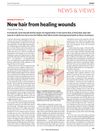
May 2007 in “Nature” Adult mice can grow new hair from skin wounds.
 56 citations
,
November 2010 in “Pigment Cell & Melanoma Research”
56 citations
,
November 2010 in “Pigment Cell & Melanoma Research” Brain hormones significantly affect hair color and could potentially be used to prevent or reverse grey hair.
52 citations
,
February 2012 in “PloS one” Lack of Ctip2 in skin cells delays wound healing and disrupts hair follicle stem cell markers in mice.
 48 citations
,
December 2004 in “Differentiation”
48 citations
,
December 2004 in “Differentiation” Tooth papilla cells can help regenerate hair follicles and grow hair.
 46 citations
,
May 2018 in “The journal of investigative dermatology/Journal of investigative dermatology”
46 citations
,
May 2018 in “The journal of investigative dermatology/Journal of investigative dermatology” The vitamin D receptor is essential for skin stem cells to grow, move, and become different cell types needed for skin healing.
 45 citations
,
October 2008 in “Cytokine & Growth Factor Reviews”
45 citations
,
October 2008 in “Cytokine & Growth Factor Reviews” Activins and follistatins, part of the TGFβ family, are crucial for hair follicle development and skin health, affecting growth, repair, and the hair cycle.
 38 citations
,
June 2019 in “International Journal of Molecular Sciences”
38 citations
,
June 2019 in “International Journal of Molecular Sciences” Tiny particles called extracellular vesicles could help with skin healing and hair growth, but more research is needed.
 36 citations
,
July 2014 in “Experimental Dermatology”
36 citations
,
July 2014 in “Experimental Dermatology” Skin and hair can regenerate after injury due to changes in gene activity, with potential links to how cancer spreads. Future research should focus on how new hair follicles form and the processes that trigger their creation.
35 citations
,
July 2022 in “Frontiers in Cell and Developmental Biology” Proper mTOR signaling is crucial for healthy skin and preventing skin diseases.