 June 2026 in “Frontiers in Cell and Developmental Biology”
 MicroRNAs can help regenerate hair by influencing stem cells and immune responses, but delivery challenges exist.
 June 2026 in “Scientific Reports”
 Open-label placebos can reduce stress and improve exam performance.

Plum-blossom needle tapping with ginger juice rubbing may help prevent hair loss after bariatric surgery.
 May 2026 in “Research Square”
 Patients need better counseling and resources for managing chemotherapy-induced hair loss.
 May 2026 in “Clinical Cosmetic and Investigational Dermatology”
 White hair can make the scalp look more visible, which may be mistaken for hair loss.
 April 2026 in “Frontiers in Cell and Developmental Biology”
 Hair cell loss usually happens after hearing loss starts.
 March 2026 in “Frontiers in Medicine”
 Different types of alopecia cause hair loss due to immune system issues, with some allowing regrowth and others causing permanent loss.
 January 2026 in “Dermatology and Therapy”
 Poor sleep may lead to hair loss, and hair loss may affect sleep.
 January 2026 in “Nature Communications”
 A wearable device using NIR light may help treat hair loss non-invasively.

Polarized microscopy helps identify hair irregularities in genetic disorders.
 July 2024 in “Journal of Dermatology Research Reviews & Reports”
 Stem cell therapy shows promise for treating hair loss by promoting hair growth.
 July 2024 in “ADMET & DMPK”
 Surface-modified nanostructured lipid carriers can improve hair growth treatments.
 June 2024 in “International Journal for Research in Applied Science and Engineering Technology”
 Flaxseed hair gel is effective for hair growth and dandruff, is stable, and has minimal side effects.
 February 2024 in “Frontiers in physiology”
 Hair follicle stem cells help skin heal and grow during stretching.
 January 2024 in “Journal of medical clinical case reports”
 NX35growth™ effectively promotes hair growth and improves hair health.
 January 2024 in “GeroScience”
 Using radiation to make mice's hair turn gray helps study and find ways to prevent or reverse hair graying.
 January 2024 in “International Journal of Zoological Investigations”
 The herbal oil with Helianthus annuus and Martynia annua seeds promotes significant hair growth.
 November 2023 in “bioRxiv (Cold Spring Harbor Laboratory)”
 Scientists made a mouse that shows how a specific protein in the skin changes and affects hair growth and shape.
 October 2023 in “bioRxiv (Cold Spring Harbor Laboratory)”
 Blocking both main energy pathways can stop hair follicle stem cell-induced skin cancer growth.
 August 2023 in “International journal of research in medical sciences”
 The serum is safe and helps treat premature greying of hair.
 July 2023 in “International journal of pharmacognosy and life science”
 The herbal hair oil made from various plants might be a good alternative to synthetic hair loss treatments.
 January 2023 in “Book of Abstracts”
 COVID-19 can cause different types of hair loss, with telogen effluvium being the most common.

Human hair keratins can be turned into useful 3D biomedical scaffolds through a freeze-thaw process.
 April 2021 in “Advances in Cosmetic Surgery”
 Hair restoration can be achieved through non-surgical treatments like minoxidil, antiandrogens, phototherapy, and PRP procedures, or through surgical methods like hair transplantation. Continued treatment is needed to maintain results, and full results are visible after 12-18 months.

Changes in skin bacteria can affect hair loss and new treatments targeting these bacteria may prevent balding without sexual side effects.
 November 2018 in “Springer eBooks”
 The document concludes that specialized hair transplant techniques can be effective, with varying success rates depending on the donor area and patient factors.
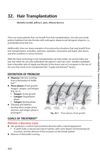 January 2018 in “Georg Thieme Verlag eBooks”
 Hair transplantation is a surgical procedure to move hair to bald areas, requires good donor hair, and results show in about a year.
 May 2017 in “InTech eBooks”
 Hair transplantation can lead to complications like pain, swelling, and rare serious issues, but risks can be reduced with careful practices.
 March 2017 in “The American Journal of Cosmetic Surgery”
 Transplanted hair follicles can resist hair loss from an autoimmune condition better than natural hair.
 January 2016 in “Springer eBooks”
 The document concludes that there are various causes and treatments for hair loss, with hair transplantation being a notable option.