2 citations
,
June 1986 in “Journal of Clinical Pharmacy and Therapeutics” Metal binding to sodium valproate may be linked to hair loss in epilepsy patients.
2 citations
,
January 1981 High temperatures and certain chemicals can significantly change the amino acid content in human hair.
2 citations
,
November 1973 in “PubMed” Sulfur-35 can be used to track hair growth and past exposure.
1 citations
,
June 2021 in “Preprints.org” Hair relaxers and straighteners can be toxic to skin cells.
1 citations
,
January 2017 in “Annals of dermatology/Annals of Dermatology” Mineral levels in hair don't significantly affect the severity of atopic dermatitis in children.
 1 citations
,
January 2017 in “Journal of Clinical and Diagnostic Research”
1 citations
,
January 2017 in “Journal of Clinical and Diagnostic Research” Sodium valproate can cause reversible hair loss in some patients.
 1 citations
,
January 2017 in “SAGE Open Medical Case Reports”
1 citations
,
January 2017 in “SAGE Open Medical Case Reports” A woman's hair loss condition got worse after her varicose vein treatment with a specific foam.
1 citations
,
August 1999 in “ACS symposium series” Polymer JR400 sticks to hair but washes off with detergent.
1 citations
,
December 1982 in “PubMed” Sodium valproate effectively reduces seizures in children with epilepsy, especially in primary generalized cases.
 May 2026 in “International Journal of Biological Macromolecules”
 The hydrogel with Poria cocos vesicles helps regrow hair in hair loss by activating specific cell signals.
December 2025 in “Asian Journal of Advanced Research and Reports” Hair growth pathways are a promising and simpler method for detecting chronic stress.
November 2025 in “Pharmacological Research - Natural Products” Kesh Kanti Expert Oil promotes hair growth and protects hair health.
 September 2025 in “Голова и шея.”
 Solutions without sodium ions best preserve hair follicle transplants.
 September 2025 in “Journal of Surfactants and Detergents”
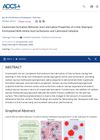
 Shampoos with sodium lauroyl methylaminopropionate improve hair lubrication and reduce irritation.
 June 2025 in “Journal of the Pakistan Medical Association”
 2dDR may help regrow hair in male pattern baldness.
 May 2025 in “Frontiers in Pharmacology”
 Targeting gut microbiome and metabolome may help treat autoimmune skin diseases like alopecia areata.
May 2025 in “OPAL (Open@LaTrobe) (La Trobe University)” Targeting specific metabolic and ionic pathways may improve alopecia areata treatment.
May 2025 in “OPAL (Open@LaTrobe) (La Trobe University)” Targeting specific metabolic and ionic pathways may improve alopecia areata treatment.
 February 2025 in “International Journal of Bioprinting”
 3D-printed scaffolds help regenerate hair follicles in lab-grown skin.
October 2024 in “Cosmetics” ATG effectively reduces hair frizz without damaging hair strength.
 July 2024 in “Drug and Chemical Toxicology”
 Moringa oleifera leaf extract protects skin from damage caused by sodium valproate.
 April 2024 in “AAPS PharmSciTech”
 New microneedle method improves hair regrowth treatment delivery.
 January 2024 in “Molecules (Basel. Online)”
 Juglone from walnut extracts may help repair damaged hair.
 December 2023 in “Journal of molecular structure”
 Hair treatments and dehydration affect hair's lipid and protein behavior, influencing its flexibility and appearance.
February 2023 in “American Journal of Biomedical and Life Sciences” Hair analysis can effectively assess nutritional status.
January 2023 in “Minds at UW (University of Wisconsin)” More research is needed to understand how shampoo chemicals affect hair strength and structure.
 November 2022 in “Journal of Investigative Dermatology”
 Butyrate helps hair grow longer, improves hair cell health, increases pigment production, and boosts hair's natural defenses.
 May 2022 in “Experimental dermatology”
 Trichothiodystrophy hair is structurally abnormal with protein and organization issues.
February 2022 in “Cosmetic Dermatology” Permanent hair waving uses chemicals to create long-lasting curls.
 July 2020 in “Scholars journal of applied medical sciences”
 Sodium valproate caused vomiting, hair loss, loss of appetite, abdominal pain, weight gain, and anemia in young children with epilepsy.