 42 citations
,
January 2009 in “Colloids and Surfaces B: Biointerfaces”
42 citations
,
January 2009 in “Colloids and Surfaces B: Biointerfaces” A certain surfactant sticks to human hair, making it change from water-repelling to water-attracting, which could help in hair conditioning.
25 citations
,
May 2019 in “Cosmetics” 18-MEA and cationic surfactants can restore and maintain hair's hydrophobic nature, improving its beauty and feel.
18 citations
,
April 2010 in “Langmuir” Human hair surface varies in wettability, showing daily and monthly patterns.
17 citations
,
January 2023 in “International Journal of Cosmetic Science” Hydrophobic interactions affect virgin hair, while electrostatic interactions are key for bleached hair.
11 citations
,
January 2016 in “Biointerphases” The hair's outermost surface has multiple layers of lipids and proteins.
10 citations
,
January 2020 in “Royal Society Open Science” A new automated method accurately measures hair damage using microscopic images.
10 citations
,
January 1971 in “The American midland naturalist” A simple method can show hair's surface pattern.
 1 citations
,
August 2022 in “Chemical engineering journal advances”
1 citations
,
August 2022 in “Chemical engineering journal advances” Scientists made human hair magnetic by coating it with special nanoparticles.

Understanding hair surface properties is key for effective hair care products.
 June 2024 in “ChemBioChem”
 Replenishing free 18-MEA can help restore damaged hair surfaces.
 April 2023 in “Han'gug miyong haghoeji/Journal of the Korean society of cosmetology”
 Direct heat perms cause more damage to hair than softening heat perms.
January 2026 in “Colloids and Surfaces B Biointerfaces” A silicone treatment makes damaged hair more water-resistant and stronger.
 September 2024 in “Skin Research and Technology”
 AFM can help diagnose lichen planopilaris by identifying specific hair structure changes.
February 2024 in “Medicina” AFM can diagnose hair disorders by revealing detailed hair surface changes.
Water and fatty acids affect hair's surface differently based on hair damage, and models can help understand hair-cosmetic interactions.
 September 2017 in “Journal of Investigative Dermatology”
 Hair care products used for 4 weeks made hair smoother.
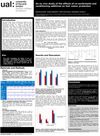 January 2014 in “University of the Arts London Research Online (University of the Arts London)”
 Certain ingredients can help protect hair color.
 10 citations
,
November 1984 in “Journal of Colloid and Interface Science”
10 citations
,
November 1984 in “Journal of Colloid and Interface Science” The study found that the Marangoni effect causes the uneven wetting of surfactant-coated hair due to the surfactant moving into the water.

The supplement may reduce hair shedding but needs more research for skin benefits.
 February 2026 in “Cureus”
 Two methods reliably measure scalp area and hair count.
 January 2023 in “Fashion and textiles”
 Cationic and nonionic surfactants provide better color intensity and resistance for semi-permanent hair dye than anionic surfactants.
 78 citations
,
October 2012 in “Biomaterials”
78 citations
,
October 2012 in “Biomaterials” Larger spheroids improve hair growth, but size doesn't guarantee thicker hair.
September 2025 in “International Journal of Cosmetic Science” A balanced mix of cationic guar gum and anionic surfactants improves hair conditioning and protection.
30 citations
,
January 1994 in “Micron” Mature hair surfaces are formed by keratinized cells with developed layers, not just modified plasma membranes.
 17 citations
,
July 2019 in “Scientific reports”
17 citations
,
July 2019 in “Scientific reports” Surface and internal treatments can help prevent hair lipid loss during washing.
2 citations
,
July 2023 in “Cosmetics” Surfactants in shampoos and conditioners remove some but not all lipids from hair, and more research is needed to understand their full impact.
 2 citations
,
January 2004 in “PubMed”
2 citations
,
January 2004 in “PubMed” Conditioners with PQ-10 soften the flat part of hair cuticles but harden the edges.
1 citations
,
November 2023 in “Cosmetics” Surfactants damage hair, but sealing the cuticle can prevent this.
 September 2025 in “Journal of Surfactants and Detergents”
 Shampoos with sodium lauroyl methylaminopropionate improve hair lubrication and reduce irritation.
 July 2024 in “ADMET & DMPK”
 Surface-modified nanostructured lipid carriers can improve hair growth treatments.