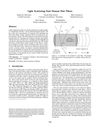
Researchers developed a new model for more realistic computer graphics of hair by considering how light scatters on hair fibers.
 52 citations
,
August 1978 in “Journal of Applied Polymer Science”
52 citations
,
August 1978 in “Journal of Applied Polymer Science” Human hair's ability to get wet is complex and can change with treatments, damage, and environment.
 43 citations
,
September 2001 in “Scanning”
43 citations
,
September 2001 in “Scanning” Hair treatments like bleaching increase friction by exposing tiny pores on the hair surface.
 20 citations
,
July 2010 in “Skin Research and Technology”
20 citations
,
July 2010 in “Skin Research and Technology” Aging makes hair thinner and rougher, with less clear edges.
15 citations
,
October 2004 in “Colloids and surfaces. B, Biointerfaces” Holes in mature hair are likely caused by the removal of substances during hair care.
13 citations
,
March 2017 in “Skin Research and Technology” Formaldehyde damages curly hair more than glyoxylic acid.
 13 citations
,
March 2006 in “International Journal of Cosmetic Science”
13 citations
,
March 2006 in “International Journal of Cosmetic Science” The study found that a polymer treatment changes the charge on hair surfaces, making bleached hair smoother and less porous.
9 citations
,
January 2010 in “Biological and medical physics series” The book was the first to focus on the biophysical properties of hair.
 7 citations
,
July 2004 in “International Journal of Cosmetic Science”
7 citations
,
July 2004 in “International Journal of Cosmetic Science” Different hair types from various ethnic groups affect hair shine due to characteristics like thickness and shape.
 3 citations
,
January 2022 in “Pharmaceutics”
3 citations
,
January 2022 in “Pharmaceutics” Nanostructured delivery systems could potentially improve hair loss treatment by targeting drugs to hair follicles, reducing side effects and dosage, but the best size, charge, and materials for these systems need further investigation.
 3 citations
,
September 2020 in “Journal of cosmetic dermatology”
3 citations
,
September 2020 in “Journal of cosmetic dermatology” Coconut oil makes hair stronger and more flexible than mineral oil.
3 citations
,
May 2009 in “International Journal of Cosmetic Science” Relaxer treatments damage African–American hair, with commercial products causing more harm than lab-made solutions.
 2 citations
,
February 2016 in “Journal of sol-gel science and technology”
2 citations
,
February 2016 in “Journal of sol-gel science and technology” A small molecule can strengthen fine hair, making it more resistant and natural-feeling.
 1 citations
,
December 2021 in “International journal of research in dermatology”
1 citations
,
December 2021 in “International journal of research in dermatology” Dermatologists should learn more about shampoos to better treat hair and scalp issues.

Modern hair styling products don't repair hair but improve its surface and stability.
 December 2025 in “Applied Sciences”
 Argan oil complexes improve hair treatment by enhancing stability, antibacterial properties, and hair texture.
October 2025 in “International Journal of Cosmetic Science” Hair properties vary by ethnicity and environment, affecting surface charge and particle deposition.
 July 2025 in “Scientific Reports”
 Fermented grapeseed oil effectively repairs and protects chemically damaged hair.
 August 2024 in “Cosmetics”
 K18® and Olaplex® both effectively repair bleached hair, improving its strength, smoothness, and overall health.
 August 2021 in “Han'gug miyong haghoeji/Journal of the Korean society of cosmetology”
 Using natural polyphenol cross-linkers like tannic acid and green tea extract in perm treatments improves curling and protects hair.
 January 1997 in “Elsevier eBooks”
 The document explains how shampoos clean, rinses condition, one-step shampoos offer convenience, and hair growth promoters aim to prevent hair loss, emphasizing the importance of scientific evidence for their effectiveness.
 63 citations
,
January 1992 in “Experimental Neurology”
63 citations
,
January 1992 in “Experimental Neurology” Chickens exposed to loud noise can quickly regain hearing mostly due to repair of the tectorial membrane, not just hair cell regeneration.
4 citations
,
August 2016 in “PubMed” Repeated dyeing and shampooing cause hair color loss and damage.
2 citations
,
January 2017 Hair movement can indicate hair quality and health.
 97 citations
,
September 2011 in “British Journal of Dermatology”
97 citations
,
September 2011 in “British Journal of Dermatology” The human hair follicle can store topical compounds and be targeted for drug delivery with minimal side effects.
2 citations
,
August 2019 in “Electronics and Communications in Japan” The device mimics human hair follicles and detects tiny forces and moments with high sensitivity.
1 citations
,
July 2012 in “ACM transactions on graphics” The new algorithm accurately captures both facial hair and skin in 3D using a camera-based system.
 1 citations
,
December 1972 in “Journal of Colloid and Interface Science”
1 citations
,
December 1972 in “Journal of Colloid and Interface Science” Ethanol spreads well on hair at low humidity but less so at higher humidity due to water condensation.
Hair movement can indicate hair quality and health.
 788 citations
,
February 2007 in “Nature”
788 citations
,
February 2007 in “Nature” The document concludes that skin stem cells are important for hair growth and wound healing, and could be used in regenerative medicine.