 4 citations
,
February 2022 in “Journal of Cosmetic Dermatology”
4 citations
,
February 2022 in “Journal of Cosmetic Dermatology” Monocytes might be linked to hair loss after COVID-19.
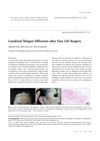 4 citations
,
January 2015 in “Annals of Dermatology”
4 citations
,
January 2015 in “Annals of Dermatology” A woman's temporary hair loss after face lift surgery stopped on its own, and hair grew back.
 3 citations
,
April 2021 in “Berkala ilmu kedokteran/Journal of the medical sciences”
3 citations
,
April 2021 in “Berkala ilmu kedokteran/Journal of the medical sciences” A fungus called Epidermophyton floccosum can cause scalp infections.
 3 citations
,
May 2019 in “Australasian Journal of Dermatology”
3 citations
,
May 2019 in “Australasian Journal of Dermatology” Hair loss in Cronkhite-Canada syndrome may be caused by autoimmune factors, not just stress or malabsorption.
 2 citations
,
June 2017 in “Pediatric Dermatology”
2 citations
,
June 2017 in “Pediatric Dermatology” A critically ill boy experienced hair loss likely due to the stress of his medical treatments, but his hair regrew completely in 1.5 months.
1 citations
,
October 2023 in “European Journal of Dermatology” Combining hair transplantation with PRP is more effective for treating hair loss than hair transplantation alone.
1 citations
,
June 2023 in “Cosmoderma” Trichoscopy is better than the hair pull test for tracking alopecia areata.
 1 citations
,
May 2018 in “Journal of Evolution of medical and Dental Sciences”
1 citations
,
May 2018 in “Journal of Evolution of medical and Dental Sciences” Platelet Rich Plasma (PRP) injections can effectively reduce hair loss and improve hair growth in both men and women suffering from androgenic alopecia.
 1 citations
,
May 2017 in “InTech eBooks”
1 citations
,
May 2017 in “InTech eBooks” Telogen Effluvium is a common hair loss condition that can be short-term or long-lasting and is often caused by stress, illness, or nutritional issues.
1 citations
,
December 2015 in “TURKDERM” Lichen planopilaris can be accurately diagnosed and effectively treated.
 1 citations
,
March 2014 in “PubMed”
1 citations
,
March 2014 in “PubMed” Androgenic alopecia (AA) in Indian women is rarely reported, with varying severity and patterns, and hair pull tests and trichograms help understand it better.
 June 2026 in “International Journal of Current Pharmaceutical Review and Research”
 PRP with minoxidil is more effective for hair growth than minoxidil alone.
 June 2026 in “International Journal of Homoeopathic Sciences”
 Personalized homeopathic treatment reduced hair fall and improved hair density in a patient with PCOS and hypothyroidism.
 May 2026 in “International Journal of Homoeopathic Sciences”
 Individualized homeopathy improved hair health and emotional well-being in a woman with stress-related hair loss.
 April 2026 in “Frontiers in Medicine”
 Syphilis can cause hair loss even without penetrative sex, but treatment can fully restore hair.
April 2026 in “JURNAL ILMU KEDOKTERAN DAN KESEHATAN” Nutritional status does not significantly affect hair loss in students.
 September 2025 in “Journal of Neonatal Surgery”
 PRP therapy may help reduce hair loss and increase hair density in androgenetic alopecia.
 September 2025 in “Journal of Maxillofacial and Oral Surgery”
 Combining PRP with CGF is more effective for hair regrowth in androgenetic alopecia than PRP alone.
 July 2025 in “Clinical Cosmetic and Investigational Dermatology”
 PRP therapy effectively improves hair density and reduces hair loss in androgenetic alopecia.
 May 2025 in “Clinical Cosmetic and Investigational Dermatology”
 Wheat extract supplements reduce hair shedding and improve growth in women with hair loss.
 January 2025 in “Annals of Maxillofacial Surgery”
 PRP therapy is more effective and preferred over minoxidil for hair loss.
 September 2024 in “International Journal of Research in Dermatology”
 Combining PRP with minoxidil and finasteride is the most effective treatment for male hair loss.

COVID-19 can cause significant hair loss.
Androgenetic alopecia is common in younger adults, especially with a family history.
 June 2024 in “Indian Dermatology Online Journal”
 Topical tofacitinib is effective and safe for treating alopecia areata.
 April 2024 in “MRIMS journal of health sciences”
 Using growth factor injections and minoxidil together can significantly improve hair growth in people with hair loss.
 January 2024 in “Journal of Cosmetic Dermatology”
 Microneedling combined with other treatments significantly improves hair growth in people with hair loss and is safe.
 January 2024 in “Annals of Agricultural and Environmental Medicine”
 Red LED light therapy helps reduce hair loss and improves hair regrowth in long COVID patients.
 January 2024 in “JCPSP. Journal of the College of Physicians & Surgeons Pakistan”
 PRP therapy is more effective than minoxidil for treating hair loss from androgenetic alopecia.
October 2023 in “University of Zadar Institutional Repository” Androgenic alopecia is hereditary hair loss treated with medications, therapies, and support.