 June 2026 in “International Journal of Ayurvedic Medicine”
 Ayurvedic methods align well with trichoscopic imaging for diagnosing and managing hair loss.
 May 2026 in “Frontiers in Cell and Developmental Biology”
 Collagen networks play a key role in hair loss and follicle miniaturization.
 March 2026 in “Frontiers in Medicine”
 Different types of alopecia cause hair loss due to immune system issues, with some allowing regrowth and others causing permanent loss.
 February 2026 in “Chinese Medicine”
 Natural products might help treat hair greying.
 January 2026 in “Theoretical and Natural Science”
 Targeting Lgr5+ stem cells and Wnt signaling may effectively treat hair loss.
 November 2025 in “PARIPEX-INDIAN JOURNAL OF RESEARCH”
 GFC is more effective than PRP for treating hair loss.
 November 2025 in “EXPERIMENTAL ANIMALS”
 Stingless bee propolis may help regenerate hair follicles and improve pigment function in chemotherapy-induced hair loss.
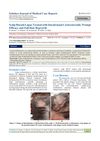 October 2025 in “Scholars Journal of Medical Case Reports”
 Intralesional corticosteroids effectively treat scalp Discoid Lupus and restore hair.
 August 2025 in “Aesthetic Cosmetology and Medicine”
 Blue light can damage hair and scalp, leading to hair loss.
Exosome therapy could help hair growth but needs more research for safety and effectiveness.
Herbal hair oil promotes hair growth, reduces hair fall, and improves scalp health without side effects.
 January 2025 in “bioRxiv (Cold Spring Harbor Laboratory)”
 Rhamnose may help hair growth and pigmentation, making it a potential treatment for hair loss.

Polarized microscopy helps identify hair irregularities in genetic disorders.

ARHGEF3 is essential for proper hair follicle development.
 June 2024 in “Frontiers in pharmacology”
 2-deoxy-D-ribose gel may help regrow hair in cases of hair loss.
 June 2024 in “International journal of nanomedicine”
 Azelaic acid micro/nanocrystals, especially with ultrasound and salicylic acid, greatly improve acne treatment.
 February 2024 in “Frontiers in physiology”
 Hair follicle stem cells help skin heal and grow during stretching.
 January 2024 in “Journal of dermatology and skin science”
 Topical aprepitant reduces skin rash and hair loss caused by cancer treatment.
 January 2024 in “bioRxiv (Cold Spring Harbor Laboratory)”
 A specific enzyme is essential for proper hair follicle stem cell development and healthy skin.
 January 2024 in “Open access journal of pharmaceutical research”
 The herbal hair oil made from natural ingredients is safe and effective for treating hair loss.
 January 2024 in “International Journal of Clinical Pharmacokinetics and Medical Sciences”
 Herbal hair serums offer multiple hair and skin benefits and are becoming more popular.
 November 2023 in “bioRxiv (Cold Spring Harbor Laboratory)”
 Disrupted cholesterol production impairs hair follicle stem cells, leading to hair loss.
 October 2023 in “Frontiers in medicine”
 Targeted immunotherapy could be a promising new treatment for hair regrowth.
 July 2023 in “bioRxiv (Cold Spring Harbor Laboratory)”
 The mesenchyme can start hair growth, but the exact signal that causes this is still unknown.
 March 2023 in “Clinical, cosmetic and investigational dermatology”
 IL-33 is linked to hair follicle damage in psoriasis and could be a treatment target for hair loss in this condition.
 January 2023 in “Vìsnik problem bìologìï ì medicini”
 Androgenic alopecia causes hair follicle degradation and skin restructuring, but some hair elements remain.

Human hair keratins can be turned into useful 3D biomedical scaffolds through a freeze-thaw process.
 December 2021 in “Molecular genetics and genomics”
 Cats with abnormal hair had DSG4 gene changes causing hair problems.
 November 2021 in “Journal of pharmaceutical research international”
 Herbal depilatories are safer and cause fewer side effects than chemical ones for hair removal.
 February 2021 in “PDEAS International Journal of Research in Ayurved and Allied Sciences”
 Ayurveda views hair health as a reflection of overall well-being and uses herbal treatments for hair care.