11 citations
,
March 2004 in “Journal of Comparative Pathology” Norfolk Terriers have a genetic skin defect causing scaling and blisters due to a keratin issue.
2 citations
,
September 1978 in “Anatomia Histologia Embryologia” Alkaline phosphatase activity in Beagle dog hair follicles is weakest in anagen and strongest in telogen.
 4 citations
,
January 2007 in “Australian Veterinary Journal”
4 citations
,
January 2007 in “Australian Veterinary Journal” A horse's sudden hair loss was caused by an allergic reaction to a coat conditioning powder.
2 citations
,
March 2011 in “Veterinary Dermatology” FGF18 is present in beagle dog hair follicles, mainly in the inner root sheath.
June 2016 in “Journal of Coastal Life Medicine” The terrier dog with pituitary-dependent hyperadrenocorticism was successfully treated with mitotane.
 12 citations
,
July 2015 in “Veterinary Dermatology”
12 citations
,
July 2015 in “Veterinary Dermatology” Microneedling helped two Pomeranian dogs with a hair growth disorder grow back 90% of their fur in 12 weeks, and the results lasted for a year.
January 2018 in “INTAS POLIVET” The dog recovered successfully after treatment with multiple medications.
 2 citations
,
January 2005 in “The Japanese Journal of Veterinary Dermatology”
2 citations
,
January 2005 in “The Japanese Journal of Veterinary Dermatology” Abnormal adrenal function is not the cause of alopecia in Pomeranians; it may be due to breed-specific hormones.
48 citations
,
August 1998 in “Developmental Biology” Deleting part of a gene in mice causes wavy hair and high pup loss.
 January 2019 in “Jui rinsho hifuka”
 A dog's skin and digestive problems improved after treatment for thyroid cancer.
 6 citations
,
June 1981 in “PubMed”
6 citations
,
June 1981 in “PubMed” Whisker hair in young people might predict severe future hair loss.
36 citations
,
July 1996 in “The journal of investigative dermatology/Journal of investigative dermatology” Mice with the 'lanceolate hair' mutation have abnormal hair and skin similar to human Netherton's syndrome.
12 citations
,
January 2013 in “Indian dermatology online journal” The document reports a unique case of woolly hair with a combination of conditions not previously seen together.

Hair and nails can show hormone changes during puberty in dogs.
3 citations
,
August 2004 in “Veterinary Dermatology” Supplementing vitamins and minerals prevented hair loss in Icelandic horses.
16 citations
,
December 2005 in “Journal of Animal Physiology and Animal Nutrition” Moderate selenium levels in a dog's diet are best for hair growth.
 January 2024 in “Jurnal Ilmu Kesehatan Hewan”
 The dog recovered well after treatment, showing no skin issues and normal hair growth.

Tissue from dog stem cells helped grow hair in mice.
 January 2024 in “Jurnal Ilmu Kesehatan Hewan”
 Oreo the dog got better from skin and worm infections after treatment and cleaner living conditions.
9 citations
,
May 2021 in “JEADV. Journal of the European Academy of Dermatology and Venereology/Journal of the European Academy of Dermatology and Venereology” Topical minoxidil may help treat a rare genetic hair condition with no fully effective treatments yet.
November 2025 in “Skin Health and Disease” Autosomal recessive woolly hair is rare and involves tightly coiled hair without other health issues.
 January 2021 in “Revista brasileira de higiene e sanidade animal”
 A dog with skin lesions was successfully treated for a human-type fungal infection.
71 citations
,
January 1998 in “Pathobiology” The document concludes that certain rats and mice are useful for studying hair loss in humans and testing treatments.
3 citations
,
January 2010 in “PubMed” Ivermectin, antibacterial drugs, and beta-glucan successfully treated a police dog's demodicosis.
1 citations
,
October 2020 in “Cermin Dunia Kedokteran” A boy's scalp rash and baldness were cured using oral medication and medicated shampoo.
January 2000 in “The Mouseion at the JAXlibrary (Jackson Laboratory)” The lanceolate hair-J mutation in mice helps understand human hair disorders like Netherton's syndrome.
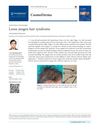 February 2023 in “Cosmoderma”
 Loose anagen hair syndrome causes easily shed hair but usually improves with time.
January 2026 in “Preprints.org” Four new FGF5 gene variants cause long hair in dogs.
 January 2025 in “Brazilian Journal of Veterinary Medicine/Revista Brasileira de Medicina Veterinária”
 Deslorelin implant successfully regrew hair in a female Pomeranian with alopecia X.

The document concludes that non-endocrine alopecia in pets varies in treatment effectiveness and often has a poor prognosis, especially in cats.