3 citations
,
January 2021 in “Veterinary dermatology” A litter of cats had a hair condition similar to a mouse mutation, leading to hair loss and abnormal hair and skin.
1 citations
,
April 2024 in “Animal Genetics” A genetic defect in an Appenzeller Mountain Dog caused skin issues, improved with ketoconazole, showing the importance of advanced genetic testing.
 March 2024 in “Brazilian Journal of Veterinary Pathology”
 The dog likely has a canine alopecia X-like disorder.
 28 citations
,
February 2012 in “PLoS ONE”
28 citations
,
February 2012 in “PLoS ONE” A PKP1 gene mutation causes skin fragility and hair loss in Chesapeake Bay retriever puppies.
 September 2024 in “The Indian Veterinary Journal”
 A Labrador pup with a fungal skin infection was fully cured in four weeks using topical treatments and immune boosters.
A white-tailed deer fawn in South Dakota was the first cervid found with congenital hypotrichosis, a condition causing sparse or missing hair.
5 citations
,
October 2012 in “Veterinary Pathology” A Doberman Pinscher had a rare form of autoimmune disease causing hair loss and other severe symptoms.
1 citations
,
January 1997 in “Skin Pharmacology and Physiology” Premature infants have less elastic hair than full-term infants.
 2 citations
,
January 2000 in “Journal of Toxicologic Pathology”
2 citations
,
January 2000 in “Journal of Toxicologic Pathology” A single recessive gene causes sparse hair in certain Japanese White rabbits.
 March 2024 in “Jurnal Ilmu Kesehatan Hewan”
 The treatment was effective for the puppy's skin and intestinal infections.
 3 citations
,
March 2014 in “Veterinary dermatology”
3 citations
,
March 2014 in “Veterinary dermatology” Norwegian puffin dogs have a unique type of hair loss that often doesn't get better on its own and responds well to ciclosporin treatment.
37 citations
,
June 2000 in “Experimental dermatology” The Lanceolate hair-J mutation in mice mimics human hair disorders like Netherton's syndrome.
 September 2023 in “Jurnal Ilmu Kesehatan Hewan”
 The dog improved significantly after treatment for skin mites and fungi.
 19 citations
,
October 1985 in “British Journal of Dermatology”
19 citations
,
October 1985 in “British Journal of Dermatology” The document concludes that unruly hair can be congenital or acquired, often lacks specific treatments, and can be managed with oils and short hairstyles.
1 citations
,
October 2021 in “The journal of investigative dermatology/Journal of investigative dermatology” Removing HIF-P4H-2 from certain skin cells in mice causes hair loss on the body but not the head.
 28 citations
,
May 2012 in “Veterinary Dermatology”
28 citations
,
May 2012 in “Veterinary Dermatology” Different types of dog hair loss are linked to problems starting the hair growth phase and early hair cycle ending.
 10 citations
,
April 2013 in “Veterinary dermatology”
10 citations
,
April 2013 in “Veterinary dermatology” A new skin disease in four Labrador retrievers responded well to immunosuppressive treatment.
6 citations
,
January 1967 in “Journal of Small Animal Practice” Old dogs' skin thins, loses hair, and may darken, but doesn't show some human aging signs.
20 citations
,
July 2005 in “Experimental dermatology” The fuzzy gene is crucial for controlling hair growth cycles.
 February 2025 in “Buletin Veteriner Udayana”
 The dog's scabies was successfully treated, leading to improved symptoms and hair regrowth.
 16 citations
,
July 2016 in “Veterinary Dermatology”
16 citations
,
July 2016 in “Veterinary Dermatology” Dermoscopy is useful for diagnosing hair loss patterns in dogs.
January 2000 in “The Mouseion at the JAXlibrary (Jackson Laboratory)” The lanceolate hair-J mutation in mice helps understand human hair disorders like Netherton's syndrome.
6 citations
,
February 2020 in “Journal of Cutaneous Pathology” Nevus psiloliparus lacks mature hair follicles but keeps other skin structures intact.
 January 2024 in “Brazilian journal of veterinary pathology”
 The dog likely has a condition similar to Canine alopecia X.
 2 citations
,
January 2005 in “The Japanese Journal of Veterinary Dermatology”
2 citations
,
January 2005 in “The Japanese Journal of Veterinary Dermatology” Abnormal adrenal function is not the cause of alopecia in Pomeranians; it may be due to breed-specific hormones.
13 citations
,
January 2001 in “Pediatric dermatology” A dark-haired Chinese girl had hair that looked banded under certain light but was normal under a microscope.
 July 2023 in “Jurnal Ilmu Kesehatan Hewan”
 Sulfur-based treatments combined with simparica effectively treat scabies in puppies.
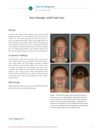 July 2019 in “Journal der Deutschen Dermatologischen Gesellschaft”
 A mother and daughter have a rare genetic hair loss disorder with no effective treatment.
Researchers made a mouse model with curly hair and hair loss by editing a gene.
7 citations
,
February 2019 in “Veterinary medicine and science” An American Bully with a genetic skin condition improved significantly with specific topical treatments.