25 citations
,
January 2003 in “Plastic & Reconstructive Surgery” Nail-matrical fibroblasts can make non-nail cells produce hard keratin, useful for nail repair.
11 citations
,
July 2010 in “European Journal of Dermatology” The condition is linked to chromosome 12, but no mutations were found in the known genes.
 2 citations
,
March 2023 in “JAAD case reports”
2 citations
,
March 2023 in “JAAD case reports” Hair repigmentation can indicate malignancy and should be investigated.
1 citations
,
March 2020 in “Hair transplant forum international” The HairMeasure device is a cheap way to measure Hair Mass Index and find scalp areas for hair exams.
 19 citations
,
March 1988 in “International Journal of Dermatology”
19 citations
,
March 1988 in “International Journal of Dermatology” Hair shaft dysplasias are abnormal hair conditions that can be inherited or acquired and may signal other health issues, with limited treatment options available.
January 2017 in “PRISM (University of Calgary)” Unique genes in hair follicle cells help tissue regeneration.
 59 citations
,
September 2008 in “Experimental dermatology”
59 citations
,
September 2008 in “Experimental dermatology” Both mouse and rat models are effective for testing alopecia areata treatments.
 1 citations
,
March 2019 in “KnE life sciences”
1 citations
,
March 2019 in “KnE life sciences” HDPCM treatment healed a baby's congenital skin defect caused by varicella infection.
 28 citations
,
October 2004 in “Differentiation”
28 citations
,
October 2004 in “Differentiation” A gene deletion causes the "hairless" trait in Iffa Credo rats.
78 citations
,
November 2005 in “Endocrinology” Hairless protein can block vitamin D activation in skin cells.
March 2026 in “Journal of the American Academy of Dermatology” Hair diameter diversity could improve androgenetic alopecia assessment and treatment planning.
2 citations
,
January 2020 in “Evidence-based Complementary and Alternative Medicine” Hataedock treatment improved skin health and reduced atopic dermatitis symptoms by enhancing the skin barrier and reducing inflammation.
August 1993 in “Journal of Dermatological Science” July 1999 in “Journal of the American Academy of Dermatology” 61 citations
,
April 1980 in “Journal of the American Academy of Dermatology” A new syndrome may link skin, growth, mental, and hair issues.
 3 citations
,
March 2010 in “Dermatologica Sinica”
3 citations
,
March 2010 in “Dermatologica Sinica” A Taiwanese patient had hair loss and skin bumps without the usual gene mutation, suggesting other genetic factors might be involved.
4 citations
,
January 2013 in “Stem cell discovery” Researchers created a cell line from a hair follicle to study hair loss.
September 2016 in “Journal of dermatological science” Human induced pluripotent stem cells can be used to create cells that help grow hair.
 39 citations
,
August 2022 in “Cell Death and Disease”
39 citations
,
August 2022 in “Cell Death and Disease” DA-MeHA hydrogel effectively aids stem cell-based skin regeneration.
 January 2024 in “Advanced Science”
 New microspheres help heal skin wounds and regrow hair without scarring.
 January 2024 in “Biomaterials Research”
 3D-cultured cells in HGC-coated environments improve hair growth and skin integration.
 68 citations
,
August 2012 in “Journal of the American Academy of Dermatology”
68 citations
,
August 2012 in “Journal of the American Academy of Dermatology” Dermatoscopy is a useful tool for diagnosing hair disorders and can help choose samples for more detailed analysis.
A genetic mutation in the CDH3 gene causes hair loss and vision problems in a young Saudi girl.
12 citations
,
October 1996 in “Dermatologic clinics” Advances in genetics may lead to targeted treatments for hair disorders.
January 1997 in “Fundamental & Clinical Pharmacology” 5 citations
,
September 2011 in “Biochimica et Biophysica Acta (BBA) - Molecular Basis of Disease” Hairless protein helps control hair growth by regulating vitamin D receptor activity.
15 citations
,
May 2017 in “Journal of Cellular Biochemistry” The hairless protein is important for skin, hair, and may influence cancer development.
30 citations
,
August 2005 in “British journal of dermatology/British journal of dermatology, Supplement” A specific gene mutation causes hair loss and potential eye issues, even if vision seems normal.
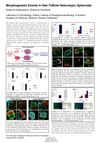
Researchers developed a method to create artificial hair follicles that may help with hair loss treatment and research.