1 citations
,
October 2009 in “International Journal of Cosmetic Science” A new keratin treatment can strengthen and protect aging hair.
November 2025 in “Journal of Investigative Dermatology” Dark skin has stronger barriers and structure due to specific gene activity.
6 citations
,
December 2018 in “International Journal of Cosmetic Science” CARB is a strong barrier in human hair that prevents dye penetration.
2 citations
,
December 1973 in “Calcified tissue research” Epilation and DHT cause skin calcification by increasing ATP and calcium deposits.
64 citations
,
August 1977 in “PubMed” Skin changes help detect graft-versus-host reaction early after bone marrow transplants.
 2 citations
,
July 2018 in “Our Dermatology Online”
2 citations
,
July 2018 in “Our Dermatology Online” Calcipotriol cream reduced skin thickening and itching in a rare nipple condition.
 June 2020 in “International Journal of Research in Dermatology”
 Xerosis and wrinkling are common in elderly skin, but some conditions can be harmful.
 21 citations
,
May 1988 in “Journal of The American Academy of Dermatology”
21 citations
,
May 1988 in “Journal of The American Academy of Dermatology” The first in-prison dermatology clinic in the U.S. faced challenges and found certain skin conditions common among inmates, with rare cases of serious skin cancer.
70 citations
,
December 1968 in “Journal of Investigative Dermatology” 11 citations
,
March 2004 in “Journal of Comparative Pathology” Norfolk Terriers have a genetic skin defect causing scaling and blisters due to a keratin issue.
5 citations
,
April 1984 in “Archives of Dermatology” Porphyria cutanea tarda causes skin issues due to an enzyme deficiency.
13 citations
,
June 2008 in “International Journal of Dermatology” Sorafenib can cause a unique skin reaction.
5 citations
,
February 2005 in “Journal of the American Academy of Dermatology” Focal palmoplantar callosities may help diagnose non-Herlitz junctional epidermolysis bullosa.
7 citations
,
December 1971 in “Calcified Tissue Research” Hair follicles in injured skin can quickly accumulate minerals, especially calcium and phosphorus.
 2 citations
,
December 2022 in “Journal of toxicologic pathology”
2 citations
,
December 2022 in “Journal of toxicologic pathology” Skin structure complexity and variability are crucial for assessing skin toxicity in safety tests.
8 citations
,
December 2024 in “Frontiers in Medicine” Damaged skin has a weakened barrier, making it more vulnerable to substances and inflammation.
94 citations
,
October 1994 in “The Journal of Cell Biology” Too much keratin 16 in mice skin causes abnormal skin thickening and structure.
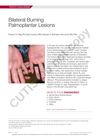
The woman was diagnosed with lichen sclerosus, a rare skin condition, after initial misdiagnosis and ineffective treatments.
33 citations
,
April 2003 in “Oncogene” 3 citations
,
July 2025 in “Acta Biomaterialia” Murine skin wounds become less stiff over time as they heal.
34 citations
,
June 1992 in “Journal of Cutaneous Pathology” Harlequin ichthyosis involves abnormal skin cell structures and giant mitochondria, affecting skin and hair.
8 citations
,
November 2020 in “Skin Research and Technology” Enlarged facial pores are denser, more contrasted, and linked to changes in skin structure and hair follicles.
2 citations
,
October 1974 in “Archives of Dermatology” The woman's skin condition persisted for 20 years despite treatments.
 20 citations
,
September 2018 in “Journal of cutaneous pathology”
20 citations
,
September 2018 in “Journal of cutaneous pathology” Different skin diseases show unique patterns of skin cell separation, cell death, and granular layer changes.
17 citations
,
May 1969 in “American Journal of Physical Anthropology” The silver marmoset's skin is thin, lacks pigment cells, and has unique features like keratinized spines and specialized glands.
Melanin-rich skin has unique challenges in diagnosing and treating skin diseases.
14 citations
,
April 1995 in “Transplantation” Human hair follicle cells can be used to help heal and replace skin.
January 2012 in “Case reports in pediatrics” A 16-year-old boy's arm hair grew more after wearing a splint, but it returned to normal in 8 months.
 19 citations
,
January 2014 in “Facial plastic surgery”
19 citations
,
January 2014 in “Facial plastic surgery” Dermabrasion improves skin appearance by removing the top layer to promote healing.
170 citations
,
November 2007 in “The journal of investigative dermatology/Journal of investigative dermatology” Skin can heal wounds without hair follicle stem cells, but it takes a bit longer.