 7 citations
,
January 1998 in “EXPERIMENTAL ANIMALS”
7 citations
,
January 1998 in “EXPERIMENTAL ANIMALS” The skin of both rat strains showed similar lectin binding patterns.
October 2025 in “Frontiers in Toxicology” A new method effectively predicts estrogen-related health effects for early screening.
8 citations
,
February 2017 in “International journal of molecular sciences” Mollusc egg extract helps skin and hair cells grow and heal.
5 citations
,
September 2021 in “Journal of Molecular Histology” LHX2, with other markers, can identify hair placodes in rats.
 1 citations
,
November 2016 in “Congenital Anomalies”
1 citations
,
November 2016 in “Congenital Anomalies” Get head MRI for babies with achondroplasia early, use free immunoglobulin light chains to detect certain neurodevelopmental disorders, and video calls work for speech therapy in patients with facial anomalies.
 April 2018 in “Journal of Investigative Dermatology”
 Researchers found a substance in chicken egg yolk that helps hair grow.
 3 citations
,
February 2014 in “Advances in Stem Cells”
3 citations
,
February 2014 in “Advances in Stem Cells” Placenta-derived stem cells can help study and treat spontaneous abortion.
132 citations
,
April 2021 in “Stem Cell Research & Therapy” A special membrane with cell particles helps heal diabetic wounds faster.
15 citations
,
September 2023 in “International Journal of Microbiology Research” AMH is a promising biomarker for diagnosing PCOS.
 5 citations
,
April 2014 in “European Journal of Obstetrics & Gynecology and Reproductive Biology”
5 citations
,
April 2014 in “European Journal of Obstetrics & Gynecology and Reproductive Biology” AMH levels can't reliably tell the difference between LOCAH and all types of PCOS in women with excessive hair growth.
3 citations
,
March 2025 in “Science Advances” A specific DNA duplication in Polish chickens affects feather shape by altering gene expression.

Lhx2 is a crucial regulator of the Sonic Hedgehog signaling in early mouse retinal development.
 5 citations
,
January 2023 in “Cell proliferation”
5 citations
,
January 2023 in “Cell proliferation” Chick embryo extract helps rat hair follicle stem cells potentially turn into Schwann cells, important for the nervous system.
10 citations
,
June 2022 in “Development” Gene regulation evolved differently in mouse and chicken skin, but remained stable in their trunks.
11 citations
,
November 2023 in “Journal of Functional Biomaterials” The ALGCS/GO30 scaffold effectively boosts mouse spermatogonial stem cell growth.
December 2016 in “The journal of investigative dermatology/Journal of investigative dermatology” Hedgehog signaling controls hair follicle development and can affect skin cancer growth.
 24 citations
,
August 2011 in “Experimental Dermatology”
24 citations
,
August 2011 in “Experimental Dermatology” The flap assay grows the most natural hair but takes the longest, the chamber assay is hard work but gives dense, normal hair, and the patch assay is quick but creates poorly oriented hair with some issues.
5 citations
,
March 2022 in “STAR Protocols” The method helps study hair follicle stem cells and calcium signals in mouse skin.
 3 citations
,
February 2021 in “Molecules”
3 citations
,
February 2021 in “Molecules” A new method was created to test the effectiveness of Dihydrotestosterone (DHT) inhibitors, like finasteride and dutasteride, in human and fish cells. The results showed fish cells are more sensitive to these treatments, and dutasteride works better than finasteride in all tested cells.
19 citations
,
January 2015 in “Development” Hoxc8 gene helps start mammary gland development by controlling specific signals.
 September 2011 in “Clinical Biochemistry”
 The demineralized bone matrix scaffold is better for cell attachment than the mineralized bone allograft.
9 citations
,
March 2017 in “Journal of Visualized Experiments” The assay effectively identifies compounds that affect immune cell activation.
 7 citations
,
January 2016 in “Methods in molecular biology”
7 citations
,
January 2016 in “Methods in molecular biology” Mouse hair follicle stem cells were successfully isolated and used to regenerate hair follicles with two different methods.
January 2004 in “Linchuang pifuke zazhi” α- and γ-catenins help develop fetal skin by 23 weeks.
January 1993 in “Nihon Chikusan Gakkaiho” Trichocytic cytokeratin expression starts earlier in whiskers than in body hair during rat embryo development.
1 citations
,
January 2017 in “UKnowledge (University of Kentucky)” LC-MS/MS is essential for accurately detecting pregnanes in pregnant mares.
14 citations
,
March 2021 in “Regenerative Biomaterials” The hydrogels help stem cells stay healthy and maintain their stem cell properties.
 1 citations
,
April 2017 in “Journal of Investigative Dermatology”
1 citations
,
April 2017 in “Journal of Investigative Dermatology” A new one-step test can quickly identify skin cancer during surgery.
February 2019 in “Psychoneuroendocrinology” Hair samples can reliably show average long-term hormone levels in young women.
 19 citations
,
November 1971 in “Clinica Chimica Acta”
19 citations
,
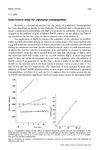
November 1971 in “Clinica Chimica Acta” The document concludes that measuring γ-glutamyl transpeptidase activity is more accurate with a higher substrate concentration and using diluted acetic acid to stop the reaction.