20 citations
,
January 2002 in “Laboratory Animals” Mutations in the hairless gene cause hair loss and skin cysts in rhesus macaques.
 May 2026 in “Nature Communications”
 H3K9me3 is crucial for proper skin development and structure.
28 citations
,
November 2018 in “Journal of cellular physiology” miR-124 helps mouse hair follicle stem cells become nerve cells by blocking Ptbp1 and Sox9.
1 citations
,
April 2010 in “Digital WPI” CLK1 is needed for skin cells to become epidermal cells but not sebocytes.
3 citations
,
July 2022 in “Brain and Behavior” The HtrA1L364P mutation causes brain dysfunction and blood vessel damage.
 1 citations
,
January 2015 in “Journal of clinical and investigative dermatology”
1 citations
,
January 2015 in “Journal of clinical and investigative dermatology” IGF-1 from human placenta helps hair grow.
 5 citations
,
October 2019 in “The journal of investigative dermatology/Journal of investigative dermatology”
5 citations
,
October 2019 in “The journal of investigative dermatology/Journal of investigative dermatology” The research linked PLCD1 gene variants to the development of trichilemmal cysts.
9 citations
,
June 2019 in “Cell cycle/Cell cycle (Georgetown, Tex. Online)” A specific RNA increases hair stem cell growth and skin healing by affecting a protein through interaction with a microRNA.
 August 2004 in “Journal of the American College of Surgeons”
 Several genes, including Hox-7A, Stra6, and Lim-1, are involved in normal palate formation.
26 citations
,
August 2009 in “Journal of Pediatric Gastroenterology and Nutrition” Hoyeraal-Hreidarsson syndrome in infants causes severe gastrointestinal issues.
Mutations in the hairless protein gene cause hair loss.
 17 citations
,
January 2011 in “The Korean Journal of Hepatology”
17 citations
,
January 2011 in “The Korean Journal of Hepatology” Vogt-Koyanagi-Harada disease can develop during interferon therapy for chronic hepatitis C.
15 citations
,
January 1991 in “Mammalian Genome” 1 citations
,
October 2023 in “BMC Genomics” miRNAs in the Dlk1-Gtl2 region may improve lamb fur quality.
1 citations
,
July 2007 in “Journal of Investigative Dermatology” The mutation causes hairless mice due to mislocalized and dysfunctional HR protein.
 4 citations
,
October 2022 in “International Journal of Molecular Sciences”
4 citations
,
October 2022 in “International Journal of Molecular Sciences” Thy-1 protein helps improve blood flow and wound healing in the skin.
37 citations
,
June 2000 in “Experimental dermatology” The Lanceolate hair-J mutation in mice mimics human hair disorders like Netherton's syndrome.
January 2025 in “Biochemical Pharmacology” Peficitinib can turn human fibroblasts into cells that help grow hair.
47 citations
,
April 2000 in “Experimental Dermatology” A new gene mutation causes a rare type of hair loss.
 January 2017 in “Journal of clinical & experimental dermatology research”
 Scientists have found a way to create hair follicles from human stem cells, which could potentially be used to treat hair loss.
52 citations
,
October 1995 in “Experimental Cell Research” Human hair keratin genes hHa2 and hHb1 are located on chromosomes 17 and 12.
November 2022 in “Journal of Investigative Dermatology” ILC1-like cells can cause alopecia areata by themselves.
 26 citations
,
August 2019 in “Stem Cell Research & Therapy”
26 citations
,
August 2019 in “Stem Cell Research & Therapy” PBX1 helps hair stem cells grow and change by turning on certain cell signals and preventing cell death, which may be useful for hair regrowth treatments.
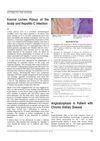
Patients with lichen planus should be tested for hepatitis C.
28 citations
,
May 2015 in “Molecular Neurobiology” LSD1 is crucial for regenerating hair cells in zebrafish.
 November 2022 in “The journal of investigative dermatology/Journal of investigative dermatology”
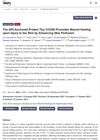
 The STRIPAK complex is crucial for skin cell organization and creating a functional skin barrier.
43 citations
,
December 1993 in “Annals of internal medicine” Flutamide, a medication used for excessive hair growth, can cause severe liver damage in women.
8 citations
,
July 2023 in “Inflammation and Regeneration” ALKBH5 helps wounds heal faster by stabilizing PELI2 mRNA.
99 citations
,
February 2023 in “Cellular and Molecular Immunology” 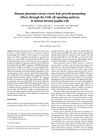 20 citations
,
August 2015 in “International Journal of Molecular Medicine”
20 citations
,
August 2015 in “International Journal of Molecular Medicine” Human placental extract may help hair growth by affecting certain cell signals and could be more effective with minoxidil.