August 2022 in “Biomedicines” Turning off the Lhx2 gene in mouse embryos leads to slower wound healing and scars.
2 citations
,
April 1970 in “Archives of Dermatology” Ichthyosis serpentina may be a variant linked to bamboo hair, with a possible genetic component.
 24 citations
,
November 1978 in “Biochemistry”
24 citations
,
November 1978 in “Biochemistry” α-type filaments in guinea pig hair follicles have unique structural features.
 2 citations
,
August 2023 in “Development”
2 citations
,
August 2023 in “Development” Hair follicles in the back of the rosette fancy mouse have reversed orientations due to a gene mutation.
 4 citations
,
January 2018 in “International Journal of Trichology”
4 citations
,
January 2018 in “International Journal of Trichology” A rare genetic disease causes sparse hair and early blindness due to a gene mutation.
15 citations
,
January 2024 in “Chemical Engineering Journal”  19 citations
,
November 2017 in “Journal of Pharmaceutical Sciences”
19 citations
,
November 2017 in “Journal of Pharmaceutical Sciences” A new gel containing minoxidil can treat hair loss effectively, potentially reducing side effects and improving treatment.
11 citations
,
November 2011 in “The Journal of Dermatology” Connexin-26 gene mutations may increase cancer risk in KID syndrome patients.

Blocking CXCR4 may help treat hidradenitis suppurativa.
November 2016 in “The Molecular Biology Society of Japan” June 2022 in “Dermatologic Therapy” Oral minoxidil and growth factors improved hair density and thickness in a girl with hereditary hair loss.
10 citations
,
June 2023 in “Preprints.org” Hydrogel-forming microneedles are a safe and effective method for delivering drugs through the skin.
 29 citations
,
April 2020 in “Biomolecules”
29 citations
,
April 2020 in “Biomolecules” The 3D scaffold helped maintain hair cell traits and could improve hair loss treatments.
January 2016 in “Frontiers in Bioengineering and Biotechnology” Keratin-based hydrogels can be improved for medical use by adding PEG, making them more soluble and adjustable.
A new genetic mutation was found causing hair and eye issues in a boy.

A young athlete's fragile hair condition improved by cutting hair and using gentle shampoo.
 April 2017 in “IOSR journal of dental and medical sciences”
 Netherton Syndrome is a non-treatable genetic disorder in children causing skin, hair, and allergy issues.
4 citations
,
April 1989 in “The Journal of Dermatology” Trichohyalin granules help inner root sheath cells in hair follicles harden by integrating with keratin filaments.
 32 citations
,
February 1998 in “The journal of investigative dermatology/Journal of investigative dermatology”
32 citations
,
February 1998 in “The journal of investigative dermatology/Journal of investigative dermatology” Two specific hair keratin genes are active during hair growth and decline as hair transitions to rest.
 September 2025 in “Crystal Growth & Design”
 Different solvents change minoxidil crystal shapes and improve flowability.
 January 2009 in “The Year book of dermatology”
 Ludwig pattern hair loss results from varying androgen sensitivity, causing fewer thick hairs and more thin hairs.
 6 citations
,
May 2013 in “PloS one”
6 citations
,
May 2013 in “PloS one” The Foxn1(-/-) nude mouse shows disrupted and expanded skin stem cell areas due to high Lhx2 levels.
 January 2026 in “Cosmoderma”
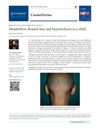
 A 9-year-old girl has a rare hair disorder causing beaded, sparse hair.
 4 citations
,
January 2014 in “Indian dermatology online journal”
4 citations
,
January 2014 in “Indian dermatology online journal” Monilethrix is a genetic hair disorder causing fragile, beaded hair with no effective treatment.
July 2024 in “Journal of Investigative Dermatology”  June 2026 in “Research Square”
 THBS4 helps hair grow by activating hair follicle stem cells.
 April 2016 in “Journal of Investigative Dermatology”
 Lymphoid-specific helicase (Lsh) is crucial for skin growth, change, and healing after injury.
74 citations
,
October 2012 in “The American Journal of Human Genetics” Mutations in the HOXC13 gene cause hair and nail development issues.
December 2025 in “ILDS-DEV” 40 citations
,
November 1966 in “Archives of Dermatology” Trichorrhexis nodosa is mainly caused by hair trauma and improves with gentler hair care.