 29 citations
,
July 2010 in “Journal of Cutaneous Medicine and Surgery”
29 citations
,
July 2010 in “Journal of Cutaneous Medicine and Surgery” Treatments for Frontal Fibrosing Alopecia have not been proven effective.
 March 2026 in “Egyptian Journal of Forensic Sciences”
 Unified regulations and ethical guidelines are needed for fair use of forensic DNA phenotyping.
June 2026 in “Journal of Cosmetic Dermatology” FFA patients have higher metal levels in hair, possibly linked to product use.
 3 citations
,
October 2021 in “Indian Journal of Plastic Surgery”
3 citations
,
October 2021 in “Indian Journal of Plastic Surgery” Follicular unit extraction is a hair transplant method that can leave small scars and uses various tools for harvesting hair from different body parts.
1 citations
,
November 2022 in “International journal of molecular sciences” Human fetal placental stromal cell injections speed up healing and improve skin and hair recovery after radiation damage.
December 2025 in “Actas Dermo-Sifiliográficas” Use a combination of oral dutasteride, topical treatments, and hydroxychloroquine to manage frontal fibrosing alopecia.
 21 citations
,
October 2017 in “Journal of the European Academy of Dermatology and Venereology”
21 citations
,
October 2017 in “Journal of the European Academy of Dermatology and Venereology” Various potential triggers may be causing the rise in frontal fibrosing alopecia, and avoiding these could help stop the disease's increase.
 8 citations
,
December 2017 in “Journal of The American Academy of Dermatology”
8 citations
,
December 2017 in “Journal of The American Academy of Dermatology” The authors updated the criteria for diagnosing frontal fibrosing alopecia, making it easier to diagnose without a biopsy.
 2 citations
,
July 2021 in “JAAD Case Reports”
2 citations
,
July 2021 in “JAAD Case Reports” Trichoscopy of the beard is useful for diagnosing frontal fibrosing alopecia in men.
September 2025 in “Brazilian Journal of Health Review” Early diagnosis and less aggressive hair care improve outcomes for Black women with frontal fibrosing alopecia.
 July 2024 in “Iranian journal of pathology”
 Frontal fibrosing alopecia mainly affects women over 50, causing hair loss and specific skin changes.
A skin model using hair and skin cells can mimic human skin for research.
 13 citations
,
August 2002 in “Dermatologic Surgery”
13 citations
,
August 2002 in “Dermatologic Surgery” FUE is a less invasive hair transplant method suitable for many patients, but it has limitations and may not replace traditional techniques.
5 citations
,
April 2021 in “Journal of Academic Research in Medicine” FAI is a reliable marker for identifying and monitoring hyperandrogenism in obese adolescent females with PCOS.
 November 2023 in “Indian Journal of Dermatology”
 The study found that Frontal Fibrosing Alopecia in North-East India mainly affects middle-aged women and is often associated with lichen planus pigmentosus.
 42 citations
,
September 2007 in “The Journal of Clinical Endocrinology and Metabolism”
42 citations
,
September 2007 in “The Journal of Clinical Endocrinology and Metabolism” The research found that polycystic ovary syndrome (PCOS) has two distinct types, with one having more severe hormone and insulin issues.
 April 2023 in “Journal of Investigative Dermatology”
 Radiation treatment causes skin fibrosis by increasing certain fibroblast subpopulations, but using a c-Jun inhibitor or fat grafting can reduce this effect.
 153 citations
,
August 2002 in “Dermatologic Surgery”
153 citations
,
August 2002 in “Dermatologic Surgery” Follicular Unit Extraction (FUE) is a less invasive hair transplant method with minimal scarring, suitable for about 60% of patients, especially those needing fewer grafts and quicker recovery.
8 citations
,
September 2023 in “Skin Research and Technology” High-frequency ultrasound improves diagnosis accuracy for most subcutaneous lesions.
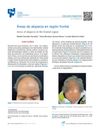 January 2025 in “Revista del Centro Dermatológico Pascua”
 Early diagnosis and treatment can help manage fibrosing alopecia in older women.
October 2024 in “Benha Journal of Applied Sciences” Frontal fibrosing alopecia is a complex condition with no definitive treatment.
 6 citations
,
June 2019 in “International Journal of Dermatology”
6 citations
,
June 2019 in “International Journal of Dermatology” Frontal fibrosing alopecia has occurred in two related male families.
 September 2024 in “Cutis”
 Sunscreen use may increase the risk of frontal fibrosing alopecia.
 March 2024 in “Journal of cosmetic dermatology”
 Isotretinoin can effectively reduce symptoms of frontal fibrosing alopecia.
 40 citations
,
January 2013 in “International journal of trichology”
40 citations
,
January 2013 in “International journal of trichology” Perifollicular erythema can indicate active frontal fibrosing alopecia.
 March 2024 in “Frontiers in genetics”
 Different types of fibroblasts play specific roles in wound healing and cancer, which could help improve treatments.
July 2024 in “Journal of Investigative Dermatology” Human hair follicles have their own thyroid hormone system.
29 citations
,
January 2020 in “Frontiers in endocrinology” Fibrodysplasia ossificans progressiva is a rare genetic disorder that causes extra bone growth and symptoms of premature aging.
 30 citations
,
December 2017 in “Journal of The American Academy of Dermatology”
30 citations
,
December 2017 in “Journal of The American Academy of Dermatology” New criteria for diagnosing frontal fibrosing alopecia include specific scalp and eyebrow hair loss as major factors and other hair loss areas and hair analysis as minor factors.
 April 2026 in “Microorganisms”
 SCFF may help promote hair growth and scalp health.