 11 citations
,
June 2012 in “Acta histochemica”
11 citations
,
June 2012 in “Acta histochemica” Mice with a Gsdma3 gene mutation have thicker skin and longer hair follicle openings due to increased β-catenin levels.
February 2023 in “Clinical, Cosmetic and Investigational Dermatology” Higher leptin and lower vitamin D levels may contribute to male pattern baldness.
June 2025 in “Molecular Genetics & Genomic Medicine” Severe genetic variants in children with a specific adrenal condition match predicted symptoms well, but milder variants do not.
7 citations
,
February 2020 in “Clinical and Experimental Dermatology” Both HLA-B and MICA are independently linked to alopecia areata.
24 citations
,
November 1997 in “Journal of Biological Chemistry” Mouse high-glycine/tyrosine proteins have distinct patterns in hair follicles, peaking at specific hair cycle days.
 126 citations
,
January 2010 in “British Journal of Dermatology”
126 citations
,
January 2010 in “British Journal of Dermatology” Baldness is more common in Chinese men than women, increasing with age, and is influenced by genetics.
 2 citations
,
March 2023 in “3C Empresa Investigación y pensamiento crítico”
2 citations
,
March 2023 in “3C Empresa Investigación y pensamiento crítico” Alopecia areata patients have higher IFN-γ and low vitamin D3 levels.
 26 citations
,
May 2013 in “British Journal of Dermatology”
26 citations
,
May 2013 in “British Journal of Dermatology” Hair loss risk is influenced by multiple genes.
15 citations
,
September 2023 in “International Journal of Microbiology Research” AMH is a promising biomarker for diagnosing PCOS.
 October 2024 in “Journal of the Endocrine Society”
 Certain genetic variants reduce enzyme activity, contributing to non-classic congenital adrenal hyperplasia.
18 citations
,
March 2010 in “Therapeutic Drug Monitoring” A new method quickly detects alcohol use from hair in under an hour.
June 2025 in “Medical Science Journal for Advance Research” Higher levels of MIG and IP-10 may help diagnose and monitor Alopecia Areata.
 18 citations
,
February 2014 in “PubMed”
18 citations
,
February 2014 in “PubMed” Androgenetic alopecia is a common hair loss condition caused by testosterone effects on hair follicles, leading to thinner, shorter, and less pigmented hair, diagnosed using scalp dermoscopy and treated with topical minoxidil, antiandrogen agents, and 5-alpha reductase inhibitors.
15 citations
,
December 2018 in “International journal of environmental research and public health/International journal of environmental research and public health” EGCG may help treat alopecia areata by blocking certain immune responses and reducing specific harmful immune cells.
 72 citations
,
March 2005 in “British Journal of Dermatology”
72 citations
,
March 2005 in “British Journal of Dermatology” AGA can occur in children with family history; early diagnosis and treatment important.
7 citations
,
December 2016 in “Journal of the American Academy of Dermatology” NKG2D+CD4+ T cells are higher in alopecia areata patients and may be involved in the disease.
February 1989 in “PubMed” A genetic hair protein variant is more common in Japanese people and is inherited.
December 2021 in “Benha Journal of Applied Sciences” Higher Alarin levels may predict androgenetic alopecia and metabolic syndrome.
December 2025 in “ILDS-DEV” 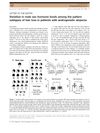 March 2017 in “Journal of Dermatology”
 Different hair loss patterns may be linked to varying male hormone levels.
 October 2025 in “JEADV Clinical Practice”
 GLP-1 receptor agonists may increase the risk of a specific type of hair loss called androgenetic alopecia.
 32 citations
,
July 2020 in “Journal of The American Academy of Dermatology”
32 citations
,
July 2020 in “Journal of The American Academy of Dermatology” AGA linked to worse COVID-19 outcomes in men.
February 2023 in “Research Square (Research Square)” Autologous Cellular Micrografts effectively treat hair loss with significant improvements and no dangerous side effects.
December 2022 in “Sri Lanka Journal of Diabetes Endocrinology and Metabolism” Early hair loss in young men is linked to higher risk of metabolic syndrome.
24 citations
,
January 2019 in “Hormone Research in Paediatrics” Hair cortisol levels in children are influenced by puberty, age, gender, and body mass index.
Lower serum irisin levels are linked to androgenetic alopecia but not to insulin resistance.
 34 citations
,
March 1999 in “Journal of The European Academy of Dermatology and Venereology”
34 citations
,
March 1999 in “Journal of The European Academy of Dermatology and Venereology” Bald men may have higher heart disease risk.
56 citations
,
January 1999 in “The Analyst” The method accurately measures certain steroids in human hair, showing different levels in males and females.
 3 citations
,
January 1992 in “Gynecological Endocrinology”
3 citations
,
January 1992 in “Gynecological Endocrinology” 3α, 17β-androstanediol-glucuronide is not a useful marker for androgen excess but may help monitor certain treatments.
 June 2006 in “American Journal of Epidemiology”
 Long-term diabetes is linked to lower prostate cancer risk.