 16 citations
,
May 1982 in “Postgraduate Medical Journal”
16 citations
,
May 1982 in “Postgraduate Medical Journal” Minoxidil can cause pericardial and pleural effusions with high protein content.
1 citations
,
March 2004 in “Patty's Toxicology” These chemicals can be toxic and cause health issues like irritation, liver damage, and cancer.
49 citations
,
January 1991 in “Food and chemical toxicology” Different zinc compounds cause varying levels of skin irritation in animals.
 88 citations
,
February 2008 in “Journal of Medicinal Chemistry”
88 citations
,
February 2008 in “Journal of Medicinal Chemistry” Scientists made the first metal-based compounds from a nonsteroidal antiandrogen drug, which showed potential in fighting both hormone-dependent and independent prostate cancer cells.
8 citations
,
January 1991 in “Soviet physics. Doklady”  October 2025 in “Journal of Molecular Structure”
 Hyaluronic acid microneedles help deliver minoxidil derivatives effectively for hair regrowth.
June 2015 in “Reactions weekly” December 2012 in “Reactions weekly” 17 citations
,
January 2013 in “International Journal of Cosmetic Science” Higher metal levels in hair are linked to poorer perceived hair health.
 20 citations
,
May 2023 in “Biological Trace Element Research”
20 citations
,
May 2023 in “Biological Trace Element Research” Daily intake of 0.5 or 5 mg cobalt ferrite nanoparticles can harm lungs through oxidative and inflammatory stress.
3 citations
,
June 2021 in “Actas Dermo-Sifiliográficas” Dermoscopy can effectively identify Malassezia folliculitis.
 December 2020 in “Dermatología argentina”
 Low-dose oral minoxidil effectively treats male pattern baldness.
March 2023 in “Clinical Toxicology” September 2011 in “Daehan miyong hakoeji” Henna orange powder, especially with alkali, protects and colors hair better than oxidizing colorants.
7 citations
,
February 2024 in “ACS Applied Materials & Interfaces” A new light-activated treatment speeds up healing of infected wounds without antibiotics.
1 citations
,
September 2008 in “International Journal of Cosmetic Science” Using chelants in hair dye reduces fiber damage by preventing harmful radicals.
 July 2012 in “Hair transplant forum international”
 Lifestyle choices like stress, smoking, heavy drinking, sun exposure, and chemical hair treatments might speed up hair loss in people with androgenetic alopecia.
 1 citations
,
December 2022 in “Middle East Journal of Science”
1 citations
,
December 2022 in “Middle East Journal of Science” Permanent hair dyes use chemicals that react with hydrogen peroxide to create color.
January 2003 in “Dialnet (Universidad de la Rioja)” The study found ways to create important compounds for male health from olive waste.
2 citations
,
January 1975 in “Archives of Dermatological Research” Certain enzymes react strongly with some hormones in rat skin during hair growth, mainly in sebaceous glands and hair sheaths.
 28 citations
,
November 2020 in “Fluid Phase Equilibria”
28 citations
,
November 2020 in “Fluid Phase Equilibria” Minoxidil dissolves better in propylene glycol + water than in supercritical CO2.
 January 2026 in “Beilstein Journal of Organic Chemistry”
 A new, efficient method creates sulfinimidate esters from sulfenamides and alcohols without metals.
 4 citations
,
May 2020 in “Medicine in Drug Discovery”
4 citations
,
May 2020 in “Medicine in Drug Discovery” The study developed a method to detect minoxidil and its sulfate form, found that minoxidil sulfate is temperature-sensitive, and identified a way to potentially increase its stability for hair loss treatment.
 May 2013 in “Reactions Weekly”
 Using minoxidil can cause severe skin reactions in some people.
May 2026 in “Advanced Materials Interfaces” The new coating protects and strengthens hair while improving its properties.
December 2025 in “Brazilian Journal of Chemical Engineering”  12 citations
,
February 2010 in “Tetrahedron Letters”
12 citations
,
February 2010 in “Tetrahedron Letters” New minoxidil compounds with better water solubility were made, but their full effects and safety need more research.
 11 citations
,
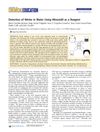
June 2013 in “Journal of Chemical Education”
11 citations
,
June 2013 in “Journal of Chemical Education” Minoxidil detects nitrite in water, creating a simple, cheap test.
217 citations
,
February 2009 in “The FASEB Journal” Gray hair is caused by hydrogen peroxide buildup, which damages hair color repair.
 January 2025 in “New Journal of Chemistry”
 Hollow mesoporous organosilica nanoparticles are promising for biomedical use.