1 citations
,
December 2011 in “Arzneimittelforschung” CB-03-04 shows promise as a treatment for prostate issues due to its strong anti-androgen effects.
9 citations
,
August 2023 in “Molecules” Two peptides, RMYYY and VMYMI, may be effective anti-inflammatory drugs.
June 2025 in “Academic Medical Journal” Restoring hair follicle immune privilege may help treat alopecia areata.
November 2022 in “Journal of Investigative Dermatology” NCSTN gene mutation causes abnormal skin cell differentiation and more inflammation, contributing to Hidradenitis Suppurativa.
Retinoids or their analogs could treat skin pigmentation disorders like melasma and vitiligo.
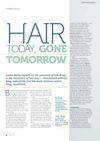 January 2016 in “Chemistry & Industry”
 Two drugs, tofacitinib and ruxolitinib, may help regrow hair by activating hair follicles.
 62 citations
,
March 2013 in “JAMA Dermatology”
62 citations
,
March 2013 in “JAMA Dermatology” Finasteride reduces Hidradenitis Suppurativa flare-ups in children and teens, but long-term safety is unknown.
 February 2026 in “Journal of Nanobiotechnology”
 A new treatment using a special gel with miR-665 reduces inflammation and helps hair regrow in alopecia areata.
 28 citations
,
January 2012 in “Biological & pharmaceutical bulletin”
28 citations
,
January 2012 in “Biological & pharmaceutical bulletin” Hairless protein can both repress and activate vitamin D receptor functions, affecting gene regulation.
 March 2025 in “FEBS Journal”
 Epiprofin suppresses parathyroid hormone gene activity, helping regulate calcium levels and could be a treatment target for hyperparathyroidism.
Self-assembling peptide hydrogels effectively deliver drugs locally, enhancing treatment and reducing side effects.
 1 citations
,
June 2021 in “Biomolecules & Therapeutics”
1 citations
,
June 2021 in “Biomolecules & Therapeutics” Activating δ-opioid receptors can help hair grow.
245 citations
,
January 2010 in “Blood” Antihepcidin antibodies may treat inflammation-induced anemia by improving iron metabolism.
 137 citations
,
September 2005 in “Proceedings of the National Academy of Sciences of the United States of America”
137 citations
,
September 2005 in “Proceedings of the National Academy of Sciences of the United States of America” The HR protein helps hair grow by blocking a hair growth inhibitor, aiding in hair follicle regeneration.
The research developed new fortilin protein constructs for potential heart disease treatments.
November 2020 in “Journal of the American Academy of Dermatology” Intense pulsed light with radiofrequency showed mixed results in improving quality of life for hidradenitis suppurativa patients, with no clinical improvements.
May 2026 in “Journal of Medicinal Chemistry” dAR-6–1 is a promising new treatment for hair loss that works better than minoxidil.
January 2026 in “ACS Applied Bio Materials” A new treatment using nanoliposomes can improve hair regrowth in androgenetic alopecia.
 April 2015 in “Andrology”
 HNG may help prevent the negative effects of chemotherapy on sperm production and white blood cell counts.
April 2019 in “Journal of Investigative Dermatology” Blocking LFA-1 prevents hair loss in mice.
April 2025 in “Frontiers in Pharmacology” Canagliflozin helps overcome progestin resistance in certain endometrial cancer cells.
 January 2025 in “Clinical and Translational Medicine”
 A specific RNA can help hair growth in baldness by boosting stem cell activity.
10 citations
,
September 2021 in “The FASEB Journal” ACKR2 helps prevent skin scarring and hair loss by controlling inflammation.
 3 citations
,
October 2018 in “Archives of Dermatological Research”
3 citations
,
October 2018 in “Archives of Dermatological Research” Applying InlB321/15 to wounds sped up healing in mice.
Lnc056 helps hair follicle stem cells grow by increasing TRIP6 expression.
 June 2024 in “Journal of Clinical Oncology”
 The combination of TACE and Donafenib is effective and tolerable for treating unresectable liver cancer.
 May 2023 in “International Journal of Trichology”
 Tofacitinib may be an effective and safe treatment for hair loss in teenagers with alopecia areata.
March 2026 in “Food Science & Nutrition” Arachis hypogaea L. root extract reduces prostate enlargement and inflammation in mice.
Tofacitinib and low-dose IL-2 may help maintain hair regrowth in alopecia areata without ongoing treatment.