 April 2019 in “Journal of Investigative Dermatology”
 The research found that certain characteristics like age, sex, race, marital status, and education level can influence whether alopecia patients stick to their hair loss treatment with topical minoxidil.
 21 citations
,
March 2021
21 citations
,
March 2021 Oral minoxidil effectively treats hair loss, with women needing lower doses (0.25 to 2.5 mg daily) and men needing higher doses (1.25 to 5 mg daily).
21 citations
,
March 2005 in “PubMed” Topical minoxidil and finasteride help treat male baldness, while women benefit from antiandrogens and minoxidil.
 2 citations
,
August 2019 in “PubMed”
2 citations
,
August 2019 in “PubMed” A specific enzyme that activates the hair growth medication minoxidil when applied to the skin was identified.
 January 2024 in “JCPSP. Journal of the College of Physicians & Surgeons Pakistan”
 PRP therapy is more effective than minoxidil for treating hair loss from androgenetic alopecia.

Finasteride can help with hair loss but may cause mental health issues like depression and anxiety.
![Minoxidil and Its Use in Hair Disorders: A Review [Corrigendum]](/images/assets/d5b5fb1b-96a4-4e61-a554-3fe9a1f78497/small/11472.jpg) 1 citations
,
February 2020 in “Drug Design Development and Therapy”
1 citations
,
February 2020 in “Drug Design Development and Therapy” Low-dose Minoxidil combined with Spironolactone helps reduce hair loss and improve hair density in women, with some mild side effects.
 12 citations
,
September 2018 in “Dermatologic Therapy”
12 citations
,
September 2018 in “Dermatologic Therapy” Daily low-dose aspirin lowers minoxidil's effectiveness for hair loss treatment.
 1 citations
,
September 2002 in “PubMed”
1 citations
,
September 2002 in “PubMed” Minoxidil helps stimulate hair growth and reduce hair loss in women with androgenic alopecia.
September 2019 in “Case medical research” 1 citations
,
November 2021 in “CRC Press eBooks” Common hair loss in men can be treated with minoxidil or finasteride.
January 2017 in “Faculty of 1000 Research Ltd” Oral minoxidil significantly reduces hair shedding in women with chronic telogen effluvium.
 April 2016 in “Journal of Investigative Dermatology” May 2021 in “IP Indian journal of clinical and experimental dermatology”
 Adding PRP to minoxidil improves hair growth in male pattern baldness.
24 citations
,
November 1992 in “Archives of Dermatology” Prednisone can regrow hair in alopecia areata, and minoxidil helps maintain it.
January 2026 in “Dermatologic Therapy” FOL100 lotion is safe and effective for increasing hair growth in men with male pattern baldness.
 June 2025 in “ACS Biomaterials Science & Engineering”
 A new method using hydrogels and microneedle patches improves minoxidil delivery for better hair growth.
 May 2024 in “Medical Journal Armed Forces India/MJAFI”
 Both low-level light therapy and 5% minoxidil are effective and safe for treating male hair loss, with no significant difference in results.
 April 2016 in “Journal of Investigative Dermatology”
 Using a stimulating cream shampoo before applying Minoxidil helps it penetrate hair follicles better, enhancing its hair growth-promoting effect.

AGA causes permanent hair loss; women use 2% minoxidil, men use 1 mg finasteride daily.
5 citations
,
January 2016 in “Surgical and Cosmetic Dermatology” 22 citations
,
July 2003 in “PubMed” Finasteride 1 mg significantly improves hair growth in men aged 41 to 60 with male pattern hair loss.
 1 citations
,
August 2019 in “Pediatric dermatology”
1 citations
,
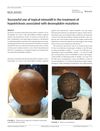
August 2019 in “Pediatric dermatology” Topical minoxidil helped an 8-year-old boy with a genetic hair disorder grow hair.
June 2026 in “EP Europace” Minoxidil and finasteride for hair loss may cause different types of heart rhythm issues.

CG2001 is safe, well-tolerated, and a promising treatment for hair loss with fewer side effects.
April 2023 in “Dermatology and therapy” Most patients stop using topical minoxidil due to side effects.
 15 citations
,
January 2000 in “Japanese Heart Journal”
15 citations
,
January 2000 in “Japanese Heart Journal” A man developed heart problems after using a baldness treatment for 4 months, suggesting that people with heart issues should avoid this treatment.
 July 2025 in “Journal of Investigative Dermatology”
 Minoxidil may improve nail growth and appearance.
July 2026 in “Journal of the American Academy of Dermatology” Most young patients found oral minoxidil helpful for hair loss and were willing to continue using it.
 17 citations
,
May 1998 in “Contact Dermatitis”
17 citations
,
May 1998 in “Contact Dermatitis” Minoxidil can cause pustular allergic reactions on skin.