
Search
forProducts matching "hims topical"
Tracking 12 products like 17 Topical minoxidil solution, 14 Topical Finasteride & Minoxidil Spray, 29 Topical Finasteride and Minoxidil Gel, 26 Thick Fix Thickening Conditioner and 24 Thick Fix Thickening Shampoo from by companies like Hims. View all 12 products »
Sort by
Research
180-210 / 1000+ results 
research Topical cetirizine for the management of androgenic alopecia: Results of a pilot study
Topical cetirizine may help increase hair length in male pattern baldness and could be an alternative to minoxidil with fewer side effects.
research Effectiveness and safety of triple-diode laser with or without adjunctive topical eflornithine in female hirsutism
Adding topical eflornithine improves laser hair removal results.
research Ex-Vivo Evaluation of Eflornitine Hydrochloride Loaded Solid Lipid Microparticles Based Cream
The EFH-SLM cream is more effective and gentler for treating excessive hair growth in women.

research Therapeutic and skincare products used in hirsutism and hypertrichosis
Prescription tablets treat hirsutism, while over-the-counter foams treat hypertrichosis.

research Oral Drug as Effective as Topical Cream for Male Pattern Baldness
Oral minoxidil works as well as topical minoxidil for male pattern baldness.
research Facial Hidradenitis Suppurativa in a 28-Year-Old Male Responding to Finasteride
Finasteride helped treat a 28-year-old's facial skin condition.
research Enhanced hair follicle accumulation and androgenetic alopecia treatment of finasteride by topical nanoparticles hydrogel system
A new topical finasteride gel using nanoparticles shows promise for safe and effective hair regrowth.
research The Therapeutic Use of Topical Minoxidil
Minoxidil effectively treats hair loss, with better results in women.
research Drug points: Topical minoxidil for common baldness
Topical minoxidil can help regrow hair in people with common baldness.
research Topical Minoxidil Therapy for Androgenetic Alopecia
Topical minoxidil may not improve the appearance of balding men, according to a letter in this document.
research Topical Minoxidil for Androgenetic Alopecia: Optimizing the Chance for Success by Appropriate Patient Selection
Minoxidil works for 56% of balding men with specific criteria.
research A Case of Allergic Contact Dermatitis Due to Topical Minoxidil
A man got a skin allergy from using a hair growth product called minoxidil.

research Faculty Opinions recommendation of Efficacy of the association of topical minoxidil and topical finasteride compared to their use in monotherapy in men with androgenetic alopecia: A prospective, randomized, controlled, assessor blinded, 3-arm, pilot trial.
Using both minoxidil and finasteride together on the scalp works better for male hair loss than using either one alone.
research FORMULATION AND EVALUATION OF TOPICAL GEL CONTAINING HAIR GROWTH PROMOTERS FOR THE TREATMENT OF ANDROGENIC ALOPECIA
The emulgel formulation F6 released more Minoxidil than the gel formulation F1.
research 77034 Efficacy and safety outcomes of oral minoxidil versus topical minoxidil in patients undergoing follicle unit extraction

research Controlled Release of Minoxidil through Hydrogel Cross-Linking to Treat Androgenetic Alopecia
A new method using hydrogels and microneedle patches improves minoxidil delivery for better hair growth.
research Hair disorders update: Alopecia to hirsutism
New treatments for hair loss and excessive hair growth show promise with few side effects and advancements in laser technology.

research Back cover
A new treatment using special microneedles and a nitric oxide-releasing drug could improve hair growth and be more convenient for people with hair loss.
research Topically Applied Minoxidil in Baldness
Minoxidil helps hair growth, but results vary.
research Aktuelle Therapie der Hypertrichosen
Photothermolysis is the best method for permanent hair removal.

research Anti-androgens for the treatment of hirsutism
Different anti-androgen medications can help treat excessive hair growth, but the right choice depends on accurate diagnosis.
research Preparation and in vivo evaluation of lecithin-based microparticles for topical delivery of minoxidil
Lecithin-based microparticles can deliver minoxidil for hair growth effectively with less skin irritation.
research Efficacy and Safety of Topical Adenosine for Androgenetic Alopecia in Adults: A Systematic Review
Topical adenosine may effectively and safely treat hair loss.
research Topical minoxidil solution (1% and 5%) in the treatment of alopecia areata
Minoxidil solution helps hair regrowth in alopecia areata, with 5% being more effective.

research Minoxidil tópico o minoxidil oral en la alopecia. ¿Cuál es su elección?
Choose between topical and oral minoxidil for hair growth based on personal tolerance and side effects.

research Safety profile of topical spray minoxidil: An observational study
Topical minoxidil often causes side effects like scalp irritation, but most users continue treatment.
research Chitosan microparticles for sustaining the topical delivery of minoxidil sulphate
Chitosan microparticles improve minoxidil sulphate delivery, potentially reducing daily applications.
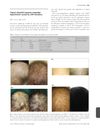
research Topical minoxidil improves congenital hypotrichosis caused by LIPH mutations
Applying minoxidil can help improve hair growth in people with hair loss caused by LIPH gene mutations.