 1 citations
,
August 2021 in “Journal of The American Academy of Dermatology”
1 citations
,
August 2021 in “Journal of The American Academy of Dermatology” Baricitinib helped improve hair, eyebrow, and eyelash growth in alopecia areata patients.
1 citations
,
November 2022 in “International journal of trichology” A girl with a rare skin condition improved after one month of treatment with acitretin.
3 citations
,
April 2017 in “Journal of Investigative Dermatology” Dermoscopy is useful for diagnosing facial actinic keratosis by identifying specific skin patterns.
 4 citations
,
January 2020 in “BioMed Research International”
4 citations
,
January 2020 in “BioMed Research International” Timosaponin BII, a plant extract, was found to promote hair growth in mice, similarly to minoxidil.
 April 2017 in “Journal of Investigative Dermatology” 3 citations
,
August 2020 in “Journal of cosmetic dermatology”
April 2017 in “Journal of Investigative Dermatology” 3 citations
,
August 2020 in “Journal of cosmetic dermatology” The scalp care solution with Timosaponin B-II improved scalp hydration, reduced dandruff, and helped prevent hair loss.
 4 citations
,
January 2023 in “Skin health and disease”
4 citations
,
January 2023 in “Skin health and disease” Blocking Janus kinase 1 helps stop inflammation and regrow hair, making it a good treatment for hair loss from alopecia areata.
1 citations
,
December 1971 in “PubMed”  April 2024 in “Authorea (Authorea)”
 Stopping heptaminol medication reversed hair color loss in a patient on dialysis.
 136 citations
,
April 2013 in “Clinical Cancer Research”
136 citations
,
April 2013 in “Clinical Cancer Research” The drug IPI-926 is safe at 160 mg daily and may help treat certain tumors, especially basal cell carcinoma.
 September 2025 in “Clinical Cosmetic and Investigational Dermatology”
 Kūlaris improved quality of life for acne sufferers without side effects.
23 citations
,
November 2018 in “International Journal of Molecular Sciences” Deoxyshikonin helps wounds heal faster in diabetic mice.
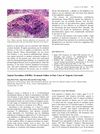 19 citations
,
September 2002 in “Acta dermato-venereologica”
19 citations
,
September 2002 in “Acta dermato-venereologica” Topical tacrolimus did not regrow hair in alopecia universalis patients.
 1 citations
,
May 2017 in “Journal of the American Academy of Dermatology”
1 citations
,
May 2017 in “Journal of the American Academy of Dermatology” Oral tofacitinib may be an effective and tolerable treatment for some people with severe alopecia areata.
1 citations
,
January 2025 in “Annals of Dermatology” Baricitinib is effective and safe for treating alopecia areata in Korea.
 3 citations
,
June 2023 in “Journal of cosmetic dermatology”
3 citations
,
June 2023 in “Journal of cosmetic dermatology” A new drug, abrocitinib, helped a child with severe hair loss regrow hair.
5 citations
,
April 2025 in “Journal of Cosmetic Dermatology” Janus kinase inhibitors are effective and safe for treating Alopecia Areata.
October 2021 in “International Journal of Dermatology” JAK inhibitors do not improve hair regrowth in androgenic alopecia but may prevent further hair loss.
4 citations
,
October 2024 in “Journal of the American Academy of Dermatology” Abrocitinib may help treat alopecia areata effectively with mild side effects.
1 citations
,
January 2024 in “Arab Board Medical Journal” Tofacitinib effectively regrows hair in alopecia areata patients, especially in younger individuals, with manageable side effects.
 July 2023 in “Clinical and Experimental Dermatology”
 Combining baricitinib with low-dose corticosteroids significantly improved severe hair loss in eight patients.
 February 2010 in “Journal of The American Academy of Dermatology”
 Posaconazole is a promising new treatment for toenail fungus.
13 citations
,
August 1999 in “Journal of Investigative Dermatology” Bikunin is found on the cell boundaries of certain skin layers and may help regulate skin and hair functions.
 April 2017 in “Journal of Investigative Dermatology”
 The document concludes that various topical treatments show promise for skin conditions like atopic dermatitis, psoriasis, and hair loss.
 3 citations
,
March 2020 in “International Journal of Dermatology”
3 citations
,
March 2020 in “International Journal of Dermatology” Tildrakizumab showed limited effectiveness in treating chronic alopecia areata in a small group of patients.
November 2025 in “JOURNAL OF EXPERIMENTAL ZOOLOGY INDIA” Thymol is a promising natural treatment for hair regrowth and inflammation in alopecia areata, performing better than betamethasone.
June 2026 in “ACS Applied Nano Materials” New microneedles may improve vitiligo treatment.
December 2024 in “The American Journal of Gastroenterology” Tofacitinib effectively treated both alopecia areata and Crohn's disease in a 12-year-old.
9 citations
,
April 2009 in “Dermatologic surgery” Infrared light might help treat stubborn alopecia areata.