 January 2025 in “Dermatology Review”
 Artefactual skin disorder involves self-inflicted skin lesions linked to mental health issues, needing combined medical and psychological treatment.
 January 2025 in “International Journal of Dermatology Research”
 Higher MPV and CRP levels may indicate more severe alopecia areata.
 January 2025 in “Annals of Thoracic and Cardiovascular Surgery”
 Removing the thymoma improved the patient's alopecia areata, suggesting a possible link between the two.
 January 2025 in “Exploratory Animal and Medical Research”
 Lithium carbonate and lead acetate together harm the heart more than individually.
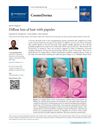 September 2024 in “Cosmoderma”
 The young man has complete hair loss and skin bumps, with no other health issues or family history.
 June 2024 in “Al- Anbar Medical Journal”
 Acute telogen effluvium can be resolved by addressing causes, but chronic telogen effluvium is harder to treat.
Toxoplasma gondii infection may increase testosterone levels in males.
 March 2024 in “International journal of life-sciences scientific research/SSR Institute of International Journal of Life Sciences”
 PCOS has many symptoms, with high androgen levels being the most common.
 February 2024 in “PloS one”
 Tofacitinib and adalimumab are promising treatments for cicatricial alopecia with few side effects.
 January 2024 in “La Ciencia al Servicio de la Salud y Nutrición”
 Spironolactone is effective and safe for treating hair loss, excessive hair growth, and acne.
Plasma gel and PRP treatments improve skin and hair with minimal side effects.
 December 2023 in “Curēus”
 Surgical removal of a scalp keratoacanthoma is effective and prevents recurrence, but hair may not regrow.
 December 2023 in “Revista de la Facultad de Ciencias Médicas (Quito)”
 Fever and rash can be early signs of lupus.
 September 2023 in “Cureus”
 Nails can reveal important health information about skin and body conditions.
 August 2023 in “Vittalle”
 Mais estudos são necessários para garantir a eficácia e qualidade dos tratamentos de alopecia com plantas medicinais.
 June 2023 in “Romanian Medical Journal”
 The case shows how hard it is to tell apart Multiple Autoimmune Syndrome from other similar autoimmune conditions, but correct diagnosis is key for treatment to work.
 June 2023 in “Benha Journal of Applied Sciences”
 Targeting IL-17 could help treat pattern hair loss.
 June 2023 in “International journal of pharmaceutical quality assurance”
 Videodermoscopy is effective for diagnosing different types of non-scarring hair loss.
 May 2023 in “PARIPEX INDIAN JOURNAL OF RESEARCH”
 Platelet-rich plasma is an effective and safe treatment for male pattern hair loss.
 February 2023 in “Indian Journal of Postgraduate Dermatology”
 The IADVL offers residents grants, scholarships, training, and learning resources for academic growth.
 January 2023 in “European endocrinology”
 People with alopecia have a higher risk of thyroid cancer.
 June 2022 in “Al-Azhar International Medical Journal /Al-Azhar International Medical Journal”
 Adding nano fat to hair transplants improves results for scar-related hair loss.
 May 2022 in “Gastroenterology”
 Targeting NETs may help reduce fibrosis in Crohn's disease.
 December 2021 in “Aegean journal of obstetrics and gynecology”
 A woman's male-like physical changes were caused by two rare ovarian conditions.
 October 2021 in “Dermatology Reports”
 Higher IL-17A levels indicate more severe alopecia areata.
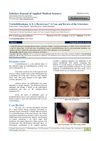 June 2021 in “Scholars journal of applied medical sciences”
 Trichofolliculoma, a rare benign hair follicle tumor, can potentially recur.
 May 2021 in “International journal of developmental research”
 Estrogens and progesterone are key in regulating melasma pigmentation.
 April 2021 in “Journal of Investigative Dermatology”
 Leontopodium alpinum extract may help reduce hair shedding by keeping hair in the growth phase longer.
 January 2021 in “International journal of basic and clinical pharmacology”
 Hydroxychloroquine is less effective than betamethasone oral mini pulse therapy for treating alopecia areata.
 December 2020 in “TURKDERM”
 A 3-year-old boy was diagnosed with a rare, non-scarring hair loss condition called temporal triangular alopecia.