 April 2023 in “Research Square (Research Square)”
 A young woman had a rare, aggressive ovarian tumor that was hard to diagnose and treat, leading to disease progression despite treatment.
 February 2026 in “Journal of the American Academy of Dermatology”
 Ophiasis mainly affects females, lasts longer, and has lower regrowth rates, with a new classification system helping predict treatment response.
 20 citations
,
January 2014 in “Journal of skin cancer”
20 citations
,
January 2014 in “Journal of skin cancer” Most people with basal cell carcinoma on their head or neck were 60-70 years old, and it often came back even after being fully removed, especially in certain areas and types.
5 citations
,
March 2013 in “Journal of Cutaneous Pathology” Granulomatous alopecia may be a distinct subtype of alopecia areata.
2 citations
,
June 2022 in “Life” A 14-year-old boy is the youngest person reported with a rare, benign tumor related to hair follicles, usually found in older people.
 March 2023 in “Human Pathology”
 Hair follicle counts and ratios are helpful in diagnosing hair loss types, but should be used with other specific features for accurate diagnosis.
10 citations
,
January 2017 in “Dermato-Endocrinology” Scarring folliculitis type of acne inversa is linked to specific symptoms and lifestyle factors like smoking and being overweight.
7 citations
,
April 2021 in “Journal of Lower Genital Tract Disease” Erosive lichen sclerosus is a distinct subtype with specific skin features, and treatment led to complete resolution in half of the cases.
 1 citations
,
March 2015 in “Journal of the European Academy of Dermatology and Venereology”
1 citations
,
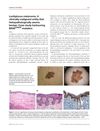
March 2015 in “Journal of the European Academy of Dermatology and Venereology” A clinically suspected melanoma appeared benign under the microscope but was confirmed by specific tests and a rare mutation.
September 2022 in “Scientific Reports” Scalp melanoma is more common and easier to diagnose early in people with androgenetic alopecia due to sun damage.
 26 citations
,
August 2013 in “Australasian Journal of Dermatology”
26 citations
,
August 2013 in “Australasian Journal of Dermatology” Certain scalp patterns can indicate the severity and activity of hair loss in Turkish alopecia patients.
 February 2025 in “Dermatology and Therapy”
 Alopecia areata incognita causes sudden hair loss but usually improves with topical steroids.
 September 2023 in “International Journal of Dermatology”
 Younger people are at a higher risk for Fibrosing Alopecia in a Pattern Distribution than previously thought, with common symptoms and possible involvement of mast cells in its development.
January 2026 in “International Journal of Dermatology” APKH in young males may signal early hair loss and needs early attention.
 January 2025 in “International Journal of Dermatology Research”
 Tailored combination therapy improves non-scarring alopecia outcomes.
 3 citations
,
January 2019 in “Annals of Dermatology”
3 citations
,
January 2019 in “Annals of Dermatology” The study concluded that careful examination is key to differentiate between lipidized fibrous histiocytoma and juvenile xanthogranuloma.
 3 citations
,
May 1999 in “Dermatologic Surgery”
3 citations
,
May 1999 in “Dermatologic Surgery” Dr. Connelly agrees that linear basal cell carcinomas might be more aggressive but highlights the study's lack of clear criteria to identify them.
 February 2009 in “Journal of The American Academy of Dermatology”
 The document concludes that detailed clinical descriptions of seven family cases help understand dominant dystrophic epidermolysis bullosa's symptoms and inheritance.
 1 citations
,
July 2018 in “Elsevier eBooks”
1 citations
,
July 2018 in “Elsevier eBooks” FAPD and possibly CCCA may be AGA subtypes, and treatments combining antiandrogens, hair growth agents, hair transplants, and anti-inflammatories could be effective.
 August 2021 in “Acta Haematologica Polonica”
 Folliculotropic mycosis fungoides has a worse prognosis than other types, with survival rates varying significantly based on subtype and organ involvement.
October 2021 in “Experimental Dermatology” Certain genes and proteins may help diagnose and treat primary cicatricial alopecia.
87 citations
,
March 2017 in “Journal of Clinical Investigation” PSENEN gene mutations can cause both Dowling-Degos disease and acne inversa.
January 2026 in “Dermatologic Therapy” Folliculotropic Mycosis Fungoides requires stage-based treatment, with early stages using skin therapies and advanced stages needing aggressive treatments.
 2 citations
,
January 2012 in “Journal of Cutaneous Pathology”
2 citations
,
January 2012 in “Journal of Cutaneous Pathology” The author clarifies that alopecia areata incognito and diffuse alopecia areata are different types of hair loss with unique symptoms and challenges in diagnosis.
4 citations
,
December 2021 in “Vestnik dermatologii i venerologii” Nonsurgical treatments for basal cell skin cancer are safe and effective.
5 citations
,
October 2019 in “JAAD Case Reports” These hair loss conditions might be part of a spectrum, not separate issues.
 January 2012 in “Yearbook of Dermatology and Dermatologic Surgery”
 The study concluded that a 'Swiss cheese' pattern in hair follicles is a useful sign for diagnosing alopecia areata.
 9 citations
,
August 2014 in “The Journal of Dermatology”
9 citations
,
August 2014 in “The Journal of Dermatology” Scalp areas that look normal in people with hair loss may still show signs of disease under a microscope.
 September 2024 in “Archives of Medical Science”
 Alopecia areata is linked to immune system differences, with specific biomarkers like CXCL9 and CXCL10 being key for diagnosis and potential treatment targets.
 9 citations
,
August 2017 in “Journal of comparative pathology”
9 citations
,
August 2017 in “Journal of comparative pathology” Trichoblastomas in rabbits are linked to uncontrolled embryonic hair growth and have distinct histological features.