 37 citations
,
May 1999 in “Australasian Journal of Dermatology”
37 citations
,
May 1999 in “Australasian Journal of Dermatology” Early diagnosis and treatment are crucial for preventing permanent hair loss in various scalp conditions, and while new treatments are promising, more research is needed to evaluate their effectiveness.
 35 citations
,
April 2013 in “Sexual medicine reviews”
35 citations
,
April 2013 in “Sexual medicine reviews” 5-alpha reductase inhibitors slightly increase the risk of sexual and mood side effects, and breast growth in men.
 27 citations
,
August 2010 in “Clinics in Dermatology”
27 citations
,
August 2010 in “Clinics in Dermatology” Hepatitis C virus can cause skin diseases and dermatologists play a crucial role in identifying these conditions.
 24 citations
,
January 2012 in “Indian Journal of Dermatology, Venereology and Leprology”
24 citations
,
January 2012 in “Indian Journal of Dermatology, Venereology and Leprology” Diffuse alopecia areata involves more inflammation and higher allergy-related antibodies than patchy types.
 20 citations
,
January 2015 in “Polish Journal of Pathology”
20 citations
,
January 2015 in “Polish Journal of Pathology” Reflectance confocal microscopy is a useful, non-invasive tool for diagnosing some skin diseases, with potential for future improvements.
 20 citations
,
June 2010 in “Genes and Immunity”
20 citations
,
June 2010 in “Genes and Immunity” Blood tests can help understand the genetic differences in people with alopecia areata, including how severe it is and if it's inherited.
 15 citations
,
September 2018 in “Medicine”
15 citations
,
September 2018 in “Medicine” Childhood ptosis can vary from a minor cosmetic issue to a serious condition and may signal other health problems.
 15 citations
,
December 2017 in “Journal of The European Academy of Dermatology and Venereology”
15 citations
,
December 2017 in “Journal of The European Academy of Dermatology and Venereology” Frontal fibrosing alopecia and androgenetic alopecia may be related, with a possible shared cause.
 12 citations
,
July 2019 in “Acta Neurologica Belgica”
12 citations
,
July 2019 in “Acta Neurologica Belgica” Levodopa for Parkinson's disease might be linked to skin issues like melanoma, but it's unclear if the drug or the disease causes them.
 9 citations
,
July 2018 in “European Journal of Dermatology”
9 citations
,
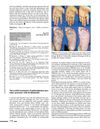
July 2018 in “European Journal of Dermatology” Brodalumab effectively treated a man's severe hand and foot psoriasis.
 8 citations
,
June 2014 in “PubMed”
8 citations
,
June 2014 in “PubMed” Men are more likely to have larger basal cell carcinomas and squamous cell carcinomas, while women have more superficial basal cell carcinomas and tumors on their legs and central face.
 7 citations
,
March 2025 in “Archives of Dermatological Research”
7 citations
,
March 2025 in “Archives of Dermatological Research” Trichoscopy helps better understand and manage alopecia areata, improving patient outcomes.
 4 citations
,
September 2024 in “Oncology Research Featuring Preclinical and Clinical Cancer Therapeutics”
4 citations
,
September 2024 in “Oncology Research Featuring Preclinical and Clinical Cancer Therapeutics” 3D models and organoids improve liposarcoma research and therapy development.
 4 citations
,
September 2017 in “Skin appendage disorders”
4 citations
,
September 2017 in “Skin appendage disorders” The dog with an Alopecia Areata-like condition showed signs of an autoimmune disease and partially regrew hair without treatment, suggesting dogs could be models for human AA research.
 4 citations
,
October 2012 in “Expert Review of Dermatology”
4 citations
,
October 2012 in “Expert Review of Dermatology” Dermoscopy greatly improves melanoma diagnosis and reduces unneeded surgeries.
 2 citations
,
April 2025 in “Cureus”
2 citations
,
April 2025 in “Cureus” Ki-67 levels do not predict treatment response in triple-negative breast cancer.
 2 citations
,
January 2024 in “Advances in Dermatology and Allergology”
2 citations
,
January 2024 in “Advances in Dermatology and Allergology” S100A7 and IL-17 may contribute to inflammation in lichen planopilaris.
 2 citations
,
November 2019 in “Cancer reports”
2 citations
,
November 2019 in “Cancer reports” The Wnt signaling pathway is not a major factor in the development of keratoacanthoma, a type of skin tumor.
Afro-textured hair is more fragile and prone to certain scalp conditions, requiring careful treatment and more research for effective management.
 1 citations
,
January 2021 in “Dermatology online journal”
1 citations
,
January 2021 in “Dermatology online journal” A unique case showed a rare combination of two types of lichen planus on the face.
 May 2026 in “Frontiers in Cell and Developmental Biology”
 Collagen networks play a key role in hair loss and follicle miniaturization.
 April 2026 in “International Journal of Drug Delivery Technology”
 Trichoscopy is a reliable, non-invasive tool for diagnosing scalp alopecias.
 March 2026 in “European Journal of Medical and Health Research”
 Women with hair loss had lower IGF-1 levels.
 January 2026 in “Dermatology and Therapy”
 UVFD can help doctors better identify harmful skin lesions on the face, reducing unnecessary biopsies.
 January 2026 in “Acta Dermatovenerologica Alpina Pannonica et Adriatica”
 Accurate diagnosis is crucial for effectively treating severe alopecia and related symptoms.
 November 2025 in “International Journal of Research in Medical Sciences”
 Diffuse alopecia in females is often linked to certain medications, diseases, and low hemoglobin, while female pattern hair loss is linked to age, duration, and family history.
 February 2024 in “PloS one”
 Tofacitinib and adalimumab are promising treatments for cicatricial alopecia with few side effects.
 September 2023 in “Cureus”
 Early recognition and treatment of atypical alopecia areata in infants are crucial.
 June 2023 in “Romanian Medical Journal”
 The case shows how hard it is to tell apart Multiple Autoimmune Syndrome from other similar autoimmune conditions, but correct diagnosis is key for treatment to work.
 January 2023 in “Pakistan Armed Forces Medical Journal”