77 citations
,
March 2000 in “Journal of Investigative Dermatology” The research identified six functional hair keratin genes and four pseudogenes, providing insights into hair formation and gene organization.
1 citations
,
April 2017 in “Journal of Investigative Dermatology” Abatacept may help some people with alopecia areata regrow hair.
 10 citations
,
March 2015 in “Journal of dermatology”
10 citations
,
March 2015 in “Journal of dermatology” The boy's severe skin disorder is caused by two new mutations in his TGM1 gene.
September 2019 in “The journal of investigative dermatology/Journal of investigative dermatology” A new mutation in the STING protein causes a disease with lupus-like symptoms and responds well to a specific inhibitor treatment.
29 citations
,
March 2000 in “Journal of Investigative Dermatology” The gene for Marie Unna hereditary hypotrichosis is located on chromosome 8p21.
 2 citations
,
June 2018 in “Clinical and Experimental Dermatology”
2 citations
,
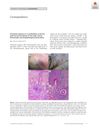
June 2018 in “Clinical and Experimental Dermatology” Permanent hair loss after a stem cell transplant can be a sign of chronic immune system attack on the scalp.
 9 citations
,
August 2013 in “PLOS ONE”
9 citations
,
August 2013 in “PLOS ONE” Genetic variants at 20p11 increase baldness risk in Chinese Han people.
June 2024 in “British Journal of Dermatology” Dermatologists vary widely in testing practices for alopecia areata, often exceeding guideline recommendations.
 October 2024 in “Journal of the Endocrine Society”
 A rare genetic mutation causes resistance to vitamin D, leading to severe rickets and requiring high doses of calcium and vitamin D for treatment.
April 2022 in “Dermatologic Therapy” Diode laser treatment works better for facial hirsutism in patients with normal hormone levels.
November 2025 in “Journal of Investigative Dermatology” Chronic refractory alopecia areata has more skin-resident memory T cells, and JAK inhibitors may help reduce them.
 September 2015 in “International Journal of Dermatology”
 Skin diseases are common in HIV patients and could help detect HIV early in Ethiopia.
April 2023 in “Journal of Investigative Dermatology” Increased TEMRA cells can predict treatment outcomes in rapidly progressive alopecia areata.
 December 2023 in “Forensic science international. Genetics”
 The RapidHIT ID system can effectively get DNA profiles from hair roots with enough cells.
 April 2023 in “Journal of Investigative Dermatology”
 Higher PD-1 levels are linked to fewer immune cells in hair follicles in alopecia areata.
3 citations
,
December 2023 in “Aging” hsa_circ_0002980 can help stop liver cancer cells from growing and spreading.
2 citations
,
March 2025 in “Journal of Translational Autoimmunity” Targeting the AhR pathway may help treat alopecia areata.
50 citations
,
February 2007 in “The Journal of Pathology” Somatic BHD mutations are rare in Japanese renal tumors.
September 2016 in “Journal of Dermatological Science” Hair follicles produce IL-7, which is essential for certain skin lymphoma cells to survive.
 17 citations
,
August 2012 in “Journal of Medical Genetics”
17 citations
,
August 2012 in “Journal of Medical Genetics” A new mutation in the XEDAR gene might cause a rare skin condition called hypohidrotic ectodermal dysplasia.
21 citations
,
December 2001 in “Endocrinology” Expressing the human vitamin D receptor in skin cells prevents hair loss in certain mice.
 34 citations
,
August 2002 in “British Journal of Dermatology”
34 citations
,
August 2002 in “British Journal of Dermatology” ALA-PDT is effective and safe for chronic X-ray dermatitis, providing complete or partial remission.
September 2025 in “OPAL (Open@LaTrobe) (La Trobe University)” The treatments stopped hair regrowth in mice.
16 citations
,
July 2021 in “American Journal of Medical Genetics Part A” Mutations in the LSS gene cause hair loss and may affect brain development, with varying severity.
June 2020 in “Jurnal Penyakit Dalam Indonesia” Anti-DFS70 antibodies can help identify nonsystemic autoimmune conditions in SLE patients.
October 2007 in “Revue du Rhumatisme” 17 citations
,
March 2012 in “Journal of biological chemistry/The Journal of biological chemistry” Hairless protein affects hair follicle structure by regulating the Dlx3 gene.
29 citations
,
February 2001 in “Proceedings of the National Academy of Sciences” A specific DNA region controls skin cell gene expression by working with certain proteins.
 5 citations
,
January 2022 in “Asian Pacific Journal of Cancer Prevention”
5 citations
,
January 2022 in “Asian Pacific Journal of Cancer Prevention” Certain VDR gene changes can affect melanoma risk.
117 citations
,
April 2008 in “Developmental biology” Ectodysplasin inhibits Wnt signaling to help form hair follicles.