 9 citations
,
June 1959 in “Archives of dermatology”
9 citations
,
June 1959 in “Archives of dermatology” Hair can darken after inflammation and then return to its original color.
8 citations
,
April 1997 in “Experimental Dermatology” hHbl gene is active in hair shaft cells and some pilomatricomas.
 November 2022 in “The journal of investigative dermatology/Journal of investigative dermatology”
 The study found markers indicating that cells responsible for hair color are differentiating in specific areas of the hair follicle.
118 citations
,
January 1992 in “Experientia” 
Daily hair care may cause holes in hair fibers.
January 2024 in “International Journal of Trichology” Recognizing perinevoid alopecia and concentric regrowth is important for diagnosing and treating alopecia areata.
 March 2026 in “JOURNAL OF CLINICAL AND DIAGNOSTIC RESEARCH”
 Recognizing unusual patterns of hair loss helps dermatologists diagnose and manage Alopecia Areata better.
44 citations
,
January 1999 in “Dermatology” Nevus comedonicus is a rare skin condition with grouped open pores, sometimes linked to other body issues.
July 2025 in “Pigment International” Follicular vitiligo causes hair to gray without skin color loss.
8 citations
,
August 2017 in “Skin appendage disorders” Red dots on the upper chest may be an early sign of certain types of hair loss.
 2 citations
,
September 2022
2 citations
,
September 2022 The PER3 rs772027021 SNP may cause mild skin pigmentation changes in a new subtype of dyschromatosis universalis hereditaria.
 September 2021 in “CRC Press eBooks”
 Fibrosing alopecia in a pattern distribution is a type of hair loss that may often be overlooked, especially in men.
 February 2009 in “Springer eBooks”
 Hyperpigmentation is common in pregnancy and may not fully fade after birth; melasma, also frequent, can persist but has limited treatment options during pregnancy.
103 citations
,
December 1986 in “Journal of Investigative Dermatology”  236 citations
,
January 1951 in “Physiological zoology”
236 citations
,
January 1951 in “Physiological zoology” Hair growth and pigmentation in mice involve specific stages crucial for research.
The gene Endothelin 3 makes mice's fur darker by increasing pigment cells and pigment levels.
1 citations
,
October 2024 in “European Journal of Histochemistry” Telocytes in silky fowl embryos develop distinct features and connections by the 20th day of incubation.
112 citations
,
January 2004 in “The International journal of developmental biology” Feather patterns form through genetic and epigenetic controls, with cells self-organizing into periodic patterns.
13 citations
,
July 2016 in “Indian Journal of Dermatology” DPR can show different hair characteristics, as seen in two brothers with normal hair.
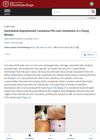 May 2024 in “Indian Journal of Dermatology”
 The woman has a rare skin condition called follicular Dowling-Degos disease, which has limited treatment options.
1 citations
,
January 2018 in “bioRxiv (Cold Spring Harbor Laboratory)” Increased PHGDH expression causes early melanin buildup in hair follicles.
 6 citations
,
November 2011 in “Journal of Dermatological Science”
6 citations
,
November 2011 in “Journal of Dermatological Science” A new gene mutation may allow some piebaldism patients to regain skin color in white patches.
2 citations
,
March 1994 in “Oncology Reports” Keratoacanthomas and squamous cell carcinomas have similar keratin patterns, making them hard to tell apart.
13 citations
,
April 1982 in “The Journal of Dermatology” Poly(ADP-ribose) synthesis is linked to skin cell differentiation.
April 2012 in “Development” Rac1 is crucial for normal hair structure and pigmentation.

The human scalp has different types of pigment cells in hair follicles with varying abilities to produce pigment.
June 2025 in “Indian Journal of Dermatology” A rare skin condition was identified and planned for treatment in an elderly man.
1 citations
,
October 2023 in “PROTOPLASMA” 12 citations
,
January 2013 in “Indian dermatology online journal” The document reports a unique case of woolly hair with a combination of conditions not previously seen together.
 1 citations
,
January 2018 in “Acta dermato-venereologica”
1 citations
,
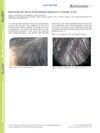
January 2018 in “Acta dermato-venereologica” A teenager's hair with alternating white and dark bands, known as Pili annulati, is a genetic condition that is usually harmless and often considered attractive.