 August 2022 in “Journal of Contemporary medical practice”
 Combining Traditional Chinese Medicine and Western medicine can improve symptoms, hormone levels, and pregnancy outcomes in Polycystic Ovary Syndrome patients, but more research is needed.
 May 2022 in “Maǧallaẗ Buḥūṯ Al-Tarbiyyaẗ Al-Nawʿiyyaẗ (Print)”
 Eating a high inositol diet significantly improves insulin resistance and hormone levels in women with PCOS.
 October 2021 in “Turkderm”
 Hormonal imbalances, not insulin resistance or dyslipidemia, may be more important in causing acne in women over 25.
 September 2021 in “International Journal of Biomedicine”
 Certain gene variations are linked to a higher risk of severe acne, suggesting a genetic influence on the condition.
 January 2018 in “Elsevier eBooks”
 The document explains how male reproductive hormones work and affect the body.
 January 2015 in “International journal of reproduction, contraception, obstetrics and gynecology”
 Women with PCOS often have irregular periods, a higher chance of infertility and miscarriages, and may improve fertility with lifestyle changes and treatment.
 November 2013 in “John Wiley & Sons, Ltd eBooks”
 The document concludes that accurate diagnosis of male and female gonadal disorders is crucial for effective treatment and better patient outcomes.
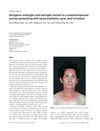 August 2009 in “International Journal of Dermatology”
 A postmenopausal woman's facial redness, acne, and excess hair were caused by too much hormone therapy for insomnia, but improved after stopping the treatment.
 January 2008 in “Springer eBooks”
 Thyroid disease can cause hair loss and treating thyroid problems might help with hair disorders.
 January 2008 in “Journal für Kardiologie (Krause & Pachernegg GmbH)”
 Healthy aging can be promoted through physical activity, lifestyle changes, and certain treatments.
 April 2024 in “International Journal of Advanced Research in Science Communication and Technology”
 Ayurvedic plants may help treat PCOD by affecting hormones and ovarian health.
 November 1999 in “Journal of Cutaneous Medicine and Surgery”
 Treatments for hair loss include hormone modifiers, minoxidil, and hair transplant surgery.
November 2025 in “Molecules” Microextraction techniques improve hormone testing while being environmentally friendly.
 December 2016 in “Springer eBooks”
 Chrousos Syndrome is caused by mutations that make the body less sensitive to glucocorticoids, leading to various symptoms and requiring high-dose treatment.
 18 citations
,
January 2020 in “Journal of Clinical Research in Pediatric Endocrinology”
18 citations
,
January 2020 in “Journal of Clinical Research in Pediatric Endocrinology” The document concludes that Functional Hypothalamic Amenorrhea should be carefully diagnosed and managed to prevent health complications, using lifestyle changes and specific medications.

Plant compounds may help manage PCOS, endometriosis, and menstrual issues.
 January 2017 in “Springer eBooks”
 The document concludes that scalp health is influenced by complex factors affecting sebaceous glands, including hormones, aging, and various substances.
 2295 citations
,
August 2012 in “The international journal of transgenderism/International journal of transgenderism”
2295 citations
,
August 2012 in “The international journal of transgenderism/International journal of transgenderism” The guidelines recommend informed consent for gender-affirming treatments and stress the importance of personalized, culturally sensitive care for transgender individuals.
 855 citations
,
June 2009 in “The Journal of Clinical Endocrinology & Metabolism”
855 citations
,
June 2009 in “The Journal of Clinical Endocrinology & Metabolism” The guideline recommends mental health involvement in diagnosing gender identity disorder and outlines hormone and surgical treatment protocols, emphasizing safety, informed consent, and long-term monitoring.
 451 citations
,
March 2005 in “Endocrine Reviews”
451 citations
,
March 2005 in “Endocrine Reviews” The enzyme steroid sulfatase is linked to breast cancer and other conditions, and inhibitors are being developed for treatment.
 284 citations
,
February 2008 in “Pediatrics”
284 citations
,
February 2008 in “Pediatrics” Chemicals and body size might change when puberty starts and progresses, but more research is needed to confirm this.
 277 citations
,
July 2011 in “Journal of the Dermatology Nurses’ Association”
277 citations
,
July 2011 in “Journal of the Dermatology Nurses’ Association” The skin's layers protect, sense, and regulate the body's internal balance, but can be prone to cancer.
 228 citations
,
January 2021 in “Journal of Neuroimmune Pharmacology”
228 citations
,
January 2021 in “Journal of Neuroimmune Pharmacology” Men have more severe COVID-19 outcomes than women.
 224 citations
,
March 2006 in “Seminars in Cutaneous Medicine and Surgery”
224 citations
,
March 2006 in “Seminars in Cutaneous Medicine and Surgery” The document concludes that understanding hair follicle biology can lead to better hair loss treatments.
 220 citations
,
August 1988 in “Clinical endocrinology”
220 citations
,
August 1988 in “Clinical endocrinology” Melatonin may help with sleep issues, depression, and cancer, but more research is needed.
 205 citations
,
July 2009 in “Journal of Dermatological Science”
205 citations
,
July 2009 in “Journal of Dermatological Science” Male and female skin differ in many ways, which could lead to gender-specific skin treatments.
 202 citations
,
June 2005 in “Aaps Pharmscitech”
202 citations
,
June 2005 in “Aaps Pharmscitech” Lecithin organogels could be good for applying drugs to the skin because they are stable, safe, and can improve drug absorption.
 180 citations
,
January 2003 in “American Journal of Clinical Dermatology”
180 citations
,
January 2003 in “American Journal of Clinical Dermatology” Menopause can lead to skin and hair problems due to hormonal changes, but hormone replacement therapy might help slow these effects.
 137 citations
,
June 2005 in “Climacteric”
137 citations
,
June 2005 in “Climacteric” Estrogen loss during menopause worsens skin health, but hormone replacement therapy may improve it, though more research is needed.
112 citations
,
January 2004 in “The International journal of developmental biology” Feather patterns form through genetic and epigenetic controls, with cells self-organizing into periodic patterns.