 June 2023 in “Research Square (Research Square)”
 Hyaluronic acid and polycaprolactone improve skin regeneration, with polycaprolactone having a stronger effect on healing and tissue repair.
 105 citations
,
January 2010 in “Mediators of Inflammation”
105 citations
,
January 2010 in “Mediators of Inflammation” Skin surface lipids are important for skin health and altering them could help prevent aging and treat skin conditions.
 6 citations
,
July 2015 in “Journal of Investigative Dermatology”
6 citations
,
July 2015 in “Journal of Investigative Dermatology” Chicken feather gene mutation helps understand human hair disorders.
 44 citations
,
January 2019 in “Journal of Translational Medicine”
44 citations
,
January 2019 in “Journal of Translational Medicine” Macrophages are essential for successful skin growth in reconstructive surgery.
 1 citations
,
December 2023 in “npj biofilms and microbiomes”
1 citations
,
December 2023 in “npj biofilms and microbiomes” Single-cell engineered biotherapeutics show promise for skin treatment but need more research and trials.
 47 citations
,
September 2023 in “Pharmacological Reports”
47 citations
,
September 2023 in “Pharmacological Reports” Vitamins A, B3, C, D, and E can improve skin health and immunity.
 January 2024 in “bioRxiv (Cold Spring Harbor Laboratory)”
 A specific enzyme is essential for proper hair follicle stem cell development and healthy skin.
 405 citations
,
May 2007 in “Journal of The American Academy of Dermatology”
405 citations
,
May 2007 in “Journal of The American Academy of Dermatology” Obesity affects skin health, causing conditions like acanthosis nigricans and may require different treatment approaches.
 162 citations
,
July 2011 in “Biomacromolecules”
162 citations
,
July 2011 in “Biomacromolecules” Chitosan nanofiber scaffolds improve skin healing and are promising for wound treatment.
 155 citations
,
May 2016 in “Nature communications”
155 citations
,
May 2016 in “Nature communications” Memory T cells in the skin balance staying put and moving into the blood, clustering around hair follicles, and increasing in number after infection.
 151 citations
,
November 2018 in “International Journal of Pharmaceutics”
151 citations
,
November 2018 in “International Journal of Pharmaceutics” Nanoparticles improve drug delivery through the skin but more research is needed on their long-term effects and skin penetration challenges.
 106 citations
,
October 2016 in “Cell Stem Cell”
106 citations
,
October 2016 in “Cell Stem Cell” PDGFA/AKT signaling is important for the growth and maintenance of certain skin fat cells.
 76 citations
,
February 2021 in “International Journal of Molecular Sciences”
76 citations
,
February 2021 in “International Journal of Molecular Sciences” Mesenchymal stem cells show potential for skin healing and anti-aging, but more research is needed for safe use, especially regarding stem cells from induced pluripotent sources.
 44 citations
,
October 2017 in “British Journal of Dermatology”
44 citations
,
October 2017 in “British Journal of Dermatology” Botulinum toxin has potential for treating various skin conditions and improving wound healing.
 26 citations
,
September 2018 in “Colloids and Surfaces B: Biointerfaces”
26 citations
,
September 2018 in “Colloids and Surfaces B: Biointerfaces” A new liposome treatment helps heal deep burns on mice by improving hair regrowth and reducing scarring.
 25 citations
,
March 2012 in “Journal of Dermatological Science”
25 citations
,
March 2012 in “Journal of Dermatological Science” Genetic variants linked to ten skin diseases were found, showing both immune and non-immune factors play a role.
 24 citations
,
December 2018 in “Life sciences”
24 citations
,
December 2018 in “Life sciences” Lysophosphatidic acid is important for skin health and disease, and could be a target for new skin disorder treatments.
 20 citations
,
May 2020 in “Experimental Dermatology”
20 citations
,
May 2020 in “Experimental Dermatology” Aging scalp skin contributes to hair aging and loss, and more research is needed to develop better hair loss treatments.
 17 citations
,
January 1997 in “Cell and Tissue Research”
17 citations
,
January 1997 in “Cell and Tissue Research” Scientists developed a method to grow human fetal skin and digits in a lab for 3-4 weeks, which could help study skin features and understand genetic interactions in tissue formation.
 10 citations
,
May 2024 in “npj Regenerative Medicine”
10 citations
,
May 2024 in “npj Regenerative Medicine” Umbilical cord cells may help delay skin aging.
 10 citations
,
November 2015 in “Experimental Dermatology”
10 citations
,
November 2015 in “Experimental Dermatology” Skin RAGE levels are linked to inflammation and cell death.
 4 citations
,
January 2020 in “Cells”
4 citations
,
January 2020 in “Cells” The research found that the gene activity in mouse skin stem cells changes significantly as they age.
 1 citations
,
January 2019 in “Journal of Embryology & Stem Cell Research”
1 citations
,
January 2019 in “Journal of Embryology & Stem Cell Research” MSCs help rejuvenate skin by promoting cell growth and reducing inflammation.
 March 2026 in “BioScience Trends”
 UV radiation causes skin aging by damaging cells and triggering harmful processes.
 February 2026 in “Frontiers in Immunology”
 Human amniotic stem cells can safely treat psoriasis-like skin in mice.
 December 2025 in “Nature Communications”
 Skin organoids can model tuberculosis infection and help test treatments.
 November 2025 in “IECCMEXICO”
 3D bioprinting advancements are improving skin regeneration for wound healing and personalized reconstruction.
 October 2025 in “Frontiers in Immunology”
 Platelet-rich plasma might help treat eczema by reducing inflammation and repairing the skin.
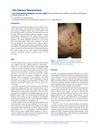 October 2016 in “Elsevier eBooks”
 Common noncancerous skin diseases have various treatments, including topical applications, light therapy, surgery, and medications, with psychological support being important.
 January 2016 in “Springer eBooks”
 New materials and methods could improve skin healing and reduce scarring.