61 citations
,
January 2013 in “International Journal of Biological Macromolecules” Combining DHT and EDC improves the strength and stability of PADM scaffolds for tissue engineering.
508 citations
,
June 2009 in “Current drug metabolism” Tyrosine kinase inhibitors effectively treat cancers but often cause skin and other side effects.
November 1968 in “Journal of the American Pharmaceutical Association”  178 citations
,
October 2001 in “Genes & Development”
178 citations
,
October 2001 in “Genes & Development” The mutated hairless gene causes hair loss by acting as a new type of corepressor affecting thyroid hormone receptors.
26 citations
,
March 1995 in “Differentiation” A rabbit gene important for hair development was identified and detailed.
76 citations
,
February 1993 in “Journal of Biological Chemistry” KAP6 genes are conserved across species and active in hair follicles.
2 citations
,
January 2015  13 citations
,
July 2017 in “Biopolymers”
13 citations
,
July 2017 in “Biopolymers” Recombinant keratins can form useful structures for medical applications, overcoming natural keratin limitations.
1 citations
,
January 1985 in “Protides of the biological fluids” Injecting monocyto-angiotropin into hare skin increases hair growth by forming new blood vessels.
December 2012 in “http://isrctn.org/>” 11 citations
,
January 2016 in “International Journal of Biological Macromolecules” Enzymatic phosphorylation of hair keratin improves the effectiveness of hair products with cationic ingredients.
 November 2023 in “Linköping University medical dissertations”
 Keratinocytes and adipose-derived stem cells can effectively heal difficult skin wounds.
 17 citations
,
June 2018 in “Frontiers in Physiology”
17 citations
,
June 2018 in “Frontiers in Physiology” ADM scaffolds help skin heal by promoting a healing-type immune response.
January 2008 in “HAL (Le Centre pour la Communication Scientifique Directe)” The mutant HR bmh protein affects hair follicle formation by failing to repress vitamin D receptor activity.
 23 citations
,
June 2010 in “Journal of Investigative Dermatology”
23 citations
,
June 2010 in “Journal of Investigative Dermatology” A mutation in the Soat1 gene causes hair structure defects and other health issues in AKR/J mice.
4 citations
,
April 2025 in “Antioxidants” Alpha-ketoglutarate protects rabbit skin cells from oxidative damage by activating a specific cell pathway.
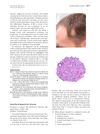
The man has Temporal Triangular Alopecia, a stable, non-scarring hair loss condition best treated with hair transplantation.
2 citations
,
January 2009 in “Human cell culture”  1 citations
,
January 2017 in “Social Science Research Network”
1 citations
,
January 2017 in “Social Science Research Network” The document suggests creating a secure database for indigenous knowledge and recommends that the TKDL actively fight patents that slightly alter traditional knowledge.
 169 citations
,
May 2006 in “Genes & Development”
169 citations
,
May 2006 in “Genes & Development” Keratin 17 is crucial for normal hair growth by regulating hair cycle transitions with TNFα.
5 citations
,
May 2024 in “Journal of Allergy and Clinical Immunology Global” Upadacitinib effectively improved severe atopic dermatitis and alopecia universalis in a 29-year-old man.
5 citations
,
January 2017 in “Arquivos Brasileiros de Oftalmologia” A rare genetic disorder causes sparse hair and vision loss due to a CDH3 gene mutation.
 April 2023 in “Cancer research”
 KRTAP2-3 could help predict cancer recurrence by identifying specific cancer cells.
2 citations
,
May 2025 in “IntechOpen eBooks” Early treatment with corticosteroids and immunosuppressants is crucial for managing Vogt-Koyanagi-Harada disease.
1 citations
,
May 2024 in “Pediatric Blood & Cancer” Trametinib can effectively treat severe kaposiform lymphangiomatosis when other treatments fail.
GHK-Cu and propolis may help prevent scalp aging and hair loss.
April 2016 in “The journal of investigative dermatology/Journal of investigative dermatology” The ALADIN score can predict how well patients with alopecia areata will respond to JAK inhibitor treatments.
106 citations
,
December 2015 in “Biomacromolecules” Keratin hydrogels can be customized for better tissue healing.
 July 2025 in “Frontiers in Medicine”
 Baricitinib successfully regrew hair in an 8-year-old boy with alopecia totalis linked to a KRT74 gene variant.
 January 2014 in “Journal of Investigative Dermatology”
 Proteins like aPKC and PDGF-AA, substances like adenosine and ATP, and adipose-derived stem cells all play important roles in hair growth and health, and could potentially be used to treat hair loss and skin conditions.