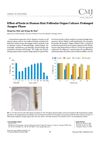
 January 2026 in “Chonnam Medical Journal”
 Escin helps keep hair follicles in the growth phase longer.
April 2017 in “The journal of investigative dermatology/Journal of investigative dermatology” Researchers developed a method to grow human hair follicles using 3D-printed skin models and modified cells.
 10 citations
,
June 2019 in “Journal of Tissue Engineering and Regenerative Medicine”
10 citations
,
June 2019 in “Journal of Tissue Engineering and Regenerative Medicine” Scientists successfully grew new hair follicles in regenerated mouse skin using mouse and human cells.
 184 citations
,
December 2018 in “Nature Communications”
184 citations
,
December 2018 in “Nature Communications” Researchers created human hair follicles using a new method that could help treat hair loss.
40 citations
,
June 2019 in “Biochemical and Biophysical Research Communications” CHIR99021 helps create human skin with hair follicles, offering hope for hair loss treatments.
30 citations
,
November 2020 in “Journal of Advanced Research” Conditioned medium from keratinocytes can improve hair growth potential in cultured dermal papilla cells.
 3 citations
,
May 2017 in “British journal of dermatology/British journal of dermatology, Supplement”
3 citations
,
May 2017 in “British journal of dermatology/British journal of dermatology, Supplement” Certain cells around hair follicles help improve skin regeneration for potential use in skin grafts.
 48 citations
,
June 2013 in “Journal of Dermatological Science”
48 citations
,
June 2013 in “Journal of Dermatological Science” Valproic acid may help hair grow and could be a safe treatment for hair loss.
 April 2018 in “Journal of Investigative Dermatology”
 Removing STAT5 from 3D-cultured human skin cells reduces their ability to grow hair.

Applying thyroid hormones to the scalp can help hair grow.
 14 citations
,
April 2011 in “Cell Proliferation”
14 citations
,
April 2011 in “Cell Proliferation” Scientists can grow human hair follicle stem cells in a lab without changing their nature, which could help treat hair loss.
October 2022 in “Experimental Dermatology” New technologies show promise for better hair regeneration and treatments.
 13 citations
,
July 2019 in “Journal of Dermatological Science”
13 citations
,
July 2019 in “Journal of Dermatological Science” Increasing alkaline phosphatase in human skin cells helps to grow more hair.
 August 2024 in “Biomolecules & Therapeutics”
 A new compound, HTPI, promotes hair growth by protecting cells from damage and regulating energy use.
13 citations
,
January 2002 in “Biochemical and biophysical research communications” Interferon β from hair cells stops the growth of other hair cells.
 5 citations
,
October 2020 in “Frontiers in Cell and Developmental Biology”
5 citations
,
October 2020 in “Frontiers in Cell and Developmental Biology” Reducing FOXA2 in skin cells lowers their ability to grow hair.
 3 citations
,
January 2018 in “Food Science and Technology Research”
3 citations
,
January 2018 in “Food Science and Technology Research” Wasabi compound may help promote hair growth.
9 citations
,
March 1987 in “British Journal of Dermatology” EGF and FGF can boost hair growth by speeding up cell growth.
39 citations
,
March 2022 in “Nature Protocols” Scientists created hair-growing skin models from stem cells, which could help treat hair loss and skin diseases.
 January 2026 in “China National GeneBank DataBase”
 Human hair follicle stem cells can help heal wounds faster.
 November 2021 in “Research Square (Research Square)”
 3D spheroid cultures of human hair follicle cells are better for hair growth research than 2D cultures, and they provide new insights into how hair growth treatments like minoxidil and TCQA work.

Growing hair follicles from cultured cells could potentially treat baldness, but more research is needed.
 15 citations
,
May 2004 in “Facial Plastic Surgery Clinics of North America”
15 citations
,
May 2004 in “Facial Plastic Surgery Clinics of North America” The document concludes that while "hair follicle cloning" shows promise for unlimited donor hair, it faces challenges with consistency and safety in humans.
 September 2013 in “中国医师杂志”
 Human scalp hair follicles grow well in Williams E medium, which may help with hair transplants.
 35 citations
,
January 2020 in “Skin Pharmacology and Physiology”
35 citations
,
January 2020 in “Skin Pharmacology and Physiology” The review concluded that keeping the hair-growing ability of human dermal papilla cells is key for hair development and growth.
 2 citations
,
November 2003 in “Humana Press eBooks”
2 citations
,
November 2003 in “Humana Press eBooks” Hair follicle cells can help heal wounds and study skin diseases.
 1 citations
,
September 2019 in “Journal of Investigative Dermatology”
1 citations
,
September 2019 in “Journal of Investigative Dermatology” Human hair matrix cells and dermal papilla fibroblasts can form early hair follicle structures but don't produce hair shafts yet.

VB-1, a natural compound, may promote hair growth by enhancing important cell signaling and increasing key gene expression.
 17 citations
,
January 1997 in “Cell and Tissue Research”
17 citations
,
January 1997 in “Cell and Tissue Research” Scientists developed a method to grow human fetal skin and digits in a lab for 3-4 weeks, which could help study skin features and understand genetic interactions in tissue formation.
Hair follicle-like structures can form when specific hair cells are mixed and implanted in mice.