 20 citations
,
June 2016 in “Magnesium research”
20 citations
,
June 2016 in “Magnesium research” Hair follicles help magnesium get through the skin more effectively.
 10 citations
,
May 2016 in “Journal of Dermatological Science”
10 citations
,
May 2016 in “Journal of Dermatological Science” PDGF-BB helps young melanocytes grow but stops mature ones from growing, and it makes melanocytes more specialized.
 1 citations
,
September 2024 in “Quality in Sport”
1 citations
,
September 2024 in “Quality in Sport” Hair graying can be delayed or prevented with antioxidants, lifestyle changes, and genetic therapy.
 April 2026 in “npj Regenerative Medicine”
 Melanocyte stem cells in hair follicles are key to understanding and potentially preventing hair graying.
138 citations
,
June 2023 in “Molecules” Skin pigmentation varies due to genetics, UV exposure, and drugs, with treatments available but requiring medical advice.
 31 citations
,
April 2019 in “Cell reports”
31 citations
,
April 2019 in “Cell reports” Patient-derived melanocytes can potentially treat vitiligo by restoring skin pigmentation.
 195 citations
,
January 2008 in “Photochemistry and Photobiology”
195 citations
,
January 2008 in “Photochemistry and Photobiology” Visible light can damage skin and most sunscreens don't block it well; more research is needed on its effects and protection methods.
 2 citations
,
January 2022 in “Stem cell biology and regenerative medicine”
2 citations
,
January 2022 in “Stem cell biology and regenerative medicine” The book "Hair Follicle Regeneration" discusses the potential of regenerating human hair follicles or activating dormant ones as a possible cure for baldness, and the promising role of new technologies like 3D printing in this field.

Exosomes show promise for skin treatments but need more research and regulation in India.
 16 citations
,
July 2012 in “Current pharmaceutical biotechnology”
16 citations
,
July 2012 in “Current pharmaceutical biotechnology” New treatments for skin conditions related to the sebaceous gland are being developed based on current research.
152 citations
,
December 2003 in “Micron” As people age, their hair follicles produce less pigment, leading to gray and white hair, due to factors like reduced enzyme activity and damage to melanocyte DNA.
 150 citations
,
April 2013 in “Dermato-endocrinology”
150 citations
,
April 2013 in “Dermato-endocrinology” Estrogen therapy can reduce skin aging but has cancer risks.
56 citations
,
December 2010 in “The journal of investigative dermatology/Journal of investigative dermatology” Hair follicle cells age faster and lose pigment due to less catalase, causing hair to turn gray.
 8 citations
,
February 2013 in “Central European Journal of Biology”
8 citations
,
February 2013 in “Central European Journal of Biology” Melanocytes are diverse cells important for pigmentation and skin health, influenced by genetics and environment.
 3 citations
,
November 2022 in “Experimental dermatology”
3 citations
,
November 2022 in “Experimental dermatology” Melatonin may inhibit melanoma growth and has potential as a cancer therapy aid, but its effects on human skin pigmentation need more research.
 93 citations
,
October 2006 in “The International Journal of Biochemistry & Cell Biology”
93 citations
,
October 2006 in “The International Journal of Biochemistry & Cell Biology” Melanocytes are crucial for skin pigmentation and can affect conditions like melanoma, vitiligo, and albinism, as well as hair color and hearing.
 41 citations
,
September 2012 in “Cellular and Molecular Life Sciences”
41 citations
,
September 2012 in “Cellular and Molecular Life Sciences” MicroRNAs play a crucial role in skin and hair health, affecting everything from growth to aging, and could potentially be used in treating skin diseases.
 38 citations
,
June 2017 in “The Journal of Dermatology”
38 citations
,
June 2017 in “The Journal of Dermatology” Aging in hair follicle stem cells leads to hair graying, thinning, and loss.
11 citations
,
January 2016 in “Evidence-based Complementary and Alternative Medicine” Rice bran extract can increase melanin production and may help treat melanin deficiency.
 July 2025 in “Advanced Science”
 Collagen VI and Semaphorin 3C are important for hair pigmentation and could help treat pigmentation disorders.

The document explains different types of skin lesions and their characteristics, causes, and related conditions.
 210 citations
,
July 1993 in “The journal of investigative dermatology/Journal of investigative dermatology”
210 citations
,
July 1993 in “The journal of investigative dermatology/Journal of investigative dermatology” Hair color production in mice is closely linked to the hair growth phase and may also influence hair growth itself.
 11 citations
,
July 2008 in “International Journal of Dermatology”
11 citations
,
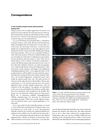
July 2008 in “International Journal of Dermatology” Greying hairs may be protected from alopecia areata.
1 citations
,
April 2008 in “Pigment Cell & Melanoma Research” Foxn1 is essential for hair pigmentation by directing pigment transfer to hair cells.
 3 citations
,
February 2025 in “Journal of PHYSIOLOGICAL ANTHROPOLOGY”
3 citations
,
February 2025 in “Journal of PHYSIOLOGICAL ANTHROPOLOGY” Certain genes are linked to skin aging, like wrinkles and pigmentation changes.
 521 citations
,
January 1954 in “Physiological Reviews”
521 citations
,
January 1954 in “Physiological Reviews” Hair growth is cyclic and influenced mainly by local factors.
 176 citations
,
January 2003 in “Journal of Investigative Dermatology”
176 citations
,
January 2003 in “Journal of Investigative Dermatology” Bone Morphogenetic Proteins (BMPs) help control skin health, hair growth, and color, and could potentially be used to treat skin and hair disorders.
90 citations
,
December 2008 in “Journal of Investigative Dermatology” Thyroid-stimulating hormone affects hair follicles but doesn't change hair growth or color.
 38 citations
,
June 2019 in “International Journal of Molecular Sciences”
38 citations
,
June 2019 in “International Journal of Molecular Sciences” Tiny particles called extracellular vesicles could help with skin healing and hair growth, but more research is needed.
 July 2025 in “The FASEB Journal”
 Human amniotic stem cell exosomes may effectively treat hair loss by promoting hair regrowth.