2 citations
,
January 2022 in “Actas Dermo-Sifiliográficas” Dermoscopy can effectively identify Malassezia folliculitis.
 2 citations
,
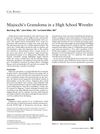
October 2019 in “Current sports medicine reports”
2 citations
,
October 2019 in “Current sports medicine reports” A high school wrestler's skin rash was cured with antifungal medication after a misdiagnosis and incorrect treatment led to a fungal infection.
 2 citations
,
April 2015 in “Dermatology practical & conceptual”
2 citations
,
April 2015 in “Dermatology practical & conceptual” Daily use of antifungal shampoo can hide symptoms and make it hard to diagnose fungal scalp infections.
 2 citations
,
May 2002 in “Clinics in Dermatology”
2 citations
,
May 2002 in “Clinics in Dermatology” Ethnic differences in hair and skin are significant and under-researched, requiring tailored dermatologic treatments and more study.
2 citations
,
January 2002 in “PubMed” Proper identification of dermatophytes is crucial for diagnosing and treating infections like athlete's foot and ringworm.
2 citations
,
January 1981 High temperatures and certain chemicals can significantly change the amino acid content in human hair.
1 citations
,
June 2021 in “Preprints.org” Hair relaxers and straighteners can be toxic to skin cells.
1 citations
,
October 2020 in “Cermin Dunia Kedokteran” A boy's scalp rash and baldness were cured using oral medication and medicated shampoo.
1 citations
,
June 2018 in “Archives of Disease in Childhood Education & Practice” The girl's hair started regrowing after 6 weeks of treatment.
 1 citations
,
June 2013 in “Medicine”
1 citations
,
June 2013 in “Medicine” A thorough skin history and full examination are important for diagnosing and understanding the impact of skin diseases.
1 citations
,
May 2002 in “AAP Grand Rounds” Tinea capitis, though rare in infants, should be considered for hair loss or scalp issues, with oral griseofulvin as the recommended treatment.
1 citations
,
January 2000 in “Indian Journal of Dermatology” A woman had hair loss and scalp nodules due to black piedra, confirmed by tests.
NaOH treatment improves hair strength and suitability for textiles.
January 2026 in “Derecho y cambio social.” Choose deodorants with low allergenic ingredients and follow usage instructions to avoid skin issues.
 December 2025 in “Journal of Mycology and Infection”
 Griseofulvin effectively treats tinea capitis in infants.
 September 2024 in “BMJ Case Reports”
 An adult had a rare scalp infection in the forehead area, treated successfully with itraconazole.
 February 2024 in “Infection and drug resistance”
 Tinea capitis in a child was caused by a fungus from cats, highlighting the need for accurate diagnosis and treatment.
 January 2024 in “Medical mycology journal”
 A mother and her two daughters got a skin infection from their cat.
 July 2023 in “International journal of dermatology, venereology and leprosy sciences”
 Most rural children with scalp ringworm had a non-inflammatory type and early treatment is important to prevent complications.
 December 2022 in “bioRxiv (Cold Spring Harbor Laboratory)”
 The new vaccine platform led to a stronger immune response and better protection against the flu than the traditional vaccine.
November 2022 in “International journal of trichology” Glyoxylic acid straighteners cause more protein loss but have similar hair strength effects as traditional alkaline straighteners.
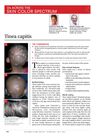 October 2022 in “The Journal of Family Practice”
 Tinea capitis is a scalp fungal infection in children that can cause hair loss, scaling, and other symptoms.
April 2021 in “Cermin Dunia Kedokteran” Two siblings with scalp fungus improved after 2 months of treatment.
December 2020 in “Jurnal RSMH Palembang (Online)” A man with a fungal scalp infection got better after treatment with griseofulvin, cetirizine, and ketoconazole shampoo.
May 2020 in “The Journal of Pediatrics” Tinea capitis can be quickly diagnosed and treated using dermoscopy to prevent hair damage.
Treating hair with 1M sodium hydroxide increases its friction, making it better for small medical knots.
 December 2014 in “Berkala Ilmu Kesehatan Kulit dan Kelamin”
 Griseofulvin effectively treats tinea capitis kerion type.
 March 2014 in “Journal of clinical microbiology”
 Kerion, a scalp fungal infection, requires lab confirmation and is treated with antifungal medication and medicated shampoo.
February 2013 in “Archives of Disease in Childhood Education & Practice” Kerion, a severe scalp infection, causes hair loss and needs oral antifungal treatment.
 August 2005 in “Microscopy and Microanalysis”
 Polymethylene wax in hair relaxers makes hair smooth and shiny with less damage.