June 2025 in “British Journal of Dermatology” Segmented hair color changes can indicate active alopecia areata.
 1 citations
,
January 2015 in “Journal of Pigmentary Disorders”
1 citations
,
January 2015 in “Journal of Pigmentary Disorders” Melasma is a skin condition linked to female hormones, genetics, UV exposure, and certain medications, but not to pituitary, adrenal, or thyroid diseases.
8 citations
,
January 2006 in “Dermatology Online Journal” The girl's skin condition is benign but challenging to treat due to its size and location.
1 citations
,
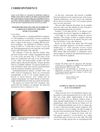
January 2019 in “Dermatology Online Journal” A rare skin condition appeared on a 19-year-old woman's scalp.
 21 citations
,
January 2005 in “Pediatric Dermatology”
21 citations
,
January 2005 in “Pediatric Dermatology” An 8-year-old girl with vitiligo developed extra hair growth on her knee after using tacrolimus ointment.
April 2026 in “Journal of Cutaneous Pathology” Alopecia can be caused by multicentric reticulohistiocytosis.
2 citations
,
September 2021 in “JAAD case reports” A man with a weakened immune system was diagnosed with a rare skin condition called trichodysplasia spinulosa using skin examination techniques.
3D models from confocal microscopy improve melanoma detection on sun-damaged skin.
 January 2025 in “Indian Dermatology Online Journal”
 Treatment reduced cystic lesions but didn't change existing Nevus Comedonicus.
June 2025 in “Indian Journal of Dermatology” A rare skin condition was identified and planned for treatment in an elderly man.
July 2019 in “Indian dermatology online journal” Alopecia areata can show unusual red-dotted vessels and dithranol treatment may mask typical patterns.
 25 citations
,
December 2008 in “Journal of Dermatological Case Reports”
25 citations
,
December 2008 in “Journal of Dermatological Case Reports” Skin color may change how alopecia areata looks under a dermoscope.
 17 citations
,
April 2004 in “Acta Clinica Belgica”
17 citations
,
April 2004 in “Acta Clinica Belgica” UV light makes skin signs of lack of carotene and vitamin A more visible.
 November 2017 in “International journal of research in dermatology”
 A rare skin disorder, nevus comedonicus, can appear on one side of the body following Blaschko's lines.
126 citations
,
November 1987 in “The Journal of Pediatrics” Selenium deficiency can cause skin and hair color loss, muscle weakness, and blood cell changes, but these improve with selenium supplements.
25 citations
,
April 2008 in “Clinical and experimental dermatology” EFFC might be common but underreported.
 23 citations
,
January 2010 in “Journal of Medical Primatology”
23 citations
,
January 2010 in “Journal of Medical Primatology” Hair loss in Rhesus macaques may be caused by a skin allergy-related condition.
17 citations
,
January 2014 in “Journal of Oral and Maxillofacial Pathology” Seborrheic keratosis is a common, harmless skin growth that can look like cancer, so it may need a biopsy.
 May 2025 in “International Medical Case Reports Journal”
 Lichen planus pigmentosus may indicate undetected hepatitis C infection.
2 citations
,
June 2009 in “Journal of the American Academy of Dermatology” The treatment didn't work for the woman's hair loss and skin darkening.
12 citations
,
August 1988 in “Histopathology” The tumor likely shows dual neural crest differentiation.
 18 citations
,
August 2021 in “PLoS ONE”
18 citations
,
August 2021 in “PLoS ONE” Melanocyte progenitor cells are found in human fat tissue and can become mature melanocytes, which may help treat skin issues.
 2 citations
,
November 1998 in “Journal of The European Academy of Dermatology and Venereology”
2 citations
,
November 1998 in “Journal of The European Academy of Dermatology and Venereology” Prednisone reduces organ mast cell infiltration but does not alter the abnormal appearance of mast cells in systemic mastocytosis.
 3 citations
,
March 2019 in “Case Reports”
3 citations
,
March 2019 in “Case Reports” A man with myotonic dystrophy type 1 had 28 skin cancers, suggesting a link between the disease and skin cancer, emphasizing the need for sun protection and regular skin checks.
February 2013 in “Journal of the American Academy of Dermatology” Follicular red dots can appear where alopecia areata and vitiligo overlap.
January 2016 in “UNESP Institutional Repository (São Paulo State University)” Melasma results from changes in the skin's pigment and structure, not just pigment cell growth.
11 citations
,
August 1986 in “Archives of Dermatology” Vitamin B12 deficiency can cause skin and hair color changes, which can be reversed with treatment.
12 citations
,
December 2021 in “Dermatology” Trichoscopy can help diagnose and assess disease activity in connective tissue diseases by identifying specific hair and scalp signs.
Multiphoton microscopy helps understand and improve vitiligo treatments by visualizing skin cell changes.
March 2022 in “Veterinary dermatology” A one-year-old cat had multiple benign skin tumors similar to those known in humans.