 1 citations
,
August 2019 in “Pediatric dermatology”
1 citations
,
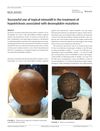
August 2019 in “Pediatric dermatology” Topical minoxidil helped an 8-year-old boy with a genetic hair disorder grow hair.
 March 2026 in “Indian Journal of Dermatology”
 Baricitinib can cause excessive hair growth.
 March 2026 in “Dermatopathology”
 A rare skin tumor with extra hair growth was found and safely removed from a 27-year-old woman.
 February 2026 in “Cureus”
 Ciclosporin can cause excessive hair growth even with testosterone blockers.
A 16-year-old girl with gum overgrowth and excessive hair growth had successful gum surgery and healed well.
October 2025 in “Animals” Blue light masks improved coat condition and energy in horses with PPID.
May 2025 in “International Journal of Trichology” Low-dose oral minoxidil often causes excess hair growth but doesn't significantly affect quality of life.
 April 2025 in “American Journal of Case Reports”
 Improper use of minoxidil can cause excessive hair growth.
 April 2025 in “International Journal For Multidisciplinary Research”
 Hypertrichosis causes excessive hair growth and can be managed with treatments like laser, electrolysis, or new topical solutions.
 September 2024 in “Polish Journal of Public Health”
 Prescription tablets treat hirsutism, while over-the-counter foams treat hypertrichosis.
September 2024 in “Dermatology Online Journal” Facial hair growth from minoxidil stopped after she quit using it.
 August 2024 in “Dermatology and Therapy”
 Vorasidenib can cause unusual hair growth.
Hirsutism in women is mostly due to PCOS and can be managed with oral contraceptives and hair removal methods.
 November 2022 in “Journal of Investigative Dermatology”
 The medicine Cyclosporin A might cause excessive hair growth by reducing a protein that controls hair growth.
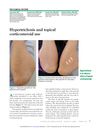 February 2022 in “Cleveland Clinic Journal of Medicine”
 Prolonged use of topical corticosteroids can cause excessive hair growth.
January 2022 in “The Pan African medical journal” Hypertrichosis causes excessive hair growth and needs psychological support due to its impact on self-esteem.
November 2019 in “British Journal of Dermatology” FOL-005 peptide may help treat excessive hair growth safely.
 April 2018 in “Journal of Investigative Dermatology”
 A new peptide, FOL-005, may help treat excessive hair growth by reducing a hair growth promoter, FGF7.
 July 2015 in “Actas Dermo-Sifiliográficas”
 A woman experienced excessive hair growth after using a hair loss treatment with minoxidil.
January 2015 in “Annals of dermatology/Annals of Dermatology” Using travoprost for glaucoma may cause extra hair growth and darker skin around the eyes, but these effects can reverse after stopping the drug.
January 2012 in “Case reports in pediatrics” A 16-year-old boy's arm hair grew more after wearing a splint, but it returned to normal in 8 months.
March 1983 in “International Journal of Dermatology” Minoxidil can cause excessive hair growth.
July 2023 in “International journal of physiology” Hypertrichosis lanuginosa causes excessive fine hair growth, often linked to genetics or cancer, with limited treatment options.
May 2002 in “Therapeutische Umschau” Hypertrichosis and hirsutism can cause psychological issues, with laser treatments being the most promising for permanent hair removal.
 August 2022 in “Frontiers in genetics”
 A new genetic change in the DSC3 gene is linked to a rare condition causing hair loss and skin blisters in a child.
 April 1999 in “Therapeutische Umschau”
 Hair loss and excessive growth treated with various options, including new laser technology.
101 citations
,
October 2007 in “Journal of Biological Chemistry” Reduced matriptase activity causes skin and hair issues in both humans and mice.
99 citations
,
October 2008 in “Journal of Investigative Dermatology” Mutations in the ST14 gene cause skin and hair issues by disrupting important protein processing.
78 citations
,
May 2012 in “Journal of Investigative Dermatology” A specific gene mutation causes woolly hair and hair loss.
55 citations
,
April 2008 in “Clinical Genetics” A new mutation in the ST14 gene was found in a patient with ARIH syndrome, showing milder symptoms and no tooth issues.