February 2022 in “Authorea (Authorea)” PAON shows skin patterns due to genetic mosaicism.
6 citations
,
January 2018 in “International Journal of Dermatology” Repigmentation patterns in vitiligo depend on melanocyte source, lesion status, and therapy choice.
22 citations
,
September 2008 in “International Journal of Dermatology” The case suggests a possible autoimmune link between lichen sclerosus and vitiligo.
April 2017 in “Journal of Investigative Dermatology” Reduced Stx17 expression may contribute to Alopecia Areata.
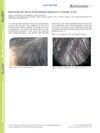 1 citations
,
January 2018 in “Acta dermato-venereologica”
1 citations
,
January 2018 in “Acta dermato-venereologica” A teenager's hair with alternating white and dark bands, known as Pili annulati, is a genetic condition that is usually harmless and often considered attractive.
 January 2007 in “Journal of the American Academy of Dermatology”
 A 73-year-old man's grey-white hair turned dark brown after eczema treatment.
September 2024 in “Indian Journal of Dermatology Venereology and Leprology” 127 citations
,
November 2010 in “Pigment cell & melanoma research” We need more research on human hair follicle pigmentation, not just mouse models.
 1 citations
,
January 2013 in “Springer eBooks”
1 citations
,
January 2013 in “Springer eBooks” The document concludes that skin and nail changes can indicate various underlying health conditions.
12 citations
,
January 2014 in “Dermatology online journal” White hair regrowth in alopecia areata may be more common than thought.
 7 citations
,
January 2013 in “The journal of investigative dermatology/Journal of investigative dermatology”
7 citations
,
January 2013 in “The journal of investigative dermatology/Journal of investigative dermatology” T-cell reconstitution after thymus transplantation can cause hair whitening and loss.
 94 citations
,
October 2017 in “International Journal of Dermatology”
94 citations
,
October 2017 in “International Journal of Dermatology” Lichen planus pigmentosus causes dark skin patches and is treated by avoiding triggers and using anti-inflammatory medications.
 3 citations
,
July 2013 in “Journal of Cutaneous Pathology”
3 citations
,
July 2013 in “Journal of Cutaneous Pathology” A woman's hair loss, resembling an autoimmune condition, improved after treatment, but requires ongoing checks due to potential serious associations.
October 2025 in “JMIR Dermatology” Exclamation-mark hairs and yellow dots indicate alopecia areata, while follicular ostia loss and white scarring indicate lichen planopilaris and discoid lupus erythematosus.
13 citations
,
January 2001 in “Pediatric dermatology” A dark-haired Chinese girl had hair that looked banded under certain light but was normal under a microscope.
 November 2024 in “Rheumatology Advances in Practice”
 Monitor for early signs of azathioprine toxicity and check blood counts regularly.
 3 citations
,
January 2021 in “Skin appendage disorders”
3 citations
,
January 2021 in “Skin appendage disorders” Hair color is not a risk factor for developing alopecia areata.
1 citations
,
January 2008 in “SKINmed Dermatology for the Clinician” Treatment with prednisolone and dapsone stopped new blisters and partially healed previous ones.
Melanin-rich skin has unique challenges in diagnosing and treating skin diseases.
8 citations
,
January 2014 in “Indian Dermatology Online Journal” Trichostasis spinulosa is a common but often unnoticed skin condition involving bundled vellus hairs, especially in people with darker skin or UV exposure.
177 citations
,
November 2002 in “British journal of dermatology/British journal of dermatology, Supplement” Transplantation is effective for stable leucoderma but not for progressive, widespread vitiligo vulgaris.
July 1979 in “Archives of Dermatology” A 68-year-old woman with benign mucous membrane pemphigoid has eye, mouth, and skin issues, including thick plaques and nail changes.
A 2-year-old boy with a rare type of lupus causing hair loss improved with oral steroids.
1 citations
,
November 2003 in “Annals of saudi medicine/Annals of Saudi medicine” A 17-year-old in Saudi Arabia was diagnosed with a rare skin condition causing red-brown facial patches.
22 citations
,
June 1977 in “Postgraduate Medicine” Certain skin conditions are more common in black people due to hair and skin differences.
15 citations
,
June 2020 in “Journal of the American Academy of Dermatology” Shiny white structures in trichoscopy can indicate long-standing discoid lupus erythematosus alopecia.
11 citations
,
December 2015 in “Indian journal of dermatology, venereology, and leprology” Dermoscopy quickly and accurately diagnosed a rare hair disorder in a 12-year-old girl.
 17 citations
,
April 2002 in “Contact Dermatitis”
17 citations
,
April 2002 in “Contact Dermatitis” Minoxidil 5% caused skin discoloration in a man using it for hair loss.
1 citations
,
June 2025 in “Journal of Drugs in Dermatology” Better documentation of alopecia areata in Black individuals is needed to improve diagnosis.
8 citations
,
January 2014 in “Indian Journal of Paediatric Dermatology” Congenital atrichia with papular lesions causes permanent hair loss and skin bumps from birth.