 40 citations
,
February 1990 in “Journal of The American Academy of Dermatology”
40 citations
,
February 1990 in “Journal of The American Academy of Dermatology” A 17-year-old developed woolly hair nevus in adolescence, which is unusual, and over time the hair darkened and straightened slightly, but microscopic changes persisted.
 1 citations
,
April 2025 in “Pediatria i Medycyna Rodzinna”
1 citations
,
April 2025 in “Pediatria i Medycyna Rodzinna” Restoring EDA and WNT pathways early may help improve skin, hair, and teeth issues in hypohidrotic ectodermal dysplasia.
 November 2022 in “Journal of Investigative Dermatology”
 Neutrophils quickly respond to skin injury.
372 citations
,
December 2004 in “Nature Genetics” 14 citations
,
February 2011 in “Experimental dermatology” A protein called COMP is part of the connective tissue in normal human hair follicles and may be important for hair health.
6 citations
,
August 2016 in “Journal of Visualized Experiments” The CUBIC protocol allows detailed 3D visualization of proteins in mouse skin biopsies.

Early diagnosis and lifelong zinc supplementation are crucial for treating acrodermatitis enteropathica effectively.
26 citations
,
May 1988 in “Pediatric dermatology” Eruptive vellus hair cysts can run in families.
13 citations
,
August 2005 in “Journal of Investigative Dermatology Symposium Proceedings” Mutations in the DSG4 gene cause fragile, sparse hair in humans, mice, and rats.
3 citations
,
May 2023 in “Pediatric Dermatology” A 9-year-old boy had a rare scalp condition usually seen in young men.
 October 2025 in “EMJ Dermatology”
 Histopathology is crucial for accurately diagnosing eruptive vellus hair cysts.
November 2014 in “The Pediatric Infectious Disease Journal” The child was diagnosed with a skin condition involving inflamed hair follicles.
84 citations
,
March 2002 in “The Journal of Dermatology” Steatocystoma multiplex is a skin condition starting around age 26, linked to hair follicles, and related to eruptive vellus hair cysts.
September 2023 in “International Journal of Trichology” Early treatment of Folliculitis Decalvans in children can improve inflammation and partially regrow hair.
2 citations
,
August 2016 in “Journal of Investigative Dermatology” 7 citations
,
June 2017 in “Journal of Cutaneous Pathology” Cystic panfolliculoma resembles hair follicle tumors due to specific cell interactions.
July 2012 in “International Journal of Trichology” Hair disorders are complex and varied, with diverse treatments available.
 May 2024 in “Animal genetics”
 A cat's poor wound healing was linked to a genetic deletion in the COL5A1 gene.
 11 citations
,
September 2012 in “The journal of investigative dermatology/Journal of investigative dermatology”
11 citations
,
September 2012 in “The journal of investigative dermatology/Journal of investigative dermatology” A mutation in the KRT71 gene causes a hair disorder by disrupting hair follicle structure and texture.
1 citations
,
January 2018 in “International Journal of Trichology” Circle hairs are harmless, spiral-shaped body hairs that don't need medical treatment.
 January 2025 in “TURKDERM”
 Alopecia areata incognito in children can be effectively treated with triamcinolone acetonide and supplements, leading to full hair regrowth.
 5 citations
,
January 2022 in “Scientific reports”
5 citations
,
January 2022 in “Scientific reports” The research identified two types of keratinocytes in chicken scales: one for hard scales and another for soft skin, with similarities to human skin differentiation.
 May 2021 in “Journal of the American College of Cardiology”
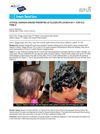
 An 11-year-old girl with Kawasaki disease experienced hair loss that improved after treatment.
May 2025 in “Indian Dermatology Online Journal” Trichoscopy is crucial for diagnosing rare genetic hair disorders.
Low vitamin C caused bleeding and corkscrew hair, resolved with vitamin C treatment.
 September 2024 in “BMJ Case Reports”
 An adult had a rare scalp infection in the forehead area, treated successfully with itraconazole.
January 2025 in “International Journal of Trichology” Increased hair growth after a cast is temporary and harmless.
 6 citations
,
January 2014 in “Clinical hemorheology and microcirculation”
6 citations
,
January 2014 in “Clinical hemorheology and microcirculation” Hereditary elliptocytosis causes elongated red blood cells and can lead to mild or no symptoms.
16 citations
,
April 2017 in “Pediatric Dermatology” Oral isotretinoin effectively treated the man's painful scalp condition and hair loss.
A six-year-old girl with extra hair on her elbows was treated with hair removal methods.