7 citations
,
March 2023 in “The Journal of Biochemistry” LONRF1 is important for oxidative damage response and tissue remodeling during wound healing.
Linalool in personal care products may worsen frontal fibrosing alopecia by damaging hair follicle stem cells and triggering harmful immune responses.
3 citations
,
March 2005 in “Iranian Journal of Pharmaceutical Sciences” Liposomes and niosomes can increase finasteride retention in the skin.
95 citations
,
July 2015 in “European journal of pharmaceutics and biopharmaceutics” Lipid nanoparticles can help deliver drugs through hair follicles but struggle to penetrate deeper skin layers.
 23 citations
,
January 2012 in “International Food Research Journal”
23 citations
,
January 2012 in “International Food Research Journal” Tofacitinib effectively treated a woman's severe symptoms from a rare autoimmune condition.
 November 2020 in “Dubai medical journal”
 Tofacitinib may effectively regrow hair in alopecia totalis patients.
 2 citations
,
April 2019 in “Journal of the American Society of Nephrology”
2 citations
,
April 2019 in “Journal of the American Society of Nephrology” Fluconazole might be a new treatment for a type of diabetes that affects water balance in the body.
 29 citations
,
May 2011 in “Journal of Cataract and Refractive Surgery”
29 citations
,
May 2011 in “Journal of Cataract and Refractive Surgery” Finasteride may cause cataracts and floppy-iris syndrome.
29 citations
,
June 2015 in “Kidney International” Disrupting the Flcn gene in mice causes early kidney cysts and tumors, which can be treated with rapamycin.
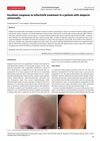 16 citations
,
January 2017 in “Acta dermatovenerologica Alpina, Pannonica et Adriatica (Tiskana izd.)”
16 citations
,
January 2017 in “Acta dermatovenerologica Alpina, Pannonica et Adriatica (Tiskana izd.)” A patient with complete hair loss regrew all her hair using tofacitinib.
19 citations
,
April 2016 in “Case Reports in Dermatology” Nilotinib can cause keratosis pilaris, a skin condition.

Type II spiral ganglion neurites avoid high concentrations of laminin and fibronectin.
 January 2024 in “Editora In Vivo eBooks”
 Early diagnosis and management are crucial for feline inflammatory bowel disease.
 July 2026 in “Lasers in Medical Science”
 Fractional microneedle radiofrequency is effective and safe for skin rejuvenation and acne scars.
25 citations
,
April 2008 in “Clinical and experimental dermatology” EFFC might be common but underreported.
August 1994 in “Journal of Dermatological Science”  August 2020 in “Ugeskrift for Læger”
 A man with severe hair loss regrew all his hair using tofacitinib and stayed healthy for a year.
135 citations
,
December 2006 in “PLoS Medicine” Hyaluronate fragments can help reverse skin thinning by working with the CD44 receptor.
November 2022 in “Munich Personal RePEc Archive (Ludwig Maximilian University of Munich)” Phosphatidylinositol 4-kinases are crucial for root growth, defense, and immunity in Arabidopsis thaliana.

The new hydrogel helps heal burn wounds better than current options by reducing bacteria and inflammation.
Lactobacillus and fermented Korean berry can help hair grow faster.
1 citations
,
June 2023 in “Journal of Visualized Experiments” A new 3D-printed microscope stage makes long-term imaging of live tissue easier and more accessible.
Ajwain seed extract improved skin healing and hair growth in a mouse skin irritation model.

Bubble microneedles effectively deliver drugs through the skin and mouth, improving treatment speed and efficiency.
21 citations
,
April 2008 in “Toxicologic Pathology” CI-1033 causes skin lesions in rats, similar to humans, due to EGF receptor inhibition.
 28 citations
,
May 2019 in “Life Sciences”
28 citations
,
May 2019 in “Life Sciences” Ginsenoside Rb1 from Panax ginseng helps mink hair grow by activating certain cell signals.
The DNS FUE technique offers discreet hair transplants with high satisfaction and low damage rates.

Tofacitinib helped a woman with total-body hair loss grow her hair back.
6 citations
,
December 2024 in “F1000Research” Fibroblast and immune cell interactions affect tissue repair and fibrosis.
September 2019 in “Journal of Investigative Dermatology” Innate lymphoid cells type 1 may contribute to alopecia areata.