 343 citations
,
March 2016 in “Nature Communications”
343 citations
,
March 2016 in “Nature Communications” IL-17-producing γδ T cells help improve bone healing.
 278 citations
,
March 2013 in “Gut”
278 citations
,
March 2013 in “Gut” Anti-IL-12/IL-23 antibody therapy effectively treats psoriasiform skin lesions in IBD patients.
 176 citations
,
August 2015 in “The journal of allergy and clinical immunology/Journal of allergy and clinical immunology/The journal of allergy and clinical immunology”
176 citations
,
August 2015 in “The journal of allergy and clinical immunology/Journal of allergy and clinical immunology/The journal of allergy and clinical immunology” Alopecia areata involves immune activation in the scalp, suggesting treatments targeting TH1, TH2, and IL-23 pathways.
 144 citations
,
November 2020 in “Frontiers in immunology”
144 citations
,
November 2020 in “Frontiers in immunology” Targeting the IL-23/IL-17 pathway effectively treats several inflammatory skin diseases.
 59 citations
,
June 2023 in “Nature Aging”
59 citations
,
June 2023 in “Nature Aging” Blocking IL-17 signaling may reduce skin inflammation and delay aging.
 53 citations
,
April 2021 in “Cell Host & Microbe”
53 citations
,
April 2021 in “Cell Host & Microbe” Skin bacteria, specifically Staphylococcus aureus, help in wound healing and hair growth by using IL-1β signaling. Using antibiotics on skin wounds can slow down this natural healing process.
32 citations
,
February 2024 in “The Journal of Experimental Medicine” CXCL12+ fibroblasts help recruit neutrophils to fight skin infections.
 9 citations
,
July 2022 in “EMBO molecular medicine”
9 citations
,
July 2022 in “EMBO molecular medicine” Blocking certain immune signals can reduce skin damage from radiation therapy.
3 citations
,
January 2023 in “JEADV Clinical Practice” IL-17 is more important than IFN-γ in causing severe hair loss in chronic alopecia areata.
 December 2025 in “Nature Communications”
 Blocking IL-17a can improve age-related smell loss in mice.
 December 2025 in “Cureus”
 Higher IL-17A and IL-23 levels are linked to alopecia areata severity and could help in tracking and treating the disease.
 October 2024 in “Stem Cell Research & Therapy”
 CGF therapy may effectively treat psoriasis by reducing inflammation.
 March 2023 in “Clinical, cosmetic and investigational dermatology”
 IL-33 is linked to hair follicle damage in psoriasis and could be a treatment target for hair loss in this condition.
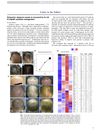 68 citations
,
November 2015 in “The Journal of Allergy and Clinical Immunology”
68 citations
,
November 2015 in “The Journal of Allergy and Clinical Immunology” Blocking IL-12/IL-23p40 helped reverse severe hair loss in patients.
59 citations
,
September 2021 in “Journal of Allergy and Clinical Immunology” Netherton syndrome has two subtypes with shared immune traits but different allergic and immune responses, suggesting targeted treatments.
 48 citations
,
January 2024 in “Immune Network”
48 citations
,
January 2024 in “Immune Network” IL-15 is key for T cell function and could help improve treatments for immune-related diseases.
34 citations
,
January 2022 in “Frontiers in Immunology” IL-25 helps heal diabetic wounds by improving blood vessel and skin cell functions.
 23 citations
,
December 2021 in “Frontiers in Immunology”
23 citations
,
December 2021 in “Frontiers in Immunology” IL-1 family cytokines are crucial for skin defense and healing, but their imbalance can cause skin diseases.
15 citations
,
June 2020 in “The journal of investigative dermatology/Journal of investigative dermatology” Mice with extra human KLK14 had hair and skin problems, including weaker cell bonds and inflammation, linked to Netherton syndrome.
14 citations
,
July 2021 in “Anais brasileiros de dermatologia/Anais Brasileiros de Dermatologia” Interleukin levels are higher in alopecia areata patients but don't predict disease severity or duration.
 2 citations
,
January 2024 in “Advances in Dermatology and Allergology”
2 citations
,
January 2024 in “Advances in Dermatology and Allergology” S100A7 and IL-17 may contribute to inflammation in lichen planopilaris.
2 citations
,
January 2020 in “Skin Appendage Disorders” Ustekinumab treatment may reveal a genetic tendency for steatocystoma multiplex in psoriasis patients.
 1 citations
,
January 2022 in “bioRxiv (Cold Spring Harbor Laboratory)”
1 citations
,
January 2022 in “bioRxiv (Cold Spring Harbor Laboratory)” Blocking IL-17 signaling can delay skin aging and improve skin and hair health.
July 2025 in “Journal of Investigative Dermatology” IL-17 inhibitors are more effective than methotrexate in preventing psoriatic arthritis in psoriasis patients.
 August 2024 in “Qucosa (Saxon State and University Library Dresden)”
 White fat tissue in the skin helps control inflammation by affecting certain immune cells.
 June 2024 in “Journal of Allergy and Clinical Immunology”
 TSLP affects atopic dermatitis by increasing sebum and reducing fat through IL-4/IL-13 signaling.
 December 2023 in “International journal of multidisciplinary research and analysis”
 SH-MSCs gel can effectively treat alopecia by increasing IL-10 and decreasing TNF-α gene expression.
April 2023 in “Journal of Investigative Dermatology” IL-17 plays a key role in severe hair loss in chronic alopecia areata.
 September 2022 in “The American Journal of Dermatopathology”
 Blocking IL-17 might help treat the hair loss condition Lichen planopilaris.
 January 2022 in “The Egyptian Journal of Hospital Medicine”
 Higher IL-21 levels may help predict alopecia areata activity.