![[4-t-Butylphenyl]-N-(4-imidazol-1-yl phenyl)sulfonamide (ISCK03) Inhibits SCF/c-kit Signaling in 501mel Human Melanoma Cells and Abolishes Melanin Production in Mice and Brownish Guinea Pigs](/images/assets/4eb017dc-711d-4926-bcd0-c3b8f48e3a99/small/19974.jpg) 26 citations
,
July 2007 in “Biochemical Pharmacology”
26 citations
,
July 2007 in “Biochemical Pharmacology” ISCK03 stops melanin production in human melanoma cells and lightens skin color in mice and guinea pigs.
 April 2025 in “International Journal of General Medicine”
 The G allele of IFITM3 rs12252 is linked to more severe COVID-19.
IL-18 signaling helps mature Tregs move into the thymus.
2 citations
,
May 2020 in “Journal of the American Academy of Dermatology” Hair shaft changes may be linked to CCCA, but their role is unclear.
25 citations
,
October 2007 in “Developmental biology” Clim proteins are essential for maintaining healthy corneas and hair follicles.
 May 2026 in “Scientific Reports”
 Overexpression of LRIG3 in skin causes hair loss.
29 citations
,
April 2000 in “Journal of histochemistry and cytochemistry/The journal of histochemistry and cytochemistry” ICAM-1 helps regulate hair growth cycles and skin remodeling.
22 citations
,
May 2011 in “Molecular Biology of the Cell” Integrin-linked kinase is crucial for normal skin healing.
January 2014 in “eScholarship (California Digital Library)” Toll-like receptor 3 helps repair the skin barrier after UV damage.
October 2025 in “Clinical and Experimental Pediatrics” A novel CLDN1 mutation in a 2-month-old with NISCH showed improvement with symptom management.
 10 citations
,
July 2021 in “Archiv für Pathologische Anatomie und Physiologie und für Klinische Medicin”
10 citations
,
July 2021 in “Archiv für Pathologische Anatomie und Physiologie und für Klinische Medicin” LRIG1 is linked to better survival in Merkel cell carcinoma.
7 citations
,
January 2021 in “bioRxiv (Cold Spring Harbor Laboratory)” Skin cells control immune cell placement, helping the skin respond better to challenges.
ILC1-like cells may contribute to hair loss in alopecia areata and could be new treatment targets.
32 citations
,
July 2003 in “Histochemistry and Cell Biology” 32 citations
,
December 2019 in “The Journal of clinical investigation/The journal of clinical investigation” A protein called IL-36γ causes skin side effects from certain cancer treatments when combined with a common skin bacteria.
IL-18 signaling helps mature Tregs move into the thymus.
10 citations
,
November 2018 in “bioRxiv (Cold Spring Harbor Laboratory)” New laser particles can track thousands of cells in 3D models, improving single-cell analysis.
 April 2023 in “The journal of investigative dermatology/Journal of investigative dermatology”
 p120-catenin helps control skin inflammation by regulating cadherin levels.
3 citations
,
December 2023 in “Aging” hsa_circ_0002980 can help stop liver cancer cells from growing and spreading.
 April 2018 in “Journal of Investigative Dermatology”
 IL-9 increases skin cell movement but decreases their ability to invade, and this effect is controlled by cell contractility, not by MMPs.
1 citations
,
August 2021 in “Journal of Investigative Dermatology” ASLAN004 was safe and well-tolerated, supporting further development for treating certain diseases.
66 citations
,
October 2002 in “Human molecular genetics online/Human molecular genetics” A gene mutation in mice causes skin defects and early death.
3 citations
,
October 2011 The updated criteria improve the accuracy of diagnosing lupus.
 April 2025 in “Journal of the Association for Research in Otolaryngology”
 NM2 and RLC phosphorylation are essential for normal inner ear hair cell function.
 February 2016 in “The journal of allergy and clinical immunology/Journal of allergy and clinical immunology/The journal of allergy and clinical immunology”
 A new TP63 mutation was found in a baby with EEC syndrome, showing the need for TREC testing to check for immune issues.
 10 citations
,
March 2015 in “Journal of dermatology”
10 citations
,
March 2015 in “Journal of dermatology” The boy's severe skin disorder is caused by two new mutations in his TGM1 gene.
 May 2022 in “bioRxiv (Cold Spring Harbor Laboratory)”
 Primary cilia affect the size and oil production of eye glands but not the oil's makeup.
July 2025 in “Journal of Investigative Dermatology” 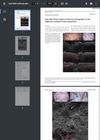 1 citations
,
October 2023 in “Skin research and technology”
1 citations
,
October 2023 in “Skin research and technology” LC-OCT is an effective new method for diagnosing classic lichen planopilaris.
 3 citations
,
September 2005 in “Experimental dermatology”
3 citations
,
September 2005 in “Experimental dermatology” The cornified envelope is crucial for skin's barrier function and involves key proteins and genetic factors.