 April 2023 in “Journal of Investigative Dermatology”
 The specific skin disease variant p.(Arg2000Trp) in plectin can cause a wide range of symptoms, which should be considered when diagnosing patients.
8 citations
,
January 1977 in “Acta Haematologica” The treatment was effective for advanced non-Hodgkin's lymphomas.
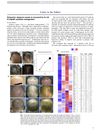
High CCL11 levels may indicate poor response to baricitinib in severe alopecia areata.
23 citations
,
December 1990 in “PubMed” SLE should be considered in horses with immune-related skin issues.
 August 2026 in “Journal of Personalized Medicine”
 Effective vitiligo treatment requires targeting multiple biological factors, not just immune suppression.
January 2011 in “Repository KITopen (Karlsruhe Institute of Technology)” Blocking certain proteins on immune cells may help treat alopecia areata.
19 citations
,
August 2017 in “American journal of clinical dermatology” Hepatitis B virus exposure may be linked to increased risk of alopecia areata.
 November 2025 in “Indian Journal of Nephrology”
 Hair dye may trigger anti-GBM disease relapse, and rituximab can help manage it.
1 citations
,
June 2020 in “Unisa Institutional Repository (University of South Africa)” Low power red laser with efavirenz can reduce HIV-1 infection to undetectable levels and improve diagnosis.
54 citations
,
January 2021 in “Biophysics Reports” Cell-based screening methods are useful and cost-effective for drug discovery but have pros and cons.
 68 citations
,
November 2015 in “The Journal of Allergy and Clinical Immunology”
68 citations
,
November 2015 in “The Journal of Allergy and Clinical Immunology” Blocking IL-12/IL-23p40 helped reverse severe hair loss in patients.
130 citations
,
January 2000 in “Nature biotechnology”  6 citations
,
November 2008 in “Journal of Dermatological Science”
6 citations
,
November 2008 in “Journal of Dermatological Science” Certain proteins involved in DNA modification may affect the genetic changes in systemic lupus erythematosus and could indicate the disease's activity.
10 citations
,
December 2015 in “International Journal of Dermatology” CK 15, follistatin, and Bmi-1 can help differentiate basal cell carcinoma from squamous cell carcinoma.
7 citations
,
November 2021 in “JAAD Case Reports” Mogamulizumab can cause hair loss and skin rashes.
28 citations
,
October 1984 in “Journal of Investigative Dermatology”  January 2024 in “Wiadomości Lekarskie”
 Using Decamethoxine and Blastomunil together speeds up wound healing.
19 citations
,
August 2023 in “Journal of Dermatological Treatment” Abrocitinib may effectively treat stubborn alopecia universalis.
 21 citations
,
January 2021 in “Journal of infection and chemotherapy”
21 citations
,
January 2021 in “Journal of infection and chemotherapy” Men, diabetes, and high inflammation levels lead to higher COVID-19 antibodies.
1 citations
,
September 2019 in “Journal of Investigative Dermatology” Anti-Desmocollin 3 antibodies can cause pemphigus-like symptoms in mice.
January 2026 in “Pediatrics International” Live vaccines can be safely given to infants with a FOXN1 variant if their immune function improves over time.
 May 2025 in “Frontiers in Immunology”
 Autoimmune diseases with high tissue recovery often relapse and remit, while those with low recovery rarely remit.
71 citations
,
May 2024 in “New England Journal of Medicine” Ruxolitinib may effectively treat APS-1 by reducing harmful immune responses.
53 citations
,
July 2009 in “Cancer Research” Blocking certain proteins can reduce skin inflammation caused by cancer treatment.
 14 citations
,
March 2002 in “The journal of investigative dermatology/Journal of investigative dermatology”
14 citations
,
March 2002 in “The journal of investigative dermatology/Journal of investigative dermatology” Patients with severe alopecia areata have higher levels of MIF, which decrease after successful treatment.
November 2025 in “The Journal of Dermatology” Nemolizumab improved both severe atopic dermatitis and alopecia areata in one patient.
 7 citations
,
October 2024 in “Frontiers in Immunology”
7 citations
,
October 2024 in “Frontiers in Immunology” A humanized CXCL12 antibody may delay and treat alopecia areata by altering the immune response.
A new image-based method improves accuracy in measuring hair loss in mice.
May 2025 in “Preprints.org” Unique microRNA patterns can help diagnose and treat severe alopecia areata.
March 2023 in “MDPI eBooks”