 April 2016 in “Journal of Investigative Dermatology”
 Mice without the p21 gene can fully regenerate injured ears due to reduced Sdf1 increase and leukocyte recruitment, suggesting new ways to induce tissue regeneration in mammals.

Using a combination of AMD3100 and FK506 can speed up and improve wound healing in diabetic rats.
May 2026 in “International Journal of Molecular Medicine” The error was corrected without affecting the study's results.
 4 citations
,
January 2009 in “Acta agriculturae Serbica”
4 citations
,
January 2009 in “Acta agriculturae Serbica” Selenium imbalance can cause hair loss and skin issues.
 October 2003 in “Journal of Investigative Dermatology Symposium Proceedings”
 Mice treatments didn't grow hair, a patient treatment may affect immune response, and people with hair loss often feel anxious or depressed.
11 citations
,
January 2005 in “Brazilian Journal of Medical and Biological Research” Hairless USP mice have enlarged skin cysts as they age.
 23 citations
,
February 2020 in “PLOS genetics”
23 citations
,
February 2020 in “PLOS genetics” Mice with LSS deficiency showed hair loss and cataracts, similar to humans, and can help in understanding and treating this condition.
 49 citations
,
February 2020 in “Scientific reports”
49 citations
,
February 2020 in “Scientific reports” The nanohybrid system significantly improved wound healing and showed strong antibacterial activity.
 343 citations
,
March 2016 in “Nature Communications”
343 citations
,
March 2016 in “Nature Communications” IL-17-producing γδ T cells help improve bone healing.
 September 2022 in “Dermatology and therapy”
 Contact immunotherapy might help treat various skin conditions, but more research is needed to confirm its safety and effectiveness.
September 2017 in “Griffith Research Online (Griffith University, Queensland, Australia)” Blocking IL-17 can reduce joint inflammation in Ross River Virus infections.
22 citations
,
October 2004 in “Journal of Investigative Dermatology” The gene causing hair loss and heart issues in rough coat mice is still unknown.
December 2024 in “European journal of medical research” 5 citations
,
November 2005 in “Journal of Investigative Dermatology”  January 2026 in “Cell and Tissue Biology”
 TS-13 speeds up hair regrowth after chemotherapy without affecting treatment effectiveness.
 42 citations
,
December 2016 in “Cell Death & Differentiation”
42 citations
,
December 2016 in “Cell Death & Differentiation” Damaging mitochondrial DNA in mice speeds up aging due to increased reactive oxygen species, not through the p53/p21 pathway.
25 citations
,
April 1985 in “Journal of Investigative Dermatology”  January 2017 in “Jikken doubutsu ihou/Jikken doubutsu/Experimental animals/Jikken Dobutsu”
 Mice with a changed Hr gene lose and regrow hair due to changes in the gene's activity.
64 citations
,
February 2008 in “Cancer Research” Inactivating both p53 and Rb genes in mice speeds up aggressive skin cancer development.
84 citations
,
October 2007 in “The Journal of Immunology” Myeloid-derived suppressor cells help control autoimmune cells and promote hair regrowth in alopecia areata.
2 citations
,
November 2023 in “Laboratory Animal Research” Combining stem cell medium and light therapy improves wound healing in diabetic rats.
101 citations
,
August 2001 in “The Journal of Cell Biology” A new keratin 6 type in mice explains why some mice without certain keratin genes still have normal hair and nails.
 August 2016 in “Journal of Dermatology”
 A chemical called 5-Bromo-2′-deoxyuridine caused rapid hair loss in mice by killing certain skin cells through a specific cell death pathway.
 August 2023 in “Veterinary Record Case Reports”
 High-dose ciclosporin significantly improved a young cat's severe skin condition.
26 citations
,
July 1992 in “International Journal of Dermatology” Oral cyclosporine A and prednisolone effectively improved alopecia universalis without side effects.
23 citations
,
July 2023 in “Proceedings of the National Academy of Sciences” CD8+ T cells drive alopecia areata, while regulatory T cells are protective.
35 citations
,
January 2006 in “Cancer Research” Mice with extra PKCδ resist chemical-induced skin cancer but not UV-induced.
 September 2016 in “Journal of dermatological science”
 Transplanted whisker follicles caused hair growth on the spine of mice.
 74 citations
,
June 2018 in “Cell death and disease”
74 citations
,
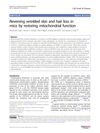
June 2018 in “Cell death and disease” Restoring mitochondrial function in mice reversed their skin wrinkling and hair loss.
11 citations
,
October 2005 in “Toxicological Sciences” Cigarette smoke condensates increase tumor-promoting markers in mouse skin, especially around hair follicles.