 78 citations
,
June 2021 in “Dermatology and Therapy”
78 citations
,
June 2021 in “Dermatology and Therapy” Future acne treatments should aggressively target inflammation to prevent scarring.
 February 2026 in “Frontiers in Public Health”
 Lifestyle changes can help manage androgenetic alopecia.
 191 citations
,
May 2018 in “British journal of dermatology/British journal of dermatology, Supplement”
191 citations
,
May 2018 in “British journal of dermatology/British journal of dermatology, Supplement” Alopecia areata is likely an autoimmune disease with unclear triggers, involving various immune cells and molecules, and currently has no cure.
 103 citations
,
January 2009 in “Carbon”
103 citations
,
January 2009 in “Carbon” Pure carbon nanotubes are safe for mice, but impure ones cause immune issues and hair loss.
 December 2022 in “Biological and Clinical Sciences Research Journal”
 Early treatment of mixed connective tissue disease is crucial to prevent severe autoimmune conditions.
 11 citations
,
May 2022 in “Journal of immunology research”
11 citations
,
May 2022 in “Journal of immunology research” Breast implants are linked to autoimmune symptoms, with over half of patients feeling better after removal, but the exact cause is unclear and may involve bacterial biofilm.
 38 citations
,
August 2005 in “Veterinary dermatology”
38 citations
,
August 2005 in “Veterinary dermatology” A disease causing skin issues in young adult German short-haired pointers is hereditary, with most affected dogs not responding to treatment.
 99 citations
,
July 2017 in “Clinical Reviews in Allergy & Immunology”
99 citations
,
July 2017 in “Clinical Reviews in Allergy & Immunology” New treatments for Alopecia Areata show promise but need to be more effective and affordable.
 61 citations
,
January 2019 in “American Journal of Clinical Dermatology”
61 citations
,
January 2019 in “American Journal of Clinical Dermatology” The cause of Frontal Fibrosing Alopecia is unclear, diagnosis involves clinical evaluation and various treatments exist, but their effectiveness is uncertain.
 59 citations
,
July 2015 in “Journal of Immunology”
59 citations
,
July 2015 in “Journal of Immunology” Certain proteins, caspases-1 and -11, are important in the early development of skin inflammation in mice.

Gender-specific analysis could improve treatment for childhood systemic lupus erythematosus.
 February 2024 in “Journal of Health Science and Medical Therapy”
 ADAM17 could be a potential target for treating PCOS.
 82 citations
,
March 2016 in “Autoimmunity reviews”
82 citations
,
March 2016 in “Autoimmunity reviews” Animal models have helped understand hair loss from alopecia areata and find new treatments.
 37 citations
,
March 1990 in “The Journal of Pediatrics”
37 citations
,
March 1990 in “The Journal of Pediatrics” Toxic shock syndrome is caused by a complex interaction of bacterial toxins and the immune system, and understanding this can help improve diagnosis and treatment.
 68 citations
,
May 2016 in “Experimental dermatology”
68 citations
,
May 2016 in “Experimental dermatology” FFA's causes may include environmental triggers and genetic factors.
 19 citations
,
January 2014 in “International Journal of Medical Sciences”
19 citations
,
January 2014 in “International Journal of Medical Sciences” Abnormal activation of hair follicle stem cells and Wnt/β-catenin signaling contributes to sebaceous neoplasms.
 8 citations
,
January 1989 in “Annual Reports in Medicinal Chemistry”
8 citations
,
January 1989 in “Annual Reports in Medicinal Chemistry” Hair loss from alopecia areata and androgenetic alopecia can be treated, but more effective and safer treatments are needed.
 1 citations
,
July 2014 in “Our Dermatology Online”
1 citations
,
July 2014 in “Our Dermatology Online” The patient with both scarring and non-scarring hair loss showed complex immune reactions and improved with steroid treatment.
 56 citations
,
January 2021 in “Clinical and Experimental Medicine”
56 citations
,
January 2021 in “Clinical and Experimental Medicine” The document concludes that while there are various treatments for Alopecia Areata, there is no cure, and individualized treatment plans are essential due to varying effectiveness.

Herbal therapies for alopecia show promise but need more research for safety and effectiveness.
 466 citations
,
August 2004 in “Journal of the American Academy of Dermatology”
466 citations
,
August 2004 in “Journal of the American Academy of Dermatology” Rosacea is a skin condition with unclear causes, classified into four subtypes.
 3 citations
,
August 2012 in “Annals of Diagnostic Pathology”
3 citations
,
August 2012 in “Annals of Diagnostic Pathology” AIDS may cause changes in the scalp that increase infection risk and hair loss.
 2 citations
,
August 2020 in “Journal of Cosmetic Dermatology”
2 citations
,
August 2020 in “Journal of Cosmetic Dermatology” Higher granulysin levels in the blood are linked to more severe hair loss in alopecia areata patients, and these levels decrease after effective treatment.
21 citations
,
April 2025 in “MedComm” Alopecia areata causes unpredictable hair loss, and more research is needed to fully understand and treat it effectively.
 26 citations
,
June 2012 in “The Journal of Obstetrics and Gynecology of India”
26 citations
,
June 2012 in “The Journal of Obstetrics and Gynecology of India” Most skin changes during pregnancy are harmless and temporary, but some can risk the fetus and need careful treatment.
 July 2026 in “Frontiers in Immunology”
 Targeting protein lactylation may improve skin disease treatments.
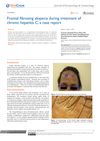 September 2017 in “Journal of Dermatology & Cosmetology”
 Hepatitis C treatment may cause frontal fibrosing alopecia.
6 citations
,
January 2005 in “Biology of Blood and Marrow Transplantation” Graft-versus-host disease occurs when donor immune cells attack the recipient's body, causing skin, gut, and liver damage.
72 citations
,
July 1984 in “Journal of Investigative Dermatology”  3 citations
,
May 2023 in “Biomedicines”
3 citations
,
May 2023 in “Biomedicines” PCOS causes infertility mainly due to hormonal imbalances, insulin resistance, and chronic inflammation.