
JAK inhibitors effectively regrow hair in alopecia areata but hair loss often returns after stopping treatment.
 January 2025 in “Advances in Dermatology and Allergology”
 Eating foods with sulfhydryl may worsen pemphigus vulgaris.
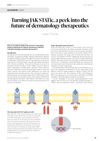 August 2024 in “New Zealand Medical Student Journal”
 JAK inhibitors show promise for treating skin diseases effectively and safely.
 March 2023 in “Revista română de reumatologie”
 Skin problems are common in lupus, often appearing first, with various types and treatments, and careful monitoring is important for diagnosis and management.
 1 citations
,
January 2014 in “Rinsho Shinkeigaku”
1 citations
,
January 2014 in “Rinsho Shinkeigaku” Immunological treatment improved both neuropathy and alopecia.
72 citations
,
November 1997 in “Clinics in dermatology” Vitiligo is a skin condition causing white patches, likely due to an autoimmune issue.
February 2025 in “bioRxiv (Cold Spring Harbor Laboratory)” Cell detachment, not autoantibody binding, causes major changes in pemphigus.
16 citations
,
January 2025 in “Burns & Trauma” Nanomedicine-based immunotherapy shows promise in improving tissue repair and regeneration.
January 2011 in “Repository KITopen (Karlsruhe Institute of Technology)” Blocking certain proteins on immune cells may help treat alopecia areata.
24 citations
,
September 2011 in “Autoimmunity” Natural killer cells play a key role in autoimmune skin diseases like pemphigus vulgaris.
May 2023 in “The Journal of Immunology” Alopecia areata involves unique activation of certain immune cells.
 8 citations
,
October 2016 in “Experimental dermatology”
8 citations
,
October 2016 in “Experimental dermatology” Hair follicles may help teach the immune system to tolerate new self-antigens, but this can sometimes cause hair loss.
October 2025 in “Science Advances” IFN-γ production by CD4 T cells is crucial for causing alopecia areata.
November 2025 in “Journal of Investigative Dermatology” Certain CD8+ T cells attack hair follicles in alopecia areata, suggesting they could be targeted for treatment.
June 2026 in “Frontiers in Immunology” JAK inhibitors effectively treat inflammatory skin diseases by targeting specific cytokine signals.
July 2025 in “Journal of Investigative Dermatology” Resident memory T cells and necroptosis may drive fibrosis in eosinophilic fasciitis and morphea.
January 2010 in “Journal of Animal Science” Transcutaneous vaccination using nanoparticles can enhance immune responses and reduce basal cell carcinomas.
 55 citations
,
April 2022 in “Journal of Molecular Medicine”
55 citations
,
April 2022 in “Journal of Molecular Medicine” Aging and chronic inflammation weaken the immune system, increasing cancer and infection risks.
 November 2025 in “Frontiers in Immunology”
 Stem cell activity influences autoimmune disease outcomes by affecting immune responses and tissue regeneration.
6 citations
,
March 2005 in “Journal of the American Academy of Dermatology” Follicular dystrophy in immunocompromised patients may be linked to medication or viral factors and can improve with treatment changes.
 89 citations
,
October 1996 in “Dermatologic Clinics”
89 citations
,
October 1996 in “Dermatologic Clinics” Alopecia areata is likely caused by a combination of genetic factors and immune system dysfunction, and may represent different diseases with various causes.
2 citations
,
September 2014 in “Nature reviews. Drug discover/Nature reviews. Drug discovery” Specific immune cells cause alopecia areata and blocking certain proteins can prevent it.
 May 2025 in “Frontiers in Immunology”
 Autoimmune diseases with high tissue recovery often relapse and remit, while those with low recovery rarely remit.
 January 2022 in “International Journal of Biology Pharmacy and Allied Sciences”
 Autoimmune diseases cause the immune system to attack the body, and management varies as some are curable and others are not.
 December 2021 in “International Journal of Biology Pharmacy and Allied Sciences”
 Autoimmune diseases cause the immune system to attack the body, and management varies as some are curable and others are not.
6 citations
,
May 2013 in “The Journal of Dermatology” Autoimmune reactions may cause both alopecia areata and HAM.
248 citations
,
August 2015 in “Pharmacological Research” Vaccines are generally safe, but rare autoimmune reactions can occur, often influenced by genetics.
33 citations
,
October 2006 in “European Journal of Immunology” The CD44-CD49d complex boosts T cell activation and survival in autoimmune disease.
March 2025 in “Clinical Reviews in Allergy & Immunology”  15 citations
,
July 1999 in “Dermatologic Clinics”
15 citations
,
July 1999 in “Dermatologic Clinics” The document concludes that immune system abnormalities cause alopecia areata, but the exact process is still not completely understood.