 December 2023 in “Journal of Ayub Medical College Abbottabad”
 Ritlecitinib effectively treats alopecia areata in patients 12 and older with fewer side effects.
IVL-DrugFluidic® can mass-produce high-quality, long-acting injectable drug microspheres, improving patient compliance and reducing side effects.
 April 2023 in “The journal of investigative dermatology/Journal of investigative dermatology”
 Blocking a key energy pathway in human hair follicles can trigger stress responses that stop cell growth.
September 2022 in “Journal of The American Academy of Dermatology” Combining dutasteride mesotherapy with oral minoxidil is more effective for hair loss than using oral minoxidil alone.
 January 2024 in “American journal of clinical dermatology”
 Ritlecitinib is safe and well-tolerated for treating alopecia areata in patients aged 12 and older.
 2 citations
,
January 2019 in “Indian Dermatology Online Journal”
2 citations
,
January 2019 in “Indian Dermatology Online Journal” The congress concluded that misuse of antifungal drugs in South Asia has led to widespread treatment failure, and new approaches and regional cooperation are needed.
July 2025 in “Journal of Investigative Dermatology” AI-09 is safe, effective, and reduces wrinkles for up to 6 months.
 1 citations
,
July 2022 in “The journal of investigative dermatology/Journal of investigative dermatology”
1 citations
,
July 2022 in “The journal of investigative dermatology/Journal of investigative dermatology” Tofacitinib helps improve skin conditions in people with Down syndrome, especially alopecia areata.
 January 2026 in “Inflammation and Regeneration”
 Two-photon microscopy improves skin imaging but faces safety and cost challenges for clinical use.
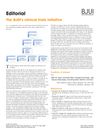 March 2017 in “BJU international”
 The BJUI supports clinical trials as key for unbiased medical evidence and works to enhance their design, reporting, and discussion.
1 citations
,
July 2021 in “Dermatologic Therapy” 1 citations
,
November 2019 in “Dermatologic Therapy” January 2021 in “Dermatologic Therapy” November 2020 in “Dermatologic Therapy” May 2020 in “Dermatologic Therapy” March 2020 in “Dermatologic Therapy” January 2020 in “Dermatologic Therapy”  5 citations
,
January 2021 in “Inflammatory Bowel Diseases”
5 citations
,
January 2021 in “Inflammatory Bowel Diseases” Tofacitinib improved ulcerative colitis, skin ulcers, and hair loss in a patient who didn't respond well to other treatments.
9 citations
,
August 2021 in “Journal of clinical medicine” Pili torti is a rare condition where hair is twisted and breaks easily, often linked to genetic disorders or other health issues.
 3 citations
,
August 2020 in “Cutaneous and Ocular Toxicology”
3 citations
,
August 2020 in “Cutaneous and Ocular Toxicology” ATP helps prevent skin damage from vandetanib by reducing stress.
2 citations
,
November 2004 in “Hospital pharmacy” Certain medications can cause serious side effects, so it's important to report them.
4 citations
,
April 2018 in “Journal of vacuum science and technology. B, Nanotechnology & microelectronics” The conclusion is that a new method can identify cosmetic residues on hair and match them to their products.
 June 2024 in “Skin Research and Technology”
 hsa-miR-193a-5p may help diagnose and treat alopecia areata.
 2 citations
,
May 2021 in “Journal of pharmaceutical and biomedical analysis”
2 citations
,
May 2021 in “Journal of pharmaceutical and biomedical analysis” A new method was developed to accurately detect and measure 47 different drug ingredients in various products.
7 citations
,
November 2018 in “Plastic Surgery” The Mitek Microfix QuickAnchor is effective and safe for endoscopic brow lifts.
 January 2023 in “Surgical & Cosmetic Dermatology”
 Combining intradermotherapy with microneedling and a topical solution reduces hair loss more effectively than intradermotherapy alone.
65 citations
,
February 2011 in “Molecular cancer therapeutics” CCT128930 is a promising new drug that effectively targets and inhibits a cancer-related protein, showing potential for cancer treatment.
 3 citations
,
April 2016 in “Journal of Investigative Dermatology”
3 citations
,
April 2016 in “Journal of Investigative Dermatology” Tofacitinib, a JAK inhibitor, improved hair regrowth in most patients with severe alopecia areata and had minimal side effects.
 136 citations
,
April 2013 in “Clinical Cancer Research”
136 citations
,
April 2013 in “Clinical Cancer Research” The drug IPI-926 is safe at 160 mg daily and may help treat certain tumors, especially basal cell carcinoma.
 20 citations
,
December 2016 in “Neurodegenerative disease management”
20 citations
,
December 2016 in “Neurodegenerative disease management” Teriflunomide effectively reduces relapses and disability in MS and has a manageable safety profile.