 January 2026 in “Forum Dermatologicum”
 Thorough hair examination is crucial for accurate diagnosis and treatment.
 August 2016 in “Journal of Investigative Dermatology”
 The research found that certain microRNAs are important for human hair growth and health.
 January 2015 in “Hair transplant forum international”
 The document's conclusion cannot be provided because the content is not available.
 15 citations
,
May 2004 in “Facial Plastic Surgery Clinics of North America”
15 citations
,
May 2004 in “Facial Plastic Surgery Clinics of North America” The document concludes that while "hair follicle cloning" shows promise for unlimited donor hair, it faces challenges with consistency and safety in humans.
 7 citations
,
January 2020 in “Scientific Reports”
7 citations
,
January 2020 in “Scientific Reports” Rabbit skin analysis showed changes in hair growth and identified miRNAs that may regulate hair follicle development.
Moderate immune responses help hair growth, while excessive responses slow it down.
73 citations
,
November 2000 in “Proceedings of the National Academy of Sciences of the United States of America” There are two ways to start hair growth: one needs Stat3 and the other does not, but both need PI3K activation.
47 citations
,
July 1998 in “Journal of Investigative Dermatology” A new mutation, Glu402Lys, in hair keratin is linked to variable symptoms of monilethrix.
11 citations
,
June 2005 in “Postgraduate Medical Journal” Some infants temporarily grow scrotal hair, which usually disappears on its own without any health issues.
 56 citations
,
August 2005 in “Journal of Investigative Dermatology Symposium Proceedings”
56 citations
,
August 2005 in “Journal of Investigative Dermatology Symposium Proceedings” Different women's hair and skin glands respond to hormones in varied ways, which can cause unwanted hair growth even with normal hormone levels, and more research is needed to treat this effectively.
 25 citations
,
May 1994 in “Journal of Investigative Dermatology”
25 citations
,
May 1994 in “Journal of Investigative Dermatology” Researchers found a new gene, hacl-1, that is active in mouse hair follicles during hair growth and may be important for hair biology.
16 citations
,
November 2017 in “British Journal of Dermatology” Cells in hair die by breaking down their DNA and mitochondria as they form keratin.
 1 citations
,
March 2010 in “Internal medicine journal”
1 citations
,
March 2010 in “Internal medicine journal” A 72-year-old man with sudden taste issues and hair growth was diagnosed with a severe stomach cancer and died within 5 months.
January 2023 in “Nature Immunology” Certain immune cells help hair growth by regulating iron in the skin.
 1 citations
,
June 2023 in “Journal of applied crystallography”
1 citations
,
June 2023 in “Journal of applied crystallography” The technique showed that human hair has two main parts, with 68% being rigid and the rest flexible, and water swelling affects its structure.
 9 citations
,
February 2018 in “Journal of The American Academy of Dermatology”
9 citations
,
February 2018 in “Journal of The American Academy of Dermatology” Researchers developed a new method using methylene blue staining to more accurately identify the growth stage of human hair follicles.
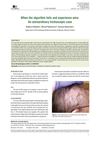
 April 2016 in “Actas Dermo-Sifiliográficas”
 The document concludes that a unique target-like hair regrowth pattern in alopecia areata may be more common than thought and should be properly identified.
90 citations
,
January 2002 in “Dermatology” Kenogen is a resting phase in hair follicles that may contribute to baldness, especially in androgenetic alopecia.
February 2006 in “Cambridge University Press eBooks” A 45-year-old woman experienced excessive hair shedding beyond the normal range.
114 citations
,
October 1996 in “Dermatologic clinics” Hair loss is mainly caused by hormones, autoimmune issues, and chemotherapy, and needs more research for treatments.
 13 citations
,
October 2002 in “Journal of Investigative Dermatology”
13 citations
,
October 2002 in “Journal of Investigative Dermatology” The upper half of a human hair follicle can grow a new hair in a mouse, but success is rare.
4 citations
,
February 2013 in “PubMed” A3 antibody helps identify key cells in rat hair follicle development.
 January 2021 in “Research Square (Research Square)”
 Rabbits with high wool production have more hair follicles, influenced by specific long noncoding RNAs.
The document concludes that measuring hair density, shaft diameter, growth rate, and anagen:telogen ratio is important for assessing hair growth treatments.
11 citations
,
February 1982 in “RePub (Erasmus University, Rotterdam)” Studying hair roots can help diagnose hair diseases and guide treatments.
November 2025 in “Journal of Investigative Dermatology” Radiation-induced hair loss may be caused by hair growth stopping and inflammation in blood vessels.
15 citations
,
May 2017 in “Journal of Cellular Biochemistry” The hairless protein is important for skin, hair, and may influence cancer development.
 136 citations
,
June 2006 in “Journal of Dermatological Science”
136 citations
,
June 2006 in “Journal of Dermatological Science” PDGF isoforms can promote and sustain hair growth.
173 citations
,
August 2015 in “Developmental cell” The study identified unique genes in hair follicle cells and their environment, suggesting these genes help organize cells for hair growth.
 November 2022 in “Journal of Drug Delivery and Therapeutics”
 Unani medicine links diffuse hair loss to poor skin pore function and body dryness, leading to thinning hair.